Answering the need for a reliable, long 12-foot wheelchair ramp, this guide highlights five top picks that balance capacity, safety features, and portability. Ideal buyers include caregivers seeking durable curb and threshold solutions, homeowners needing permanent-entry ramps, and facilities managers looking for heavy-duty access ramps. Each product section explains who it’s best for and why it stands out, plus practical caveats to help you decide.
| Product | Best For | Key Benefit | Approx. Heavy-Duty Capacity |
|---|---|---|---|
| VEVOR 12FT Portable Wheelchair Ramp | Home use with driveways and door thresholds | Double non-slip surface for all-day use | 800 lbs |
| FACHNUO 12 Feet Wheelchair Ramp with Support Legs | Long outdoor thresholds and steps | Reflective strips and extended rails for safety | 800 lbs |
| Silver Spring 12’ Portable Wheelchair Ramp | Compact storage, frequent transport | Folds and handles ease portability | 600 lbs |
| TaiH Leo 12 Feet Wheelchair Ramp | Home thresholds with detachable sections | Non-slip frosted surface with safety rails | 800 lbs |
| KOLOTOOL 12FT Wheelchair Ramp with Dual Handrails | High-capacity needs with extra guidance | Detachable handrails add stability | 1300 lbs |
VEVOR 12FT Portable Wheelchair Ramp
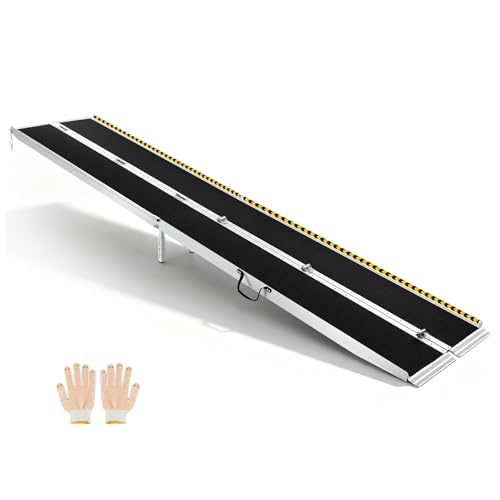
Best for: Homeowners needing a tough, all-day ramp for door thresholds and driveways. The VEVOR ramp provides an unfolded length of 143 inches and an 800-pound load rating, making it suitable for wheelchairs, scooters, and even pets. Its double non-slip surface increases traction in wet or dry conditions, while raised side baffles and reflective strips reduce accidental falls at night. The caveat: it may show slight sinking under load during initial use, which is normal as the ramp settles. Folded dimensions make storage feasible in garages or utility spaces.
FACHNUO 12 Feet Wheelchair Ramp with Support Legs

Best for: Users needing a long, secure ramp with extra stability for home steps. This ramp features a 12-foot unfolded size and a robust 800-pound capacity, plus support legs and reflective strips that aid visibility in low light. The detachable design helps with transport, but it weighs about 68 pounds, so assistance is recommended for moving. The top and bottom rails extend to guide the ground, reducing slip risk in variable terrain.
Silver Spring 12’ Portable Wheelchair Ramp

Best for: Buyers prioritizing portability and easy storage. This ramp folds to a compact size and includes integrated carrying handles and securing straps for travel. With a 12-foot length and 600-pound capacity, it suits most standard wheelchairs and walkers for home doors, porches, or garages. A potential limitation is its weight and bulk when fully deployed, so plan for placement and assistance during setup.
TaiH Leo 12 Feet Wheelchair Ramp

Best for: Those who want a detachable, stable ramp with safety rails and a frosted non-slip surface. The 12-foot unfolded length accommodates higher entrances and door thresholds, with a max load around 800 pounds. Its heavier build requires occasional assistance to move, and the tailplate design helps bridge uneven ground. Choose this if you value integrated safety features and a low-profile aesthetic for home use.
KOLOTOOL 12FT Wheelchair Ramp with Dual Handrails

Best for: Environments where extra guidance and balance matter. This ramp carries up to 1300 pounds and includes detachable dual handrails for increased stability, making it a strong choice for users who require additional support on long approaches. The weight is higher due to the reinforced build, and handrails are detachable for space-conscious storage. Avoid this if you need the lightest possible option.
Buying Guide
- Height compatibility: For 12-foot ramps, verify the intended rise height (12–36 inches is common). Choose a ramp length that provides a safe slope to minimize tipping risk.
- Load capacity: Consider the weight of the user, vehicle, and occasional cargo. Higher capacities (800–1300 lbs) offer more margin for power chairs or scooters.
- Surface and traction: Look for non-slip coatings or grit textures. Raised side rails prevent wheels from rolling off edges.
- Portability vs. permanence: Folding or detachable ramps are easier to store and transport, while non-folding designs may be sturdier for fixed installations.
- Safety features: Reflective strips, guardrails, and tailplates enhance visibility and reduce trips or falls, especially in dim areas.
- Installation considerations: Some ramps include ground-anchored features or adjustable legs—ensure compatibility with steps, thresholds, and ground conditions.
Frequently Asked Questions
- What is a safe slope for a 12-foot ramp? Answer: A safe slope typically targets a gradual incline with a rise-to-run ratio around 1:12 to 1:14, depending on user needs and device wheelbase.
- Do I need handrails on a wheelchair ramp? Answer: Handrails can provide extra balance and safety, especially on long ramps or for users needing additional support during ascent or descent.
- Can these ramps be used outdoors? Answer: Yes, most 12-foot ramps in this list are designed for outdoor use, including thresholds, steps, driveways, and porches, though weather exposure can affect surface grip over time.
- How heavy are these ramps to move? Answer: Weight varies from around 60 to 100+ pounds depending on length, material, and added safety features. Detachable designs typically require two people for setup.
- What should I measure before buying? Answer: Measure door or threshold height, step rise, and available ground space to ensure the ramp length and slope match your setup.
- Is a longer ramp always better? Answer: A longer ramp reduces slope, improving safety, but it also requires more storage room and may be less portable. Balance length with space and mobility needs.