Direct answer for buyers: these air-pressure mattresses and toppers are designed to relieve and prevent bedsores by distributing pressure, boosting circulation, and reducing shear. They are best for bedridden individuals or seniors who cannot shift weight regularly. The following five options balance comfort, quiet operation, and ease of cleaning, making them suitable for home use, hospitals, or nursing facilities. A quick at-a-glance guide below highlights who benefits most from each product.
| Product | Best For | Key Benefit |
|---|---|---|
| Vive Alternating Air Pressure Mattress Pad | Most active caregivers seeking customization | 130 air cells with quiet pump |
| Lunderg PressuRelief Alternating Pad | Caregivers wanting comfort layer | Softness layer plus static mode |
| Lunderg Queen Size Alternating Pad | Queen or larger beds | Large coverage, quiet pump |
| Kekoy Alternating Air Pressure Mattress Pad | Early-stage prevention and accessibility | 130 cells, flocking option |
| Alcedo Alternating Mattress Pad | Durable hospital/home use | Medical-grade, waterproof surface |
Vive Alternating Air Pressure Mattress Pad
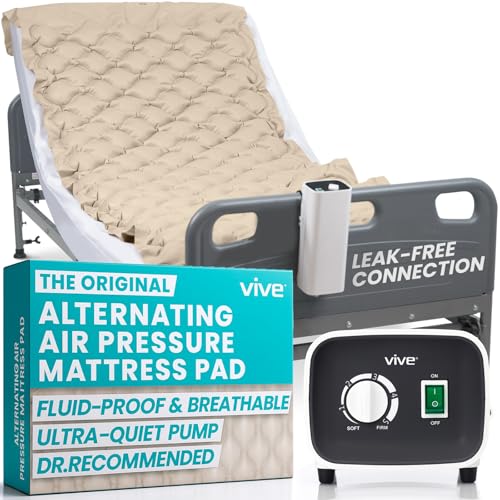
Best for: bedridden patients who need consistent pressure relief and adjustable comfort. The pad uses a 130-cell design with a wave-like therapy cycle to distribute weight evenly and relieve pressure spots. Its whisper-quiet pump operates at about 22 dBA, enabling restful sleep without disruption. This option is suitable for home care or hospital beds where noise could affect sleep quality.
Why selected: The combination of 130 cells and a low-noise pump provides thorough pressure redistribution while remaining gentle on the ears. Heat-sealed cells help prevent leaks, offering long-term reliability.
Caution: While the pump is quiet, some users may notice slight initial noise as the system cycles through modes. Regular inspection of seams and connections is advised to maintain performance.
Lunderg PressuRelief Alternating Pad

Best for: caregivers who want additional comfort without sacrificing pressure relief. This model features a PressuRelief Comfort Layer that adds softness, making it more familiar and comfortable for longer rest periods. It includes a quiet pump with Static Mode for non-alternating support when needed.
Why selected: The Comfort Layer addresses a common complaint about alternating pads—discomfort. Static Mode provides a stable, cushioned surface for patients who benefit from a non-moving bed. The pump maintains ultra-quiet operation at about 23 dBA.
Caution: The added comfort layer slightly changes the surface feel; if precise conformity to a patient’s body is required, test its support in the first days of use.
Lunderg Queen Size Alternating Pad
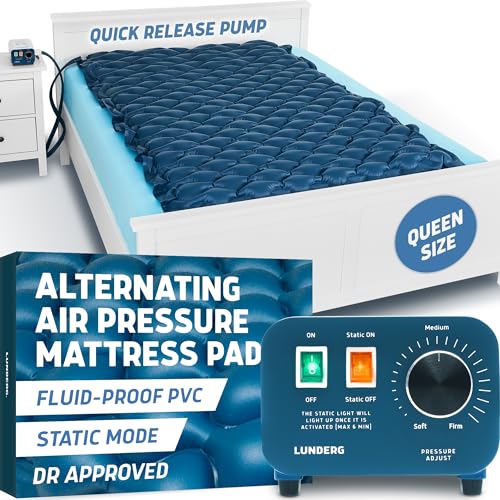
Best for: larger beds and taller individuals who need broad coverage. The queen-sized model measures 53×77 inches and supports up to 320 lbs. It uses a whisper-quiet pump and offers Static Mode for non-alternating rest, making it suitable for home or nursing facility use.
Why selected: The larger footprint ensures even pressure distribution across a bigger surface area, reducing risk of localized pressure points on wider beds. It maintains reliable therapy without sacrificing quiet operation.
Caution: The larger size may require reinforcement under the mattress to prevent shifting during sleep on uneven surfaces.
Kekoy Alternating Air Pressure Mattress Pad

Best for: early-stage pressure sore prevention and daily care routines. Kekoy’s model uses 130 bubble air cells to redistribute body weight and reduce skin stress. It emphasizes a breathable, waterproof cover to simplify cleaning, making it practical for home healthcare settings.
Why selected: The design targets early prevention with a robust 130-cell system and a breathable surface, helping to minimize sweating and heat buildup during sleep. It aims to balance effective therapy with user comfort.
Caution: As with any alternating pad, caregiver supervision is important during initial use to confirm patient adaptation to the sensation of alternating pressure.
Alcedo Alternating Mattress Pad

Best for: users needing medical-grade durability and a waterproof, easy-to-clean surface. The Alcedo mattress pad combines alternating therapy with a medical-grade waterproof cushion, designed for hospital bed or home use. It promises reliable circulation improvement and pressure relief.
Why selected: The waterproof surface supports a hygienic environment and straightforward maintenance, which is crucial for long-term use in care settings. The pad is built to support up to 300 lbs, providing robust support for a broad user base.
Caution: Some users may prefer a softer top layer; if comfort is a higher priority than surface durability, assess whether a topper might complement this model.
Buying Guide: Choosing the Right Air Pressure Mattress Pad
What to consider before buying
- Bed size and weight capacity: Match the pad to the bed (twin, full, queen, or larger) and ensure the weight limit covers the user.
- Number of air cells: More cells typically offer finer pressure redistribution. Look for 130-cell configurations for thorough coverage.
- Noise level: Quiet pumps (around 22–23 dBA) reduce sleep disturbance.
- Modes: Static mode provides a stable surface; alternating mode relieves pressure with regular cycles.
- Cover material: Waterproof or water-resistant covers simplify cleaning; breathable fabrics help reduce heat and moisture buildup.
- Maintenance: Verify seal integrity and ease of replacing pumps or toppers if needed.
How to use effectively
- Place the pad on a clean, flat surface and ensure proper alignment with the bed.
- Start with a gentle alternating cycle and gradually adjust to comfort levels recommended by caregivers or clinicians.
- Inspect the pad daily for leaks, tears, or uneven inflation.
Care and safety considerations
- Follow the manufacturer’s cleaning instructions to maintain waterproof surfaces.
- Do not place sharp objects on the pad; use a fitted cover to protect seams.
- Consult a clinician if bedsores persist or worsen despite therapy.
FAQs
- What is the main benefit of an alternating air mattress for bedsores? It redistributes pressure to reduce continuous exposure on vulnerable areas and supports better blood flow.
- Can these pads be used on home beds and hospital beds? Yes, most models are designed for both home and hospital environments and accommodate standard bed sizes.
- Is a Static Mode necessary? Static Mode is helpful when you need a stable, non-moving surface for rest or comfort beyond alternating cycles.
- How long should the pressure cycles run? Many units use cycles around six minutes per cycle, but settings vary by model and user needs.
- What maintenance is required? Regular inspection for leaks, cleaning of waterproof covers, and replacement of worn components as needed.
- Who benefits most from these products? Bedridden individuals and seniors at risk of pressure ulcers, along with caregivers seeking effective prevention tools.