If you need reliable air cleaning for a medical office, choose models that cover sizable areas, offer true HEPA filtration, and operate quietly to maintain a calm patient environment. This guide highlights five top picks suited for waiting rooms, exam rooms, and staff areas. Each product is evaluated for room size, filtration performance, and practical office-friendly features. The buyer type for each model is noted to help you pick quickly.
| Product | Best For | Approx. Coverage | Notes |
|---|---|---|---|
| Medify MA-40 | Large waiting rooms and open offices | Up to 1,793 sq ft (CADR 406) | High-cleaning capacity; quiet modes |
| MOOKA PR1 | Open floor plans and classrooms | Up to 2,200 sq ft | Pet-friendly modes; washable pre-filter |
| PuroAir 240 | Larger offices with heavy pollutant loads | Up to 1,000 sq ft | Three-layer filtration; strong carbon performance |
| BLUEAIR Blue Pure 511i Max | Quiet patient areas and small offices | Up to 1,138 sq ft | Smart features; excellent quiet operation |
| Levoit Core 200S-P | Exam rooms and workstations | About 140 sq ft per refresh (4.8x per hour) | AHAM Verifide; smart features |
Buyer type guide: For compact spaces such as exam rooms, prefer smaller, quieter purifiers with strong filtration (Levoit Core 200S-P). For larger waiting areas or open-plan offices, choose high-CADR models like Medify MA-40 or MOOKA PR1. For a balance of size, cost, and features, consider BLUEAIR 511i Max. For sensitive environments with odor concerns, look to PuroAir 240 with robust carbon filtration.
Medify MA-40 Air Purifier For Large Spaces

Best for: Large waiting rooms or multi-room offices. The MA-40 offers true HEPA H13 filtration and rapid CADR, capable of cleaning 1,793 sq ft in one hour. The unit targets smoke, odors, pollen, and fine particulates down to 0.1 microns. It operates quietly with three fan speeds and a sleep mode that dims panel lights.
Why selected: High coverage makes it a strong choice for medical offices needing rapid air turnover in larger spaces. The H13 filter provides deeper particle removal compared with standard HEPA H11 options. Caution: Design emphasizes performance over ultra-portability; plan placement for optimal air flow.
MOOKA PR1 Air Purifier For Large Rooms

Best for: Open-plan offices and classrooms requiring wide-area purification. The MOOKA PR1 can reach up to 2,200 sq ft and features a broad intake design for efficient filtration. It supports a washable pre-filter to extend the main filtration life and includes a PM2.5 display for real-time air quality feedback.
Why selected: High maximum coverage makes it suitable for expansive medical spaces. The washable filter approach helps manage long-term operating costs. Caution: Auto mode behavior depends on air quality readings; verify it aligns with your workflow needs.
PuroAir 240 HEPA Air Purifier

Best for: Offices needing strong pollutant and odor filtration. The PuroAir 240 features a three-layer filtration system (pre-filter, HEPA, activated carbon) that captures up to 99.9% of pollutants, including VOCs and odors. It is CARB, ETL, ISO, and UL certified, highlighting compliance with indoor air standards.
Why selected: Powerful filtration with carbon helps address odors and chemical pollutants common in clinical environments. Caution: Independent performance claims are based on lab testing; real-world results may vary with room layout.
BLUEAIR Blue Pure 511i Max Smart Air Purifier
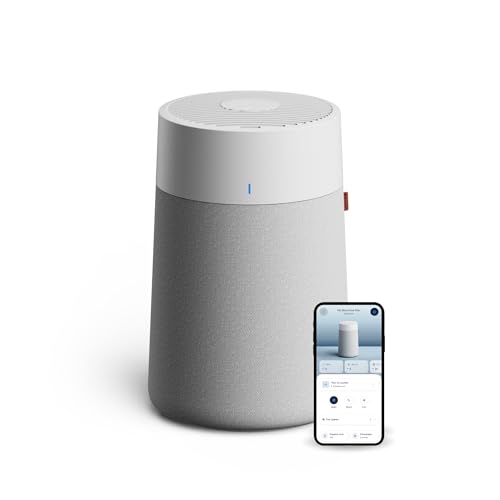
Best for: Quiet patient rooms and small offices needing smart features. The 511i Max covers up to 1,138 sq ft and uses HEPASilent dual filtration to remove 99.97% of particles down to 0.1 microns. It operates with minimal noise and includes auto mode and Wi-Fi connectivity for monitoring and control.
Why selected: Excellent balance of coverage, low noise, and smart controls make it ideal for waiting areas where patient comfort is important. Caution: Smart features require app setup and network access, which may not be suitable for all clinical setups.
Levoit Core 200S-P Air Purifier

Best for: Exam rooms and small staff areas where space is limited. The Core 200S-P is AHAM Verifide and uses a 3-in-1 filter with HEPA. It provides efficient purification for smaller spaces and includes smart features for monitoring air quality and filter life.
Why selected: Compact size and reputable AHAM verification ensure reliable performance without overwhelming a small clinical workspace. Caution: Covering only smaller rooms per cycle; may require multiple units for larger areas.
Buying Guide: Key Considerations For Medical Offices
- Room size and CADR: Match purifier capacity to the largest room or open area in your office to ensure effective air turnover.
- Filtration type: True HEPA (prefer H13 where possible) plus activated carbon is ideal for removing particles, odors, and VOCs common in clinical settings.
- Noise levels: In patient-facing spaces, prioritize models with low noise or sleep modes to maintain a calm environment.
- Maintenance and filters: Look for washable pre-filters or easily replaceable main filters. Consider total cost of ownership and filter availability.
- Smart features and control: Auto mode, air quality sensors, and remote monitoring can support reliable operation in busy offices.
- Certification and compliance: AHAM Verifide or similar certifications indicate adherence to tested performance standards.
- Placement and airflow: Ensure unobstructed intake and outlet paths; avoid placing units directly near doors or heavy traffic to maximize effectiveness.
FAQ
- What size air purifier is best for a medical waiting room?
Choose models rated to cover at least the room’s square footage; larger spaces may require multiple units or high-capacity purifiers like MOOKA PR1 or Medify MA-40. - Is HEPA filtration necessary for medical offices?
- Should I prioritize quiet operation?
- Do air purifiers remove odors from the office?
- Are smart features worth it for a clinic?
- Can I use more than one purifier in a single office?
Yes. True HEPA filtration (preferably H13) captures fine particles, pollen, bacteria, and smoke with high efficiency.
Yes. Patient comfort and staff communication benefit from low-noise operation, especially in exam rooms and waiting areas.
Purifiers with activated carbon or carbon-impregnated filters significantly reduce odors and VOCs.
Auto mode and air quality sensing help maintain consistent air quality with minimal manual adjustments.
Yes. Spacing multiple purifiers can improve air turnover in larger spaces or multi-room suites.