If you’re seeking reliable bed and room alarms to prevent falls and support dignity, these options are among the top choices for caregivers and families. They are designed for elderly loved ones who may wander or attempt to leave bed, with multiple alert styles to fit different environments and sensitivities. This guide highlights who each product is best for, why it’s selected, and practical considerations to help you decide.
Summary table of selected products
| Product | Best For | Why It Stands Out | Notable Limitation |
|---|---|---|---|
| Smart Caregiver Bed Alarm for Elderly Adults | Caregivers who want simple, immediate bed alarms with optional wireless alerts | Pressure-based pad with in-room alarm and optional wireless add-on | Wired setup requires proximity to monitor |
| Lunderg Wireless Early Alert Bed Alarm System | Families prioritizing dignity and non-intrusive alerts | Pagers for alerts; hip-level placement reduces false alarms | Requires wireless pager system for alerts |
| Upgraded Version Bed Sensor Alarm (Nesthao) | Homes needing long-range monitoring and dual alert options | Long-range wireless with both bed and doorway sensing | Wireless system may require regular battery checks |
| Lunderg Bed & Chair Alarm Set | Comprehensive coverage with bed and chair sensing | Two-sensor setup for broader detection | Set-up is more involved than single-sensor systems |
| PILSAMAS Bed Alarms for Elderly | Privacy-conscious setups with clear sensor IDs | Infrared floor sensors with display and no ongoing fees | Requires careful placement to minimize false alarms |
Note: This article uses objective descriptions from product features to help you compare options. Always consider your living space, the person’s mobility level, and caregiver workflow when choosing an alarm system.
Smart Caregiver Bed Alarm for Elderly Adults

This bed alarm uses a 10″x30″ weight-sensing pad to detect when pressure is removed from the bed. An in-room alarm sounds to alert caregivers, and a wireless add-on kit can send alerts directly to the caregiver. Best for caregivers seeking straightforward, immediate notification with an optional quieter alert path. Suitable for dementia care or post-hip surgery recovery where staying in bed is preferred initially.
Best for: caregivers who want immediate, audible alerts and a discreet pad that fits under the fitted sheet. Better for: those who don’t need constant remote monitoring. Choose this if: you want a simple, wired-to-monitor setup with an optional wireless alert path. Caution: set-up requires securing the pad and monitor so cords stay out of the way to prevent tripping.
Lunderg Wireless Early Alert Bed Alarm System

This system sends alerts wirelessly to a caregiver pager, avoiding an in‑room alarm that might frighten the person in bed. It uses a hip-level sensor pad to reduce false alarms, addressing dignity and agitation concerns. Best for families prioritizing low-stress monitoring and faithful adherence to CMS-aligned dignity standards. Better for: alerting caregivers without disturbing the resident. Caution: ensure the caregiver has the pager and understands how to respond quickly to alerts.
Upgraded Version Bed Sensor Alarm (Nesthao)
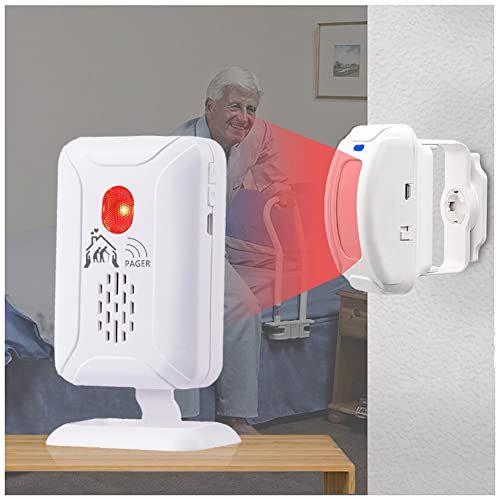
Offers a dual alert approach with bed and doorway sensing and a long 500-foot range for remote monitoring. Its wireless design and easy setup support multi-room monitoring without Wi‑Fi or cloud services. Best for: households needing extended range and flexible placement. Better for: caregivers who want a portable receiver and low infrastructure. Caution: battery management is essential to maintain continuous alerts.
Lunderg Wireless Early Alert Bed & Chair Alarm Set

This set combines bed and chair sensors to maximize early detection as a person begins movement. It uses wireless alerts to a pager, reducing the risk of startling the resident with in-room alarms. Best for: seniors who frequently shift position or stand and walk from a chair. Better for: comprehensive coverage in small to medium spaces. Caution: ensure both sensors are placed correctly to avoid missed alerts—hip-level pad placement is emphasized for accuracy.
PILSAMAS Bed Alarms for Elderly Dementia Patients

This system uses infrared floor sensors to detect a patient’s footstep rather than bed movement, aiming to reduce false alarms caused by repositioning. It includes a sensor ID display on the caregiver pager for quick location of the alert. Best for: privacy-conscious homes and those who want no monthly service fees. Caution: placement is critical to prevent false alerts from pets or other movement near the bed area.
Upgrade Professional Bed Sensor Alarm (Nesthao)
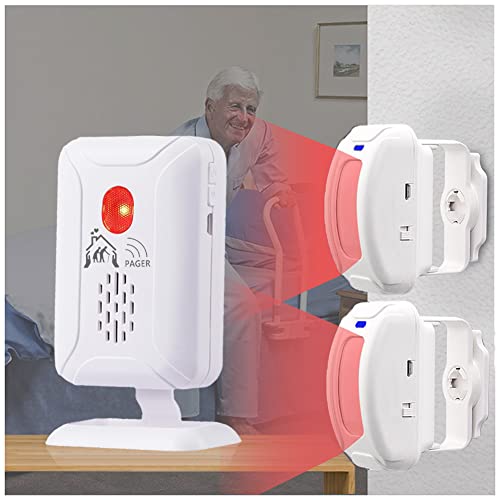
This model emphasizes long-range wireless monitoring with two power options and built-in self-test. It supports monitoring from anywhere in the home and reduces intrusiveness by enabling non-room alerts. Best for: caregivers who need flexible placement and strong range. Better for: homes with multiple rooms or a caregiver who moves around. Caution: confirm battery and charging status to avoid missed alarms during power transitions.
Buying Guide: Key Considerations For Choosing An Elderly Bed Alarm
What type of alert is most appropriate? Alarms come in in-room audible forms and wireless pager-based systems. Consider the resident’s sensitivity to sound and the caregiver’s ability to respond quickly.
Where should sensors be placed? Bed pads work under the fitted sheet, while floor or doorway sensors offer different detection dynamics. Hip-level pads may improve accuracy for early rise detection, while door sensors help monitor room exits.
How important is privacy and dignity? Wireless pager systems minimize disruption in the room and reduce fear or agitation. For some families, a non-intrusive solution with silent modes is preferable.
What is the range and reliability? Higher-range wireless solutions support caregivers who operate across rooms or floor plans. Check open-area range specifications and battery requirements.
What is the maintenance plan? Some systems require ongoing battery changes, while others may use USB charging. Consider who handles maintenance and how often alerts should be tested.
Budget and setup effort matter. Systems vary from simple installs under a bed sheet to multi-sensor kits requiring more time for placement. Choose based on the home environment and caregiver workflow.
Frequently Asked Questions
- What’s the difference between bed pad alarms and floor sensor alarms? Bed pads detect pressure changes when someone leaves the bed; floor sensors detect foot contact with the floor. Floor sensors can reduce false alarms from repositioning but may require different placement strategies.
- Are wireless alert systems better for dementia care? They can be kinder to residents because alerts don’t occur directly in the room. Wireless pagers allow caregivers to respond without startling the person in bed.
- Do these systems require Wi-Fi? Most listed products operate without Wi-Fi; they use direct wireless connections or batteries. Some models offer optional app integrations; verify your preference before purchase.
- Can these alarms help with fall prevention? Yes. They provide advance notice of a movement, enabling supervision before full bed exit, which helps reduce falls.
- What should I consider for small living spaces? Look for compact sensors and simple signal paths that don’t clutter the bedroom. A single-pad or dual-sensor set can fit tight layouts while maintaining coverage.
- Is a long-range system worth it? If you need monitoring across multiple rooms or floors, a long-range system reduces the chance of missed alerts and strengthens caregiver response times.