For quick, accurate readings at home, choose an arm blood pressure monitor with reliable cuff sizing, easy operation, and clear data tracking. This guide highlights five well-suited models for different needs—from simple one-button devices to Bluetooth-enabled trackers. Best for beginners, best for seniors, best for quick daily checks, best for accuracy, and best for memory and multi-user use.
Summary table of selected products:
| Product | Best For | Cuff Size Range | Memory | |
|---|---|---|---|---|
| iHealth Track Smart Upper Arm Blood Pressure Monitor | Smartphone-ready tracking | Standard to Large Adult Arms | 99 readings on device; unlimited on app | Bluetooth |
| OMRON Iron Upper Arm Blood Pressure Monitor | Reliable home use, clinician trust | Standard to large arms (cuff included) | Not specified in features | Manual display with one-button operation |
| Oklar Blood Pressure Monitor Upper Arm | Easy for the elderly | Adjustable cuff 8.7″–15.7″ | Up to 240 readings total | Not specified |
| OMRON Bronze Upper Arm Blood Pressure Monitor | Compact with Hypertension indicator | Cuff included | Up to 14 readings | Connect App |
| AQESO Blood Pressure Monitor | Great value with three cuffs | 7″–21″ arms | 3-user memory | Not specified |
iHealth Track Smart Upper Arm Blood Pressure Monitor
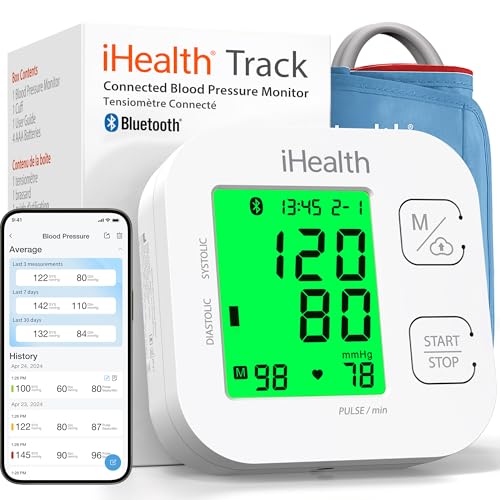
The iHealth Track uses Bluetooth to sync readings with iOS and Android devices. Best for buyers who want mobile data tracking and simple two-button operation for quick measurements. It stores up to 99 readings on the device and unlimited smartphone history via the iHealth app, helping users observe trends over time. The color-coded display quickly indicates reading status (green, yellow, red).
Who it’s best for: tech-enabled users who prefer app-based trend tracking and a larger display for easy readings. Choose this if you want to manage multiple measurements across devices. Caution: Bluetooth dependence means syncing requires a compatible smartphone and app setup.
OMRON Iron Blood Pressure Monitor

OMRON’s Iron model emphasizes trusted accuracy and simplicity. It offers one-touch operation and includes Irregular Heart Beat Detection to flag potential concerns. This monitor is well-suited for users who want quick readings without complex setup, while still receiving cardiology-relevant cues. It stores multiple readings to help track changes over time.
Who it’s best for: buyers seeking a straightforward device with reliable accuracy and heart rhythm alerts. Better for users who want a compact, easy-to-use monitor without advanced app features. Caution: Limited on-device memory may require app use for longer-term tracking.
Oklar Blood Pressure Monitor Upper Arm
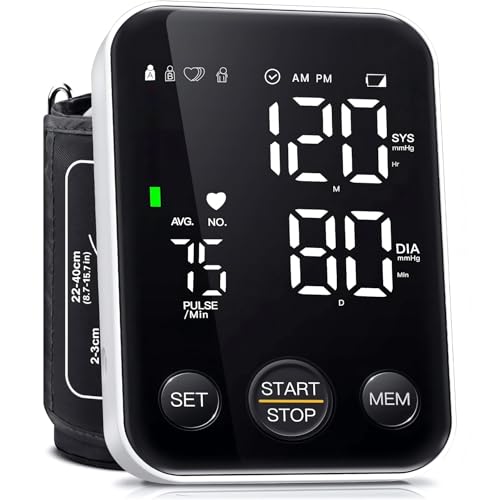
Oklar focuses on one-button operation and a large LED display for easy reading. It stores up to 240 readings, supports two users, and visually indicates measurement progress. This makes it a strong choice for families tracking several people’s data. It’s especially user-friendly for seniors who benefit from the bright display and quick measurements.
Who it’s best for: households needing multiple users and long-term trend tracking in a single unit. Caution: Requires two-user memory management for full use; ensure you understand the storage layout before purchases.
OMRON Platinum Blood Pressure Monitor
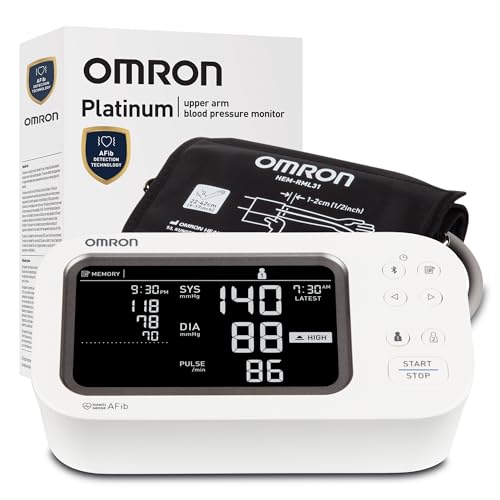
The Platinum model combines advanced accuracy with dual-user memory and AFib detection. It’s designed for rigorous daily checks and provides a broad data history for two users. Features like the High Morning Average Indicator help contextualize readings with cardiovascular risk timing. It’s best for those who need robust data and AFib screening alongside convenience.
Who it’s best for: users who want extensive history tracking, clinician-like data insights, and AFib detection. Better for long-term monitoring; may be more than what a casual user needs. Caution: Higher price point and more features than are necessary for some users.
AQESO Blood Pressure Monitor

AQESO offers a value-focused option with three cuffs to accommodate a wide range of arm sizes (S, M/L, XL). Its large backlit LCD and one-touch operation support quick, easy readings. The package emphasizes clear WHO classification bars for quick health interpretation, making it a practical choice for broader family use.
Who it’s best for: buyers needing a versatile set of cuffs and straightforward operation. Better for households with varied arm sizes or for those who want clear health interpretation at a good price. Caution: The data memory may be more limited compared to premium models; verify memory needs upfront.
Buying Guide: Key Considerations for Arm Blood Pressure Monitors
- Accuracy features: Look for devices with validated accuracy, irregular heartbeat detection, and clear indication of readings. Devices with AFib detection can flag potential issues for further medical review.
- Cuff sizing and fit: Ensure the cuff fits your arm size. Some models include multiple cuff options or wide ranges to accommodate standard to large adult arms.
- Memory and sharing: Decide how many readings you need stored on the device and whether you want to sync with a phone app for long-term tracking and multi-user support.
- Ease of use: One-button operation, large display, and audible readings can be important if you read easily or prefer minimal steps to measure.
- Connectivity: Bluetooth or app integration can help with trend analysis, sharing with a clinician, and cross-device data access. Consider device compatibility with your phone’s OS and version.
- Alerts and indicators: Hypertension indicator, morning average, or abnormal reading flags provide quick context about potential health concerns.
- Power options: Battery or USB power options matter if you travel or use the monitor frequently away from power outlets.
FAQ
- Do all arm blood pressure monitors require calibration? Most modern home monitors are designed to be pre-calibrated and ready to use out of the box. Check product details for any calibration notes.
- Is Bluetooth connectivity necessary for everyday use? Not necessary for all buyers. Bluetooth is helpful for trend tracking and app-based history but many users prefer standalone devices with on-device memory.
- What cuff size do I need? Measure your arm circumference and choose a cuff that covers that range. Some models include multiple cuffs; others require separate purchases.
- What is irregular heartbeat detection? This feature screens for rhythm abnormalities during blood pressure readings and can prompt medical follow-up if irregularities persist.
- Can multiple users share one monitor? Some models support two or more users with separate memory. Check the product’s memory capacity and user profiles to confirm.
- Are there monitors with AFib detection? Yes, certain models offer AFib detection as part of their advanced features. These are particularly helpful for users concerned about rhythm-related risks.