Looking for an automatic blood pressure monitor that’s accurate, easy to use, and suitable for daily home checks? This guide highlights five top options that fit a range of needs—from simple one-button operation for seniors to advanced devices with memory and Bluetooth tracking. Each pick is explained with who it’s best for, why it stands out, and any small caveats to consider. Readers will find practical, comparison-friendly details to help choose the right monitor for personal health monitoring, caregivers, or family use.
The following summary table provides a quick comparison of key points for the highlighted products. Use it to skim differences before diving into the full sections.
| Product | Best For | Notable Feature | Potential Limitation |
|---|---|---|---|
| iHealth Track Smart Upper Arm Monitor | Tech-savvy users tracking via app | Bluetooth to iOS/Android, large backlit display | Requires Bluetooth for most features |
| Oklar Blood Pressure Monitor Upper Arm | Family use with shared device | Stores up to 240 readings total | Older LED display but readable |
| OMRON Iron Blood Pressure Monitor | Reliable clinician-grade data | Advanced accuracy with irregular heartbeat detection | Higher price range |
| Sinocare Blood Pressure Monitor | Budget-friendly with strong basics | Dual-user, large display, simple operation | Depends on battery power or USB-C charging |
| YONLO Blood Pressure Monitor | Clear color-coded results | Dual cuffs, large LED display | Some users report learning curve with memory |
iHealth Track Smart Upper Arm Monitor
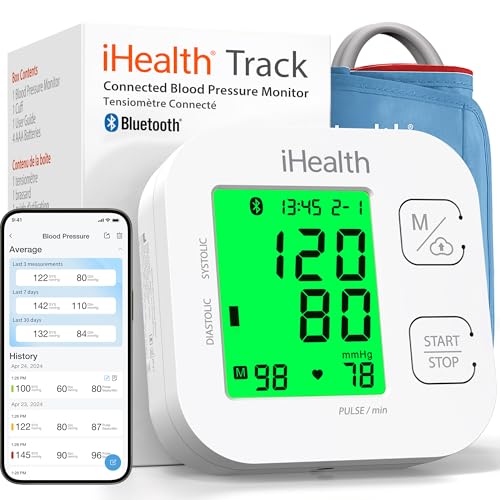
Best for tech-forward users who want app-based tracking. This monitor features clinically accurate readings with two-button operation and a large multi-color backlit display. It stores up to 99 readings on the device and unlimited readings on a connected smartphone via the iHealth app (iOS 12+; Android 9+). The device uses Bluetooth 4.0 and up, pairing with iOS and Android devices for history, trends, and easy sharing with clinicians.
Who it’s best for: Individuals who value seamless smartphone integration and trend tracking over time. The wide-range cuff supports standard to large adult arms, making it suitable for many users without extra purchases.
Why selected: Combines simple operation with robust data access and long-term tracking, useful for daily monitoring and remote consultations. The color-coded display helps interpret results quickly.
Caution: Bluetooth-dependent features require a compatible mobile device and may be less functional in areas with poor connectivity. Calibration is not required, but ensure the cuff is fitted correctly for accurate readings.
Oklar Blood Pressure Monitor Upper Arm
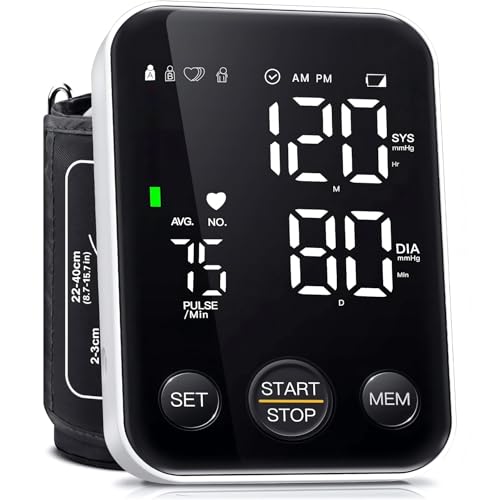
Best for households needing a straightforward, budget-friendly option with substantial memory. This device features a one-button design for quick measurements and a large LED display for easy reading. It stores up to 240 readings across two users, enabling family-wide tracking without multiple devices.
Who it’s best for: Caregivers or families who want a simple, reliable monitor for shared use and basic data without subscription requirements.
Why selected: The high reading capacity per device makes it practical for long-term tracking and spotting trends across users. The backlit display supports reading in dim lighting.
Caution: LED display, while bright, may be less crisp in bright daylight users; also, the device relies on battery power, so stock up on batteries or ensure proper charging capability if applicable.
OMRON Iron Blood Pressure Monitor

Best for accuracy-focused users who want clinician-grade reliability. The OMRON Iron Upper Arm Blood Pressure Monitor emphasizes Advanced Accuracy Technology and Irregular Heart Beat Detection, helping users and clinicians assess heart health over time. One-touch operation delivers quick readings, supporting routine monitoring with confidence.
Who it’s best for: Individuals who require dependable measurements and may need heart rhythm alerts as part of their monitoring plan. Helpful for those seeking consistent daily checks or sharing results with healthcare providers.
Why selected: The Irregular Heart Beat Detection adds a health-tracking dimension beyond systolic/diastolic values, aiding early detection of potential issues. It’s widely regarded for consistent performance in many clinical contexts.
Caution: Typically comes at a higher price point. Ensure the device’s cuff size matches the user’s arm circumference for accurate readings.
Sinocare Blood Pressure Monitor

Best for budget-conscious buyers who still want reliable home monitoring. Sinocare offers a straightforward one-button operation and a large display for clear readings. It is a dual-user monitor that supports two profiles and provides clinically comparable results with easy-to-read displays.
Who it’s best for: Individuals or families seeking a cost-effective device that still delivers dependable measurements without extra bells and whistles. This is suitable for basic daily checks and long-term tracking via memory.
Why selected: The combination of a large display, simple use, and dual-user capability provides solid value. It’s a practical entry point for new users learning to monitor blood pressure at home.
Caution: Battery-powered operation means you’ll need to manage power sources; consider USB-C charging options if available in your set or spares for ongoing use.
YONLO Blood Pressure Monitor

Best for users who want clear visual results with color-coded indicators. The YONLO monitor includes dual cuffs (9–17 inches and 13–21 inches) with a large LED backlit display and a memory for up to 3×199 readings across users. The color coding makes interpretation quick and intuitive, especially for home monitoring across multiple family members.
Who it’s best for: Families needing a monitor that fits varied arm sizes with straightforward interpretation of results. Easy-to-understand visuals help non-experts assess whether readings fall within normal ranges.
Why selected: The dual cuff approach and large, color-coded display provide practical usability, especially for users who measure themselves multiple times daily for trends.
Caution: Memory readouts can be overwhelming if not organized; consider pairing with a simple table or app to track trends over time if you require deeper analysis.
Buying Guide
- Arm fit and cuff size: Choose a monitor with cuffs that fit your arm circumference. Improper cuff size affects accuracy. Many units include adjustable cuffs; some offer dual-size options.
- Display readability: A large, high-contrast display helps users read results quickly, especially in dim lighting or for those with vision challenges.
- Memory and data tracking: Decide whether you need device-only memory or cloud/app-based history. App syncing is useful for trend analysis and sharing data with clinicians.
- Accuracy features: Look for technologies like irregular heartbeat detection, averaging of multiple readings, and clinically validated claims from reputable brands.
- Power and portability: Battery-powered devices are convenient for travel; consider models with rechargeable options and USB charging where available.
- Ease of use: One-button operation and simple interfaces benefit first-time users and older adults. Consider voice features if accessibility is important.
- Two-user or multi-user support: Household monitoring benefits from devices offering multiple profiles and shared storage without data mixing.
- Connectivity: Bluetooth or Wi-Fi can enhance data management but may require a companion app and a compatible phone or tablet.
FAQ
- What is an automatic blood pressure monitor? It automatically inflates the cuff, takes measurements, and displays results without manual pumping.
- Do these devices require calibration? Most home monitors are designed to be ready out of the box with no user calibration needed, though cuff size and placement affect accuracy.
- Is a larger cuff always better? A cuff that fits your arm is essential for accurate readings. Too small or too large cuffs can skew results.
- Should I use memory on the device or an app? Device memory is quick for spotting recent changes; apps are better for long-term trends and sharing data with clinicians.
- How often should I measure my blood pressure? Follow your clinician’s guidance; many adults measure once daily or a few times per week to monitor trends.
- Are wrist monitors less accurate than upper-arm models? Generally, upper-arm cuffs offer more consistent results; wrist monitors can be convenient but may require proper positioning for accuracy.