Finding a reliable automatic pill dispenser can help everyone manage medications safely and independently. The following selections are designed for Alzheimer’s care and senior living, combining clear displays, easy setup, multiple alarms, and caregiver monitoring. Each option offers features that support adherence, reduce missed doses, and enhance safety for patients and families alike.
| Product | Brand | Key Benefit |
|---|---|---|
| SenyerKare 28-Day Automatic Pill Dispenser | Generic | High capacity with 28 slots and large LCD display |
| Adamson TimelyMed Smart Pill Dispenser | Adamson | Remote monitoring via app and lock security |
| Colorwing 2025 Smart Pill Dispenser | COLORWING | Arthritis-friendly access with dual lock and Bluetooth |
| JULOS 28-Day Bluetooth Dispenser | JULOS | Smartphone control and visual cues with LED halo |
| Live Fine 28-Day Dispenser (Upgraded LCD) | Live Fine | Bright LCD, 28-day capacity, multiple dosage rings |
SenyerKare 28-Day Dispenser Overview
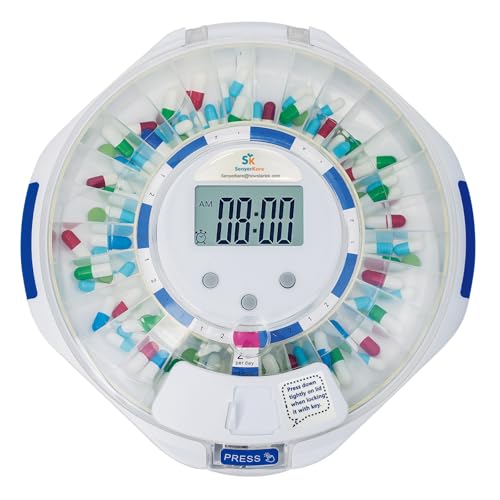
The SenyerKare 28-Day Automatic Pill Dispenser is designed for independent living or assisted settings, with a four-week supply capacity and audio-visual alerts. Its detachable carousel eases loading prescription, vitamins, and supplements, while a large, ultra-bright LCD display helps users and caregivers confirm current time, schedule, and expiration alerts at a glance. The device supports 1 to 6 daily alerts and uses a transparent lid for clear pill visibility, reducing the chance of missed doses. Interchangeable dosage rings and multiple reminder templates tailor the system to individual regimens, supporting accuracy and safety in daily medication management.
Adamson TimelyMed Smart Pill Dispenser

The TimelyMed system emphasizes remote care, pairing a 28-day automatic dispenser with a free app that lets caregivers monitor dosing, verify pill intake, and receive alerts from anywhere. It includes a secure lock with two keys for safety and a nine-dosage-ring setup to cover 28 days. The combination of audio/visual reminders and remote visibility helps maintain adherence, reduce caregiver anxiety, and ensure timely medication administration for elderly users, especially those with cognitive challenges.
Colorwing 2025 Smart Dispenser

The Colorwing 2025 model focuses on arthritis-friendly use with palm-activated, one-touch access and a patented press-release opening. Its dual-lock system combines a fingerprint scanner with a physical backup key, helping prevent impulsive access and accidental overdoses. Custom voice reminders and selectable alert tones support adherence, while Bluetooth connectivity enables convenient syncing and monitoring. This design prioritizes safety, independence, and clear daily routine reinforcement for seniors and dementia patients.
JULOS 28-Day Bluetooth Dispenser

JULOS offers a smartphone-driven experience with an easy-to-read LCD and up to nine alarms per day. The SmartLife app provides dosage management, stock checks, and adherence tracking, while a 360-degree LED halo provides enduring visibility during nighttime. The design emphasizes dementia-friendly usability, ensuring users receive timely prompts without disrupting sleep, and it includes lifetime access to premium features with no ongoing subscriptions.
Live Fine Upgraded LCD Dispenser

The Live Fine upgraded LCD model highlights an extra-bright screen and a 28-day capacity with 9 interchangeable dosage rings. Its transparent lid provides clear pill visibility, and the system accommodates 1x to 9x daily alerts to match diverse medication routines. Designed for family caregivers, visiting nurses, and home care agencies, it balances intuitive operation with robust dose scheduling to help prevent missed or double doses while enabling straightforward monitoring of upcoming doses.
Buying Guide: Key Factors In Selecting An Automatic Pill Dispenser
- Capacity and dosage flexibility: Consider whether the device offers enough slots (28 is common) and whether it supports multiple dosage rings or adjustable portions to cover a full month without frequent refills.
- Alert types and visibility: Look for clear audio and visual cues. Large LCDs, LED halos, and bright displays help users with vision or hearing challenges.
- Access control and safety: Dual locks or fingerprint authorization can prevent unauthorized access, especially for dementia patients. A physical back-up key adds a fail-safe option.
- Caregiver connectivity: Apps that enable remote monitoring, dosage confirmations, and real-time alerts enhance oversight and reduce caregiver strain. Check for platform compatibility (iOS/Android) and whether there are any ongoing subscription fees.
- Ease of use: A simple setup process, intuitive controls, and large buttons or touchpoints support independence for seniors. Detachable carousels and quick-fill features reduce daily friction.
- Durability and maintenance: Look for sturdy housings, easy-clean lids, and reliable battery life or power options. Transparent lids aid visual checks between doses.
- Sleep and daily routine considerations: For dementia care, devices with calm, non-disruptive alerts and 24-hour schedules help maintain routines without startling users at night.
- Data privacy and security: If using a connected app, evaluate how patient data is stored and shared, plus whether there are secure login requirements and local-only storage options.
Comparison At A Glance
- Best for remote caregiver monitoring: Adamson TimelyMed Smart Pill Dispenser and TimelyMed variants emphasize app-based oversight and security.
- Best for high capacity: SenyerKare offers 28 slots and a transparent lid for easy monitoring, with multiple reminder templates.
- Best for ease of access: Colorwing’s arthritis-friendly design with palm-activated opening and dual lock enhances independent use.
- Best for smartphone integration: JULOS and Adamson variants provide app control and real-time dose management, suitable for tech-savvy users and families.
- Best overall display and visibility: Live Fine models emphasize large LCD readouts and extended alarm customization for clarity and adherence.
These devices vary in how they balance independence with safety, caregiver oversight, and ease of use. When choosing, consider the patient’s cognitive needs, manual dexterity, and whether remote monitoring helps the care team stay informed without being intrusive. Evaluate the ease of setup, the robustness of alerts, and the reliability of locks or security features to ensure the system supports consistent medication routines without causing frustration.