Finding the right back pillow for scoliosis can help reduce nighttime discomfort and support proper spine alignment. This guide highlights five lumbar and back-support pillows designed for side and back sleepers, with attention to the lower back and overall posture. Suitable buyers include those with scoliosis seeking nightly relief, people with chronic back pain, and anyone needing improved spinal alignment during sleep or desk work.
Overview table of recommended products:
| Product | Best For | Why It Stands Out |
|---|---|---|
| vamorry Lumbar Pillow | Back sleepers seeking full-bedroom support | High-density memory foam with versatile placement under knees or legs |
| Cozyhealth Lumbar Pillow | Side sleepers needing spinal alignment | Ergonomic semi-circular design to fill gaps along the lumbar curve |
| ComfiLife Lumbar Support Pillow | Multi-position comfort, long-term use | Triangular wedge with memory foam for all-night support |
| Fledano Lumbar Pillow | Memory-foam bed support for back/sid e sleepers | Slow-rebound memory foam that holds shape and supports natural curve |
| CloudBliss Lumbar Support Pillow | Office and multi-seat use | Pear-shaped design with high-density memory foam and adjustable straps |
vamorry Lumbar Pillow for Sleeping

Best for: Sleepers who want comprehensive back support that adapts to different sleep positions. The pillow is designed to support the lower back for side, back, and even stomach sleepers, promoting spinal alignment through the night.
Why selected: It uses premium memory foam to maintain shape and provide consistent support. The pillow’s versatility allows it to support the back or be placed under knees or legs to relieve pressure points. This makes it a solid option for scoliosis-related discomfort at night.
Limitations: Some users may prefer firmer or softer densities; it’s designed for long-lasting shape, but personal comfort varies with body weight and sleep position.
QUTOOL Lumbar Support Pillow for Office Chair

Best for: Office workers or students needing steady lumbar support during long sitting periods. The product emphasizes durable straps that fit many chairs and maintain posture alignment for sustained comfort.
Why selected: It combines high-density memory foam with a contoured shape designed to maintain the spine’s gentle curve. The longer straps help secure the pillow on a variety of chairs, reducing back tightness and improving overall posture for scoliosis-related discomfort while seated.
Limitations: It is primarily a chair accessory; usage for bed sleep is not its primary design, so sleepers seeking bed-specific support may prefer other options.
Cozyhealth 3.15″ Lumbar Pillow

Best for: Side sleepers who need precise lumbar support to maintain proper alignment and reduce lower-back pressure. The semi-circular design helps fill gaps along the spine’s natural curve.
Why selected: Its memory foam provides long-lasting support, with breathable materials to maintain comfort across the night. It’s noted for keeping the lumbar area supported while relaxing legs and hips, an important factor for scoliosis comfort in bed.
Limitations: The pillow’s shape may not suit every bed setup; some users prefer a taller or shorter profile depending on mattress firmness and sleep position.
ComfiLife Lumbar Support Pillow

Best for: Sleepers who want a multi-use pillow that can also support legs or knees. Its wedge shape makes it a practical choice for back and side sleepers seeking targeted relief for lower back, hip, and leg pain.
Why selected: The triangle wedge design supports the spine while distributing pressure to minimize stress on the lower back. It provides a stable foundation for extended rest and can double as a bed rest pillow when reading or lounging.
Limitations: Some users may find the wedge angle not ideal for all bed configurations. It may take time to adjust to the specific contour if you’re used to flatter pillows.
Fledano Lumbar Pillow for Sleeping
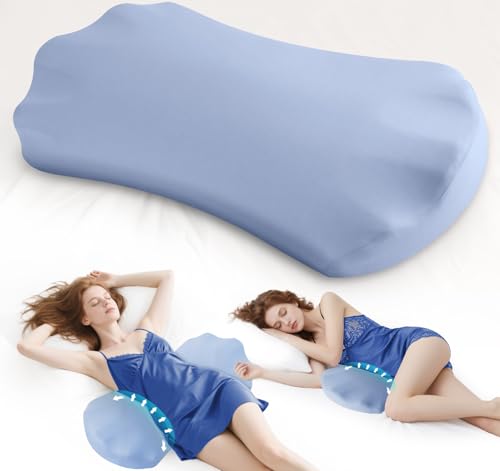
Best for: Sleepers who want a memory foam option that contours to the body and maintains spinal alignment. It’s suitable for side and back sleepers needing steady lower-back support in bed.
Why selected: Made with slow-rebound memory foam, the pillow adapts to shape while maintaining density, helping reduce pressure on the lumbar region. It helps prevent gaps that contribute to scoliosis-related discomfort during sleep.
Limitations: As with many memory foam designs, ventilation and heat retention can vary by user. Consider a breathable cover or cooling solutions if you tend to sleep hot.
CloudBliss Lumbar Support Pillow

Best for: Office chairs, cars, or gaming seats where constant back support is needed. Its adjustable straps and anti-slip bottom keep it in place for people who move often during work or travel.
Why selected: The pear-shaped ergonomic design and high-density memory foam provide targeted lumbar relief. The secure fit helps maintain posture and reduces upper-to-lower back strain for scoliosis management during long sessions.
Limitations: It is primarily a back-support pillow for seating; bed sleep comfort depends on your mattress and preferred position.
Buying Guide: How to Choose a Back Pillow For Scoliosis
What level of support do you need? Consider density and contouring. Higher-density memory foam holds shape longer and provides stronger continuous support for the lower back, which is crucial for scoliosis-related discomfort.
Where will you use it most? If mostly in bed, prioritize bed-specific lumbar pillows with under-knee or leg-elevation capabilities. For desk or car use, a pillow with secure straps and a stable shape is preferable.
How adjustable should it be? Straps that fit various chairs and anti-slip bottoms help prevent shifting, ensuring consistent alignment during long work or travel sessions.
What is your sleep position? Side sleepers often benefit from pillows that fill the gap between the waist and mattress, while back sleepers may prefer a pillow that follows the natural curve of the lower back.
Maintenance matters. Look for breathable covers and washable materials to maintain hygiene and comfort, especially if you use the pillow nightly.
Durability and longevity. A pillow that resists flattening and retains shape over months of use is essential for ongoing scoliosis relief. Check for memory foam that resumes shape after compression and covers that endure washing cycles.
Frequently Asked Questions
How do lumbar pillows help with scoliosis symptoms?
Lumbar pillows support the natural curve of the spine, reduce pressure on the lower back, and improve alignment during sleep or sitting, which can alleviate pain and stiffness associated with scoliosis.
Can I use these pillows in bed and on a chair?
Yes. Many lumbar pillows are versatile enough for both settings, but availability of attachment straps or specific shapes may make some better suited for either bed or chair use.
Is memory foam always best for scoliosis relief?
Memory foam is common because it conforms to your body and maintains support. However, personal comfort varies; some sleepers prefer balanced or firmer foams, so consider density and feel when choosing.
How long should I test a pillow before deciding?
Give it at least a few weeks to determine if it helps your alignment and reduces pain. If discomfort persists or worsens, reassess the pillow choice or consult a medical professional.