If you’re seeking targeted back relief for scoliosis and related spine discomfort, a back stretcher can offer decompression, support, and gentle acupressure. This guide highlights five reliable options, explaining who each is best for and why. It’s ideal for adults managing chronic back pain, athletes seeking posture correction, or anyone needing at-home posture therapy. The table below summarizes key details to compare at a glance.
| Product | Main Benefit | Best For | Notes |
|---|---|---|---|
| MINOLL Back Stretcher (B0B63DMGFK) | Acupressure massage with 102 contact points | Low back pain relief and scoliosis support | Ergonomic, supports up to 400 lbs |
| ChiFit Multi-Level Back Stretcher (B06ZZWZL2F) | Multi-level adjustment with 92 acupressure points | Customizable stretch for pain relief | Three gear levels for varying intensity |
| Everlasting Comfort Lumbar Board (B09C7JP4F4) | 88 acupressure nodes, adjustable angles | Posture correction and long-term relief | Supports up to 350 lbs |
| Docemel Back Stretcher (B0H4V2B2HB) | Inflatable airbag for arch height control | Sciatica and scoliosis relief | Inflation-based adjustment |
| RESTCLOUD Back Stretcher (B091MZDK5T) | 5-minute daily routine with 8 massage nodes | Quick relief and gentle stretching | Shaped to complement spinal curvature |
Note: Each product targets similar goals (decompression, posture support, and back massage) but uses different mechanisms such as acupressure nodes, gear-based stiffness, or inflatable adjustments. Consider your daily routine, space, and comfort level when selecting a model.
MINOLL Back Stretcher With Acupressure Points

The MINOLL back stretcher uses an ergonomic arch and 102 contact points to stimulate back acupressure. It supports the lumbar region and is designed to aid spinal realignment and posture correction. Best for people seeking a robust, stationary device for home use and gentle daily stretching. Caution: individuals with recent back surgery or acute injuries should consult a clinician before use. This model supports up to 400 pounds, promoting durable daily use.
ChiFit Multi-Level Back Stretcher

ChiFit offers three gear levels and 92 acupressure points to stimulate the back and reduce muscle tension. It’s well-suited for users who want a quick change in stretch intensity and immediate relief after long days of sitting. Best for lower and mid-back pain, with a design that emphasizes portability and adjustable traction. Choose this if you value strong, customizable tension without inflating components. Limitation: higher settings may feel intense for new users.
Everlasting Comfort Lumbar Board
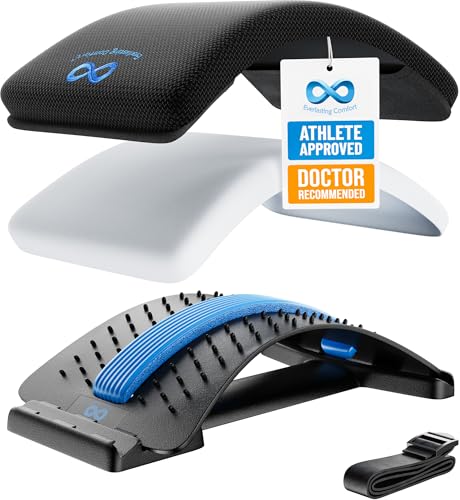
Everlasting Comfort focuses on a natural spinal curve with 88 acupressure nodes and three angle settings. It’s a solid option for those prioritizing posture correction and long-term flexibility improvement. Best for users who want a sturdy, fixed-board experience at home or in an office. Limitation: the maximum weight support is solid but may feel less flexible for very tall users who need more pronounced arching.
Docemel Back Stretcher With Inflatable Arch

Docemel distinguishes itself with a customizable inflatable airbag system. You can inflate to raise the arch height and increase stretch intensity, then deflate to ease. This makes it well-suited for users who need adjustable support in response to daily discomfort. Best for scoliosis and sciatica relief when gradual, progressive traction is preferred. Caveat: inflatable systems may require periodic maintenance to prevent air leaks over time.
RESTCLOUD Back Stretcher For Quick Relief

RESTCLOUD emphasizes a five-minute daily routine with an S-curve design and eight massage nodes. It supports passive stretching aligned with the spine’s natural curvature. Best for users seeking a light, fast-start option that fits into a busy schedule. Limitation: it offers a gentler stretch, which may be less effective for severe scoliosis without extended use or combined therapies.
Buying Guide
What to consider before buying a back stretcher
- Purpose and severity: Identify whether you need daily posture support, quick relief after activity, or targeted scoliosis management.
- Adjustment and customization: Gear-based vs inflatable adjustments affect how precisely you can tailor the stretch.
- Acupressure vs pure traction: Nodes provide massaging benefits; consider if you want more pressure points or a softer experience.
- Weight capacity and materials: Check max load and durability for long-term use; look for sturdy frames and skin-friendly cushioning.
- Portability: For travel or desk use, lighter models with carrying options may be preferable.
- Usage guidelines: Start with short sessions and gradually increase time to avoid overstretching.
Choosing by scenario
- Best for beginners: RESTCLOUD or ChiFit due to gentle starts and simple use.
- Best for comprehensive acupressure: MINOLL or Everlasting Comfort with numerous nodes.
- Best for adjustable arch intensity: Docemel (inflatable) or MINOLL models with multiple levels.
- Best for quick daily relief: RESTCLOUD and OTC office-friendly options; both fit small spaces.
Maintenance and safety tips
- Follow the manufacturer’s instructions for assembly and use to avoid overstretching.
- Inspect for wear, especially around joints, straps, and inflatable components.
- Consult a healthcare professional if you have a known spinal condition or recent surgery.
Frequently Asked Questions
- Do back stretchers help scoliosis?
They can support posture and provide decompression, but they are not a substitute for medical treatment. Use as part of a broader plan advised by a clinician.
- How long should I use a back stretcher daily?
Typical guidance is short sessions (5–10 minutes) to start, then adjust based on comfort and clinician recommendations.
- Can I travel with a back stretcher?
Yes, many models are compact and portable, though inflatable or multi-gear units may be bulkier.
- What is acupressure on a back stretcher designed to do?
Acupressure points aim to stimulate muscle relief and improve blood flow, potentially aiding relaxation and mobility.
- Should I choose multi-level or inflatable models?
Multi-level gear provides fixed angles; inflatable options offer adjustable arch height. Choose based on your comfort and flexibility needs.
- Is a back stretcher safe after spinal surgery?
Medical guidance is essential. In many cases, doctors recommend avoiding aggressive traction until cleared.