People who travel with temperature-sensitive medications need reliable, portable cooling. This guide highlights five battery-operated medicine coolers that support safe storage on the go. Best for travelers, frequent flyers, caregivers, and patients who require insulin or other cold-sensitive drugs, these options mix battery power, USB charging, and precise temperature control. Below, compare key features, ideal use cases, and practical cautions to help you choose.
| Product | Power & Cooling | Temperature Range | Best For |
|---|---|---|---|
| PURZOT Z200 Electric Insulin Cooler | 10,000 mAh battery; USB-C continuous power; Biogel ice pack | 36°F to 68°F (2°C – 20°C) | Travelers needing flexible modes and dry-cold backup |
| ELDERACARE TSA Approved Insulin Cooler | 20,000 mAh battery; 8+ hours active cooling; USB charger | 36°F to 68°F (2°C – 20°C) | Air travelers and long trips requiring longer runtime |
| AUMETE Rechargeable Insulin Cooler | 20000 mAh detachable battery; USB-C charging | Cooling: below room temp; Heating for above room temp | Seasonal travel needing dual-mode temperature control |
| ZLPTEAM Portable Insulin Cooler (Black) | USB-powered cooling; continuous power required | 35°F to 46°F (1.7°C – 7.8°C) | Compact daily use with USB on-the-go charging |
| ZKSCool Portable Insulin Cooler | Rechargeable batteries; LCD display | 36°F to 68°F (2°C – 20°C) | Longer trips with visible temperature monitoring |
Note: All products listed comply with basic portable cooling needs and data provided by seller descriptions. This table summarizes capabilities and typical use-cases to help you compare at a glance.
PURZOT Electric Insulin Cooler Travel Case

The PURZOT Z200 provides three cooling options: a built-in 10,000 mAh battery for up to about 3 hours of cordless operation, continuous USB-C powered cooling, or a Biogel ice pack for backup during power loss. This makes it suitable for air, rail, or car travel. Best for travelers who need a flexible, travel-ready solution with a digital temperature display for real-time monitoring. Caution: battery capacity may limit runtime on long trips without access to USB power or a spare power source.
ZLPTEAM Portable Insulin Cooler (Black)

This model uses USB-powered cooling with no built-in battery requirement, making it ideal for daily commuting or short trips where access to USB power is reliable. Best for users who want a lightweight, travel-friendly cooler that relies on external power sources. Caution: Always ensure a powered source is available when you need cooling the most.
ELDERACARE TSA Approved Insulin Cooler
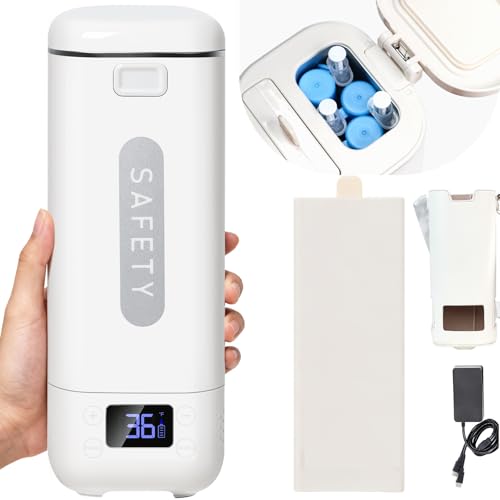
Equipped with a 20,000 mAh battery, this cooler supports 8+ hours of active cooling plus an extra hour of passive cooling after power-off. It includes a carry case and charger, and features a temperature display for precise control. Best for travelers who need longer runtimes and a premium transport case. Caution: Some travelers report the need to verify fit for certain medication vials due to interior dimensions.
AUMETE Rechargeable Insulin Cooler Travel Case
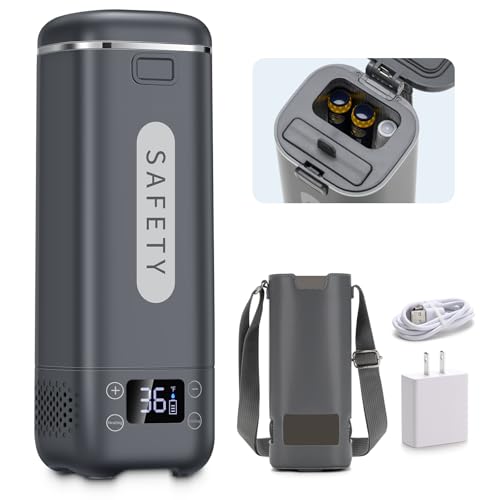
The AUMETE cooler features a detachable 20,000 mAh battery and USB-C charging. It offers dual-mode operation: cooling for summer and heating for winter. Best for travelers who require flexibility across seasons and environments. Caution: Use cooling for temperatures below room temperature; heating is for above room temperature—misuse could affect medication stability.
ZLPTEAM Portable Insulin Cooler (White)

This white model uses USB-powered cooling for continuous operation, ideal for users who favor USB-only solutions and want a compact, travel-ready design. Best for light-luggage travelers who rely on USB power sources. Caution: Requires ongoing power to maintain cooling; without USB power, function is limited.
ZKSCool Portable Insulin Cooler

Features a precise LCD display with real-time temperature and a 36°F–68°F range. The internal capacity supports multiple vials or pens. Best for travelers who want clear live temperature readings and a robust cooling runtime (up to 8–11 hours on certain configurations). Caution: Full runtime depends on ambient conditions and battery health.
Viowey Insulin Pen Cooler

Viowey combines Biogel cooling with USB-powered cooling. It includes a 5W USB cable for flexible power sources. Best for travelers who need dual cooling modes and TSA-compliance. Caution: Biogel modes cannot run simultaneously with USB cooling, so plan power sources accordingly.
Buying Guide: Key Considerations For Medication Cooling On The Go
What temperature range is necessary for your meds?
Most insulin and temperature-sensitive medications are stored between roughly 35°F and 46°F (2°C–8°C). Choose a cooler with an adjustable range that comfortably covers this window and provides consistent cooling even in hot environments.
How will you power the cooler?
Popular options include built-in rechargeable batteries, USB-C powered operation, and replaceable or detachable batteries. Consider how often you travel, access to USB ports, and whether continuous power is available during your trip.
What is the payload and interior fit?
Assess interior dimensions and capacity to ensure it can hold your insulin pens, vials, or small medication bottles. Larger capacities are beneficial for longer trips or households with multiple medications.
Portability and durability matters
Look for compact, lightweight designs with protective cases. TSA-approved or airline-friendly models simplify security checks and in-flight transport.
Reliability and safety features
Digital temperature displays, anti-freeze protections, and real-time monitoring help prevent accidental freezing or overheating. Some models offer dual modes (cooling and heating) for seasonal variations.
Maintenance and usability
Consider ease of cleaning, availability of spare parts, and whether the device requires specific accessories (ice packs, car adapters). The ability to monitor temperature remotely or through a simple display reduces guesswork.
Frequently Asked Questions
- What is the recommended storage temperature for most insulin products?
- Can these coolers be used for vaccines or other biologics?
- Do all models work without a power source?
- How long do batteries typically last on a full charge?
- Are these travel coolers compliant with airline regulations?
- What features indicate a good long-trip cooling solution?
Answers vary by model, but generally, insulin is best stored around 36°F to 46°F. A cooler with a real-time temperature display helps verify conditions during travel. Battery life and power options determine suitability for flights and road trips. For vaccines or other biologics, always consult medical guidelines and airline rules, and choose devices with validated cooling ranges and sufficient runtime.
Choosing the right battery-operated cooler involves balancing power, temperature stability, capacity, and portability. The options in this guide cover a range of travel needs—from compact USB-powered units to high-capacity battery solutions—so you can pick the best fit for your medications and itinerary.