Answering the common buyer intent for aging-in-place safety, this guide highlights five reliable bed sensor systems designed to prevent falls and alert caregivers quickly. Best for families seeking discreet, non-intrusive monitoring and easy setup, these options cover weight-sensing pads, wireless alerts, and multi-sensor networks. Each product is evaluated for who it suits best, its setup simplicity, and potential limitations to consider before purchase.
| Product | Best For | Key Benefit |
|---|---|---|
| Smart Caregiver Bed Alarm for Elderly Adults | Caregivers wanting in-room alerts | Instant bed pressure alarm with optional wireless alerts |
| Lunderg Wireless Early Alert Bed Alarm System | Privacy-conscious families | Wireless alerts to a caregiver pager, no in-room alarm |
| Upgrade Professional Bed Sensor Alarm (Nesthao) | Wide-area monitoring | Long-range wireless motion sensing with floor/door placement |
| Smart Caregiver Bed Exit Alarm with Wireless Pager | Integrated caregiver notification | Pager with vibration and sound alerts, expandable sensors |
| Lunderg Wireless Early Alert Bed & Chair Alarm Set | Full-room fall prevention | Bed and chair sensors with wireless pager |
Smart Caregiver Bed Alarm for Elderly Adults

The Smart Caregiver bed alarm uses a 10×30 inch weight-sensing bed pad to detect when pressure is removed and immediately alerts caregivers. This option is best for caregivers who want audible in-room alerts and the option to add a wireless alert kit later for direct caregiver notifications. The pad sits beneath the patient and connects to a monitor for easy placement on a bed, wall, or nearby surface.
Who it’s best for: families that prefer an audible bedside alarm with optional wireless forwarding. It suits caregivers who want immediate local alerts and straightforward setup without complex electronics.
Limitations to consider: In-room alarms can startle some users; the optional wireless kit is sold separately and may be needed for silent alerts.
Lunderg Wireless Early Alert Bed Alarm System

This system emphasizes privacy and dignity by sending alerts to a caregiver pager rather than alarming the patient in the room. Its patented PreRise early alert targets hip-level pressure, aiming to give caregivers notice before getting out of bed. It requires no Wi-Fi or apps, and the 10×33 inch pad is designed for durability and easy cleaning.
Who it’s best for: households prioritizing discreet monitoring and a non-intrusive alert method. It’s a strong fit for active caregivers who want to minimize distress for the person being monitored.
Limitations to consider: The system relies on a dedicated pager, so effectiveness hinges on keeping the pager within range and charged.
Upgrade Professional Bed Sensor Alarm (Nesthao)
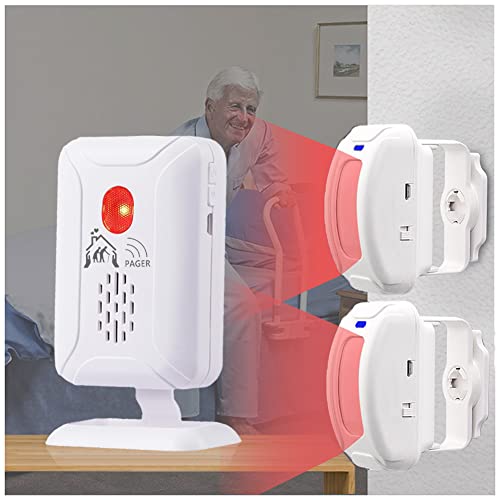
The Nesthao upgrade offers a long-range wireless system with a floor-placement sensor or door monitoring to trigger alerts. It supports multiple power modes (battery or Micro USB), enabling flexible placement without clogging outlets. The system emphasizes easy setup with factory-paired components and self-test indicators.
Who it’s best for: families needing broader room coverage and flexible power options. It’s suitable for spaces where floor placement provides more accurate detection than bed-placed sensors.
Limitations to consider: Setup requires testing sensing range and direction to avoid false alarms in busy rooms.
Smart Caregiver Bed Exit Alarm with Wireless Pager

This system pairs a 10×30 inch bed pad with wireless paging, letting caregivers monitor from a distance. The included pager supports vibrate and sound alerts and can notify across a network of up to six sensors, making it strong for larger homes or multi-room monitoring.
Who it’s best for: caregivers who want a centralized alert hub and the flexibility to monitor multiple sensors. It’s a practical choice for easing nighttime duties without intruding on the patient’s space.
Limitations to consider: Pager reliance means ensuring battery life and signal integrity across the home are maintained.
Lunderg Wireless Early Alert Bed & Chair Alarm Set

This set offers comprehensive coverage with both bed and chair sensors, wired to the same wireless pager. Hip-level bed sensor alerts and a chair sensor pad extend monitoring to seating areas, reducing the risk of wandering or standing transitions. The pads are long-lasting, easy to wipe, and designed for incontinence resistance.
Who it’s best for: households needing broad fall-prevention coverage across sleeping and seating areas. It’s ideal for care plans requiring immediate alerts for multiple exit points.
Limitations to consider: Coordination of multiple sensors requires the included pager management; ensure all pads are connected properly to avoid missed alerts.
Buying Guide
What type of monitoring should I choose?
Decide between in-room alarms, wireless pagers, or multi-sensor networks based on space, noise tolerance, and caregiver routines. In-room alarms are simple, while wireless pagers reduce stress for the patient. Multi-sensor setups offer broader coverage but require more management.
How important is ease of setup?
Look for systems with plug-and-play components, factory pairing, and clear self-test indicators. Easy setup reduces installation errors and helps caregivers deploy the system quickly.
What about room layout and placement?
Floor vs. bed placement matters. Floor sensors under the bed can detect feet reaching the floor, while hip-level bed pads may reduce false alarms from shifting. Consider door sensors for additional exit monitoring if space allows.
What are the alert methods and their impact?
Audible bedside alarms are immediate but may startle some patients. Wireless pagers provide caregiver notifications without disturbing the patient’s sleep. Choose the method that aligns with the patient’s comfort and caregiver availability.
Are there any privacy or dignity considerations?
Systems that use wireless pagers or discreet bed pads can minimize perceived restraints. For dementia or agitation concerns, prefer non-intrusive alerting methods that respect the patient’s dignity while maintaining safety.
How many sensors should I plan for?
Start with one bed sensor and one chair sensor if possible, then scale to multiple areas (beds, chairs, doorways) as needed. A scalable network helps cover key exit points without overcomplicating management.
FAQ
- What is the primary purpose of a bed sensor for the elderly? To detect when a resident leaves or is about to leave the bed and alert caregivers to prevent falls or wandering.
- Do these devices require Wi-Fi? Some systems operate without Wi-Fi, using a dedicated pager or handheld monitor. Others may integrate with home networks for centralized monitoring.
- Can bed sensors trigger false alarms? Yes, depending on placement and activity. Products with hip-level or floor-placement sensors aim to reduce false alerts.
- Are wireless pagers reliable for night use? Yes, when charged and within range. Look for devices with long battery life and clear alert options (vibrate, sound).
- Is multiple-sensor monitoring worth it? For larger homes or dementia care, multiple sensors provide broader protection but require management to ensure all alerts reach caregivers.
- What maintenance is required? Regularly inspect pads for wear, replace batteries as needed, and test the system to confirm alerts are functioning properly.