If you’re looking for benzoyl peroxide for dogs, this guide helps you pick safe and effective shampoos and topical products. It targets conditions like folliculitis, seborrhea, dandruff, and itchy skin, and it explains who each product is best for. The top picks below include options for dogs, cats, and even horses when appropriate. A quick summary table after the introduction shows the most relevant choices for different skin concerns and coat types.
| Product | Best For | Key Benefit |
|---|---|---|
| Davis Manufacturing Benzoyl Peroxide Creme Rinse | Dogs with demodectic mange or dermatitis | 2.5% benzoyl peroxide with conditioning agents |
| Pet MD Benzoyl Peroxide Shampoo (12oz) | Dogs or cats with oily, flaky skin | Deep cleansing with benzoyl peroxide and sulfur |
| Pet MD Benzoyl Peroxide Shampoo (16oz) | Pets needing stronger cleansing | 3% benzoyl peroxide for keratolytic action |
| Vetoquinol BPO-3 Shampoo | Oily coats with red, flaky skin | 3% benzoyl peroxide with soothing additives |
| Curaseb Benzoyl Peroxide Shampoo | Folliculitis and dandruff | Veterinary-strength formulation |
Davis Manufacturing Benzoyl Peroxide Creme Rinse

This product uses 2.5% benzoyl peroxide to target demodectic mange, seborrhea, and dermatitis. It also provides relief for conditions tied to folliculitis, crusty skin, and canine or feline acne. Conditioning agents help hydrate the skin and prevent dryness and irritation. Best for dogs with sensitive or irritated skin prone to crusts or sebaceous buildup, especially after grooming or in dry climates. A potential limitation is sensitivity in pets with very reactive skin; always follow the dosing and rinse instructions to avoid over-drying.
Pet MD Benzoyl Peroxide Shampoo (12oz)
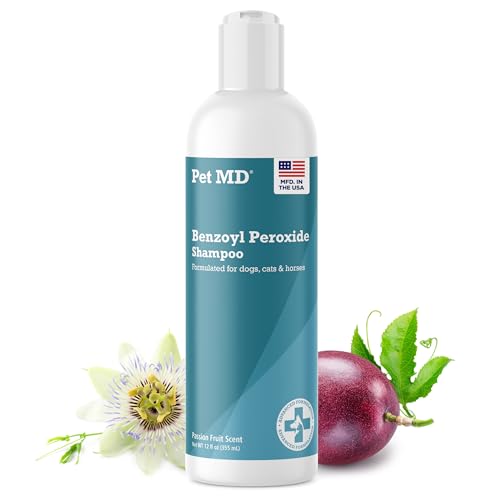
Designed to relieve itchy and flaky skin, this formula combines benzoyl peroxide with sulfur for deep cleansing. It helps remove buildup, excess oils, and impurities while supporting a healthier skin and coat with regular use. The product is suitable for dogs and cats showing signs of seborrhea or oily coats. Best for pets needing a thorough cleanse to reduce oil and follicle blockage. Caution: Benzoyl peroxide can be drying; use as directed and avoid overuse on very sensitive skin.
Pet MD Benzoyl Peroxide Shampoo (16oz)

This 16-ounce variant provides 3% benzoyl peroxide for pets prone to seborrhea or folliculitis. It focuses on flushing follicles and degreasing the coat to reduce buildup and oils. Best for pets that need a stronger cleansing action without harsh rinses. Choose this if you want a higher concentration to address persistent oily skin; avoid if your pet has very sensitive or recently irritated skin without veterinary guidance.
Vetoquinol BPO-3 Shampoo (3%)

Vetoquinol’s BPO-3 Shampoo provides a safe, deep clean for dogs, cats, and horses when used as directed. Its formula combines natural soothing agents, moisturizers, and vitamins to calm irritated skin. It addresses hot patches, oily coats, and flaky skin. Best for pets needing a medicated cleanse with added skin-soothing properties. Limitation: it’s a general-use medicated shampoo, so consult a vet for chronic skin conditions or if your pet has known allergies to any ingredients.
Curaseb Benzoyl Peroxide Shampoo

Curaseb Benzoyl Peroxide Shampoo offers veterinary-strength formulation focused on relieving folliculitis, dandruff, and oily or flaky skin. It helps cleanse and deodorize areas such as face folds, paws, underarms, and groin, leaving a blueberry scent. Best for pets with persistent skin issues where strong cleansing is needed. Caution: strong products can be drying; follow usage instructions and monitor for signs of irritation.
Pet MD Topical Wipes for Cleansing

While not a shampoo, these wipes offer topical cleaning with aloe for cats and dogs. They deodorize and help relieve infections like hot spots and redness between baths. Best for quick between-bath cleansing or for cleaning difficult areas such as face folds and underarms. Not a substitute for a full medicated wash when a deeper cleanse is required.
Truseb Clinically Medicated Benzoyl Peroxide 3%

Truseb Clinically Medicated Benzoyl Peroxide 3% Shampoo is designed for dogs, cats, and horses. It aims to relieve itchy and flaky skin by opening and flushing hair follicles and degreasing the coat. Best for pets with stubborn folliculitis or seborrheic dermatitis requiring a strong medicated cleanse. Limitation: high potency requires careful use as directed to avoid over-drying or irritation.
Buying Guide: Benzoyl Peroxide Shampoos And Cleansing Wipes For Pets
What should you consider before choosing a benzoyl peroxide product for your pet?
- Skin condition: For dandruff, itching, and oily coats, a 2%–3% benzoyl peroxide formula with degreasing action is common. More severe folliculitis may benefit from a higher concentration under veterinary guidance.
- Coat and skin type: Long-coated or sensitive pets may need gentler formulations with conditioning ingredients to reduce dryness.
- Application method: Shampoos offer comprehensive cleansing; wipes are convenient between baths for quick hygiene and odor control.
- Frequency: Follow product guidelines to avoid over-drying; some pets tolerate weekly use, others monthly or as directed by a veterinarian.
- Safety and allergies: Check for any known allergies to benzoyl peroxide or related ingredients. Avoid mixing with other medicated products without veterinary advice.
Frequently Asked Questions
- What conditions is benzoyl peroxide best for in dogs?
It is commonly used for folliculitis, seborrhea, dandruff, oily coats, and acne-like skin issues. - Can I use benzoyl peroxide on cats?
Some products are labeled for both dogs and cats; always follow the product’s label and consult a vet if you have multi-species households. - Will benzoyl peroxide dry out my pet’s skin?
It can be drying; use products with conditioning agents and limit frequency as directed. - Should I rinse out the product completely?
Yes, rinse thoroughly after washing to reduce residue that could irritate sensitive skin. - When should I consult a veterinarian?
If skin issues persist, worsen, involve ulcers, or are accompanied by swelling or fever, seek veterinary advice. - Can benzoyl peroxide be used with other topical treatments?
Use only as directed and consult your veterinarian to avoid interactions with other medications.