Answering your search for reliable body fat percentage machines, these five options cover handheld and scale-based measurements with clear data displays. They’re suitable for fitness newcomers, hobbyists, and athletes who want regular body composition insights. This guide highlights who each device is best for, explains how they measure fat percentage, and notes practical limitations. Below, compare the top picks and see a quick buying table to help you choose.
| Product | Best For | Key Metric Coverage |
|---|---|---|
| Omron HBF-306C | Individuals wanting handheld fat/BMI tracking with multiple profiles | Body fat %, BMI, two modes |
| GE Smart Scale (8-Electrode) | Home users and small groups seeking comprehensive body composition | Weight, fat, BMI, muscle mass, 50 metrics |
| Baseline Hand-held Monitor | Simple, portable fat and BMI readings on the go | Body fat %, BMI, kcal |
| GE 14-Metric Body Fat Scale | Users who want many metrics on a single scale | 14 health metrics including body fat, BMI, muscle, water |
| INEVIFIT EROS | App-savvy households tracking multiple metrics with a smartphone | 13 metrics, app sync, BMI, body fat |
Omron HBF-306C Handheld Body Fat Loss Monitor
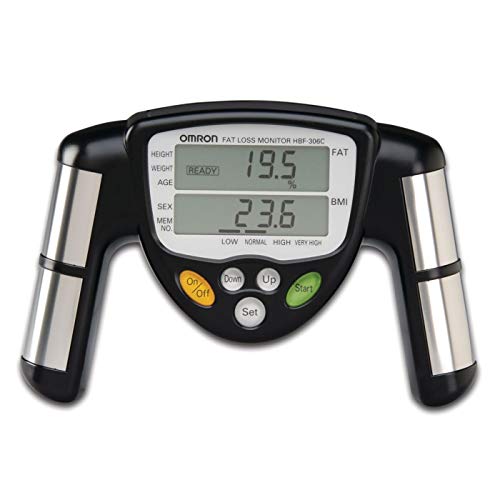
Best for individuals who prefer a portable, handheld device to assess body fat percentage and BMI without standing on a scale. The Omron HBF-306C uses bioelectrical impedance with two modes—standard and athlete—so results can reflect different activity levels. It stores up to nine profiles, enabling family tracking. A practical choice for users who want quick, on-the-spot body composition readings and simple data management. Limitation: handheld measurements can be less consistent for very lean or very muscular users compared with full-body scales.
GE Smart Scale With 8 Electrodes for Precise Body Data

Better for households or small gyms seeking a comprehensive body composition picture. This GE scale uses 8-electrode dual-frequency BIA and segments the body into five sections to deliver more precise data. It shows weight, BMI, body fat, muscle mass, body water, bone mass, and more on a clear display, with app compatibility for extended tracking. Best for: users who want a detailed, multi-metric readout in one station. Limitation: initial setup and app pairing can require a bit of time for new users.
Baseline Hand-held Body Fat Monitor

Choose this for a lightweight, wireless handheld option that delivers quick reads of body fat, BMI, and kcal. It’s simple to use, portable, and battery-powered, making it convenient for on-the-go tracking. The data can help plan targeted training and dietary adjustments in consultation with healthcare professionals. Caution: being a handheld device, readings may vary with grip strength and body positioning, so regular checks against a scale can help maintain consistency.
GE Scale for Body Weight and Body Fat (14 Metrics)

This GE model is designed for users who want an expansive readout from a single scale. It lists weight, fat percentage, BMI, muscle mass, body water, visceral fat, bone mass, protein, BMR, and more, with a large display and a robust platform. Best for families or gym users who value a broad health snapshot. Limitation: some metrics require optional app syncing for deeper analysis beyond the on-scale display.
INEVIFIT EROS Bluetooth Body Fat Scale

The INEVIFIT EROS scales track 13 metrics, including body fat percentage, BMI, and metabolic indicators, directly on a smartphone app. It supports multiple profiles, syncing with fitness platforms like Fitbit, Apple Health, and Google Fit. This makes it well-suited for tech-friendly households and individuals who prefer centralized digital records. Caution: some users may require time to learn app navigation and to ensure accurate weight readings with consistent weighing posture.
Buying Guide
- What metric matters most: If you mainly want body fat percentage, handheld devices like Omron offer portability, while full-body scales provide richer data (fat, muscle, water, BMR) but require standing still.
- Profile needs: Families benefit from devices that store multiple profiles. Look for devices that support several users with automatic data separation.
- Measurement method: Bioelectrical impedance (BIA) is common but can be influenced by hydration and recent activity. Some devices use multi-sensor or segmental measurements for improved accuracy.
- Display and app: A bright display helps in dim environments. Apps improve tracking over time, especially when syncing with health ecosystems (Apple Health, Google Fit, Fitbit).
- Platform and data privacy: Consider how your data is stored and whether it syncs to private accounts. Evaluate ease of use vs. data depth according to your needs.
- Limitations to expect: No device is perfect. Readings can vary between devices or modes. Consistency in measurement conditions improves reliability.
FAQ
- What is a body fat percentage machine best used for?
They provide a snapshot of body composition, useful for tracking changes over time alongside diet and exercise goals.
- Do handheld devices measure body fat accurately?
Handheld devices use bioelectrical impedance and can be less consistent than segmental scale measurements, especially for very lean or muscular individuals.
- How often should I measure body fat?
Measurement frequency depends on goals; many users track weekly or biweekly to observe trends without overemphasizing daily fluctuations.
- Is app syncing necessary?
Not strictly, but syncing helps long-term trend analysis and integration with other health data.
- Can these devices replace professional assessments?
They are convenient tools for home tracking but should not replace medical advice or clinical body composition tests when precise assessment is required.
- How should I prepare for a measurement?
Avoid heavy exercise, alcohol, and large meals for several hours before measurement to improve consistency.