Finding engaging, dementia-friendly activities can help reduce anxiety and loneliness while supporting cognitive engagement. This guide highlights five card-based products designed for Alzheimer’s patients and seniors, focusing on ease of reading, meaningful prompts, and caregiver guidance. The options below are suitable for a range of abilities—from early to later stages of dementia—and emphasize conversation, reminiscence, and social interaction. Each pick is categorized by who it’s best for and why it stands out, with practical cautions to consider before purchase.
| Product | Best For | Key Benefit |
|---|---|---|
| Golden Memories Conversation Cards for Seniors with Dementia & Alzheimer’s (Infodeck) | Caregivers seeking structured prompts | Six color-coded topics and large print for easy reading |
| Keeping Busy Conversation & Memory Cards Game for Seniors | Group activities and reminiscence | 224 prompts across six topics for social interaction |
| Dementia & Alzheimer’s Conversation Cards – Double-Sided with Caregiver Guidance (Hoksang) | Families needing guided conversations | Built-in caregiver guidance on each card |
| Memory Games for Seniors — Alzheimer’s and Dementia Must Haves (Quokka) | Flexible play styles | Two play modes with color-coded prompts |
| Lythesia Conversation Cards Alzheimer’s & Dementia | Structured conversations with care support | 300+ questions across 8 categories |
Golden Memories Conversation Cards for Seniors with Dementia & Alzheimer’s
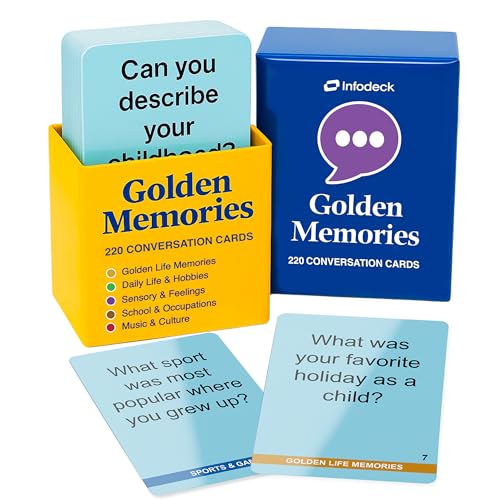
The Golden Memories set offers 220 large-print flash cards organized into six color-coded categories with open-ended prompts about life, hobbies, and music. Best for caregivers looking to spark stories and gentle cognitive activity without overwhelming a participant. The large text helps readers with visual challenges, and the varied categories reduce repetition during sessions.
Best for: Caregivers seeking a comprehensive, structured conversation program for diverse topics. Caution: Some users may need additional prompts beyond the included questions for very late-stage dementia.
Keeping Busy Conversation & Memory Cards Game for Seniors

This set provides 224 prompts across six topics, focusing on long-term memories and familiar experiences. It’s designed for all stages of dementia and aims to foster meaningful conversation and social interaction through reminiscence and shared activities. The questions are versatile for individual or group sessions.
Best for: Groups and families who want a broad variety of prompts to sustain engagement. Caution: Because prompts cover many topics, some users may need help navigating newer or less familiar themes.
Dementia & Alzheimer’s Conversation Cards – Double-Sided with Caregiver Guidance

These double-sided cards pair conversational prompts with caregiver guidance on the back, making it easier to extend chats naturally. The structured approach helps reduce awkward pauses and supports calm, meaningful interactions. No expertise is required—suitable for families and caregivers new to dementia communication strategies.
Best for: Caregivers who want built-in prompts plus actionable guidance. Caution: The dual-sided format may require careful handling to prevent wear over time if used heavily in busy settings.
Memory Games for Seniors — Alzheimer’s and Dementia Must Haves

This product offers two play modes: solo memory and group, with color-coded decks and a built-in answer sheet for verification. Visual cues and bold prompts support recognition and recall while allowing players to start at different comfort levels. It supports flexible engagement whether playing alone or with others.
Best for: Users who value adaptable play styles and clear verification. Caution: Group play may require a facilitator to manage flow and keep sessions on track.
Lythesia Conversation Cards Alzheimer’s & Dementia
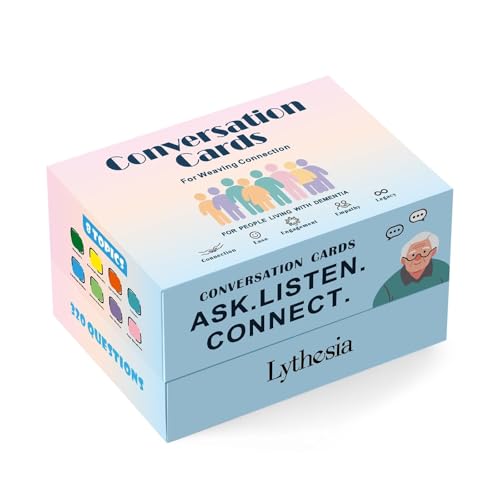
With over 300 questions across eight categories, Lythesia emphasizes guided, meaningful conversations that help mitigate memory pressure and support calm engagement. It’s designed for caregivers and families, offering a complete system with a simple three-step use process, making it easy to implement right away.
Best for: Caregivers seeking a comprehensive conversation framework. Caution: A larger question set may feel overwhelming for some users in very early stages without gradual introduction.
Buying Guide
Key purchase considerations to help you choose the right card set for an Alzheimer’s or dementia care plan:
- Reading ease: Look for large print and high-contrast text to support readers with visual challenges.
- Prompts and structure: Decide if you prefer open-ended questions, guided prompts, or a caregiver-focused approach.
- Group vs. solo use: Some sets excel in group activities, others are designed for individual reminiscence or caregiver-led sessions.
- Durability and maintenance: Reusable cards with wipe-clean surfaces are beneficial for busy or shared spaces.
- Caregiver guidance: Cards that include built-in guidance help ensure conversations stay calm and meaningful.
- Cost and availability: Consider the number of prompts and potential replacement parts or additional packs.
FAQ
- What features make dementia conversation cards effective?
- Are card sets suitable for all stages of Alzheimer’s?
- Can these cards replace professional therapy or activities?
- How should I choose between group and solo play?
- What maintenance is required for reusable cards?
- Is caregiver guidance important?
Effective cards use large print, clear prompts, and a simple structure that helps caregivers guide meaningful conversations without awkward pauses.
Many sets are designed for a range of stages, with options for early memory prompts and more focused activities as needs progress.
No. They complement professional care by fostering connection and reminiscence but are not substitutes for medical or therapeutic interventions.
Group-friendly sets emphasize shared experiences and social prompts, while solo-oriented options support independent reminiscence and cognitive exercise.
Wipe-clean surfaces and gentle cleaning preserve readability and longevity during repeated use in care settings.
Yes. Cards with built-in caregiver guidance can reduce uncertainty and help sustain calm, meaningful conversations.