If you’re seeking reliable, caregiver-friendly chairs and seat monitors for dementia patients, you’re looking for equipment that instantly alerts you when a person stands up. The top options below emphasize chair-based monitors, bed and chair alarm systems, and versatile restraints designed for safety and ease of use. This guide helps buyers choose the right system for different living arrangements, budgets, and levels of supervision. The table below compares five strong choices to help you pick quickly.
| Product | Best For | Key Benefit |
|---|---|---|
| Smart Caregiver Chair Exit Alarm System | Home care or assisted living | Wireless chair pad alerts caregiver; compact and easy to wipe |
| Smart Caregiver Bed Exit Alarm + Pager | Overnight monitoring | Bed pad with wireless pager for round-the-clock alerts |
| Lunderg Wireless Chair Alarm System | Low-noise environments | Silent pager alerts; long wireless range |
| Lunderg Under Mattress Bed & Chair Alarm Set | Discreet monitoring | Invisible bed pad plus chair pad; early pre-rise alerts |
| Floryexn Chair Pad & Pager | Universal compatibility | Dual-alert system with LED indicators |
Smart Caregiver Chair Exit Alarm System With Wireless Pager
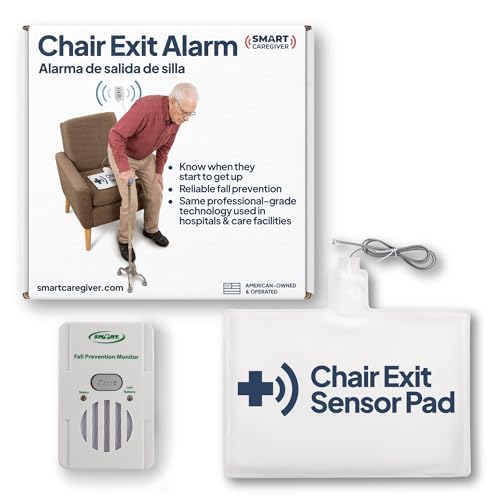
The chair exit alarm uses a weight-sensing pad placed on a chair to detect when a patient stands. When movement occurs, the caregiver receives an alert via a wireless pager. This setup is best for home care or small facilities where immediate attention is crucial and the caregiver can carry a pager during daily tasks.
Best for: caregivers who need direct, fast alerts and where the chair is a patient’s usual seating. Why chosen: it provides a simple, practical alert system with a clearly labeled reset button and battery indicators. Caution: ensure the pad is correctly seated to avoid false alarms from shifting weight.
Smart Caregiver Bed Exit Alarm With Wireless Pager

This system expands protection to overnight safety with a large bed pad that wirelessly signals caregivers when a patient leaves the bed. The included pager supports vibrate or sound options, providing flexible alert preferences. It’s ideal for families who want continuous monitoring at night while maintaining caregiver mobility around the home.
Best for: overnight monitor use and quiet environments. Why chosen: wireless reminders enable hands-free monitoring across rooms. Limitation: system requires pager battery management and a compatible setup across multiple sensors.
Smart Caregiver Chair Exit Alarm With Wireless Pager

Designed to prevent wandering and falls, this chair alarm includes a cordless 10” x 15” weight sensor pad and a discreet pager. The system offers up to 300 feet range and a quieter vibrate option for patient comfort. It works well in rooms where space is limited or where a silent alert helps avoid startling residents.
Best for: quiet monitoring in living rooms and bedrooms. Why chosen: long-range cordless setup reduces caregiver interference with patient routines. Caution: ensure the pad remains correctly positioned to avoid missed alerts.
SUYIEYING Restraint Strap for Bed And Wheelchair

This 2-in-1 restraint belt converts from a compact wheelchair strap to a full-length bed restraint. It aims to reduce the risk of slipping or falling while maintaining comfort with a padded waist cushion. Intended for long-term use, it provides an extra safety layer for at-risk patients in both bed and chair settings.
Best for: caregivers needing flexible restraint options across bed and wheelchair use. Why chosen: adjustable length and detachable design increase usability across multiple furniture types. Limitation: restraints require careful fitting to avoid discomfort or restricted movement.
Lunderg Wireless Chair Alarm System For Elderly

With no in-chair alarm sound and a wireless pager, this system focuses on calm, notification-first monitoring. It is compatible with multiple seating options—chairs, wheelchairs, recliners—and features a reliable wireless range to keep caregivers informed without startling the patient. The setup is straightforward and requires no Wi-Fi or apps.
Best for: dementia care environments that favor subtle alerts and minimal room noise. Why chosen: avoids panic responses by sending notifications to a caregiver’s handheld device. Caution: verify the pad’s surface stays clean and intact to maintain sensitivity.
Lunderg Under Mattress Bed & Chair Alarm Set

This system provides an invisible approach to monitoring with a bed pad placed under the mattress, plus a chair pad to cover both beds and seating areas. Alerts transfer wirelessly to a caregiver’s pager. It is especially suitable for patients who resist visible monitoring devices, ensuring you still receive timely alerts.
Best for: patients who dislike wearing devices or visible pads. Why chosen: invisibility reduces resistance, while still enabling early alerts for safer responses. Caution: ensure mattress depth fits the bed pad requirements to maintain accurate readings.
Buying Guide: Key Considerations For Choosing Dementia-Friendly Chair And Bed Monitors
What type of environment fits best? For busy households, wireless chair alarms with pagers are efficient, allowing caregivers to multitask while staying notified. For overnight monitoring, bed exit systems with wireless pagers can reduce anxiety about midnight checks.
How discreet should monitoring be? If a patient resists visible devices, under-mattress or restraint-based options may work better. In contrast, visible chair pads can offer quick visual confirmation for caregivers.
What range do you need? A long-range system (300 feet or more) suits larger homes or multi-room setups. Short-range systems are sufficient for single rooms but may require closer proximity to the patient.
How easy is setup and maintenance? Look for systems with wipe-clean pads, simple battery indicators, and minimal wiring. Systems with ready-to-carry pagers tend to integrate smoothly into daily routines.
What safety levels are required? For dementia care, early alerts and gentle notifications are preferable to avoid startling residents. Consider systems that offer both vibration and audible alerts to match caregiver preferences.
Frequently Asked Questions
- Q: What is the main advantage of a wireless chair alarm? A: It provides immediate alerts to caregivers without requiring them to be near the patient, enabling multitasking and faster response.
- Q: Are under-mattress bed alarms effective for dementia patients? A: Yes, they offer discreet monitoring and can alert caregivers before rising, reducing fall risk.
- Q: How do I choose between a chair alarm and a restraint belt? A: Choose a chair alarm for non-contact monitoring and quick responses; restraint belts suit patients who frequently attempt to rise and need physical support.
- Q: What maintenance is required for these systems? A: Regular pad cleaning, battery checks, and ensuring wireless connections are stable are the main tasks.
- Q: Can these systems monitor multiple areas at once? A: Some models support multiple sensors and expand to a network of chairs, beds, and doorways for comprehensive coverage.
- Q: Do these devices interrupt patient comfort? A: Modern wireless systems are designed to minimize noise and startle, often offering vibrate alerts to reduce disturbance.