Discover chairs and assistive aids designed to improve posture, safety, and independence for people with Parkinson’s. This guide highlights five practical products that help manage mobility, transfers, and daily routines. The best picks are tailored for wheelchair users, standing assistance, and safe bedside transfers. Each option includes who it’s best for and why it stands out, plus a concrete caution to consider before buying. A quick summary table follows to help you compare at a glance.
| Product | Best For | Why It Stands Out |
|---|---|---|
| KAVIL Lateral Support for Wheelchair Back Cushion | Wheelchair users needing lateral support | Provides back and lumbar support and fills gaps to reduce leaning |
| KAVIL Lateral Support for Wheelchair (L-Shape) | Parellel support with enhanced side stability | Two-layer filling for comfort and firm support |
| Vive Stand Assist | Residents needing help standing from a chair or sofa | Dual handles and adjustable frame for safer push-to-stand |
| WHLICKS Stand Assist Lift | Users requiring high-capacity stand-to-transfer aid | Ergonomic handrails, wide height range, strong construction |
| NEPPT Patient Lift Transfer Belt | Caregivers transferring patients between chair and bed | Multiple handles for safe transfers and weight distribution |
KAVIL Lateral Support Back Cushion for Wheelchair

The KAVIL wheelchair lateral cushion wraps around the back and lumbar, delivering safe, comfortable support for the lower back. It also fills the gap between hemiplegic patients and the chair to reduce lateral leaning. This cushion is best for semi-dependent users who need continual back support and pressure relief while seated in a wheelchair. Note: measure your chair dimensions before purchase to ensure a proper fit.
Key features: wraps around the back and lumbar; 32.65” length; adjustable thickness options (3.47″ and 2.24″); foldable for multiple uses as a seat and lumbar cushion.
Caution: Compatibility depends on chair width and back dimensions. Ensure the cushion will fit around your wheelchair frame before ordering.
KAVIL Lateral Support Cushion (L-Shape)
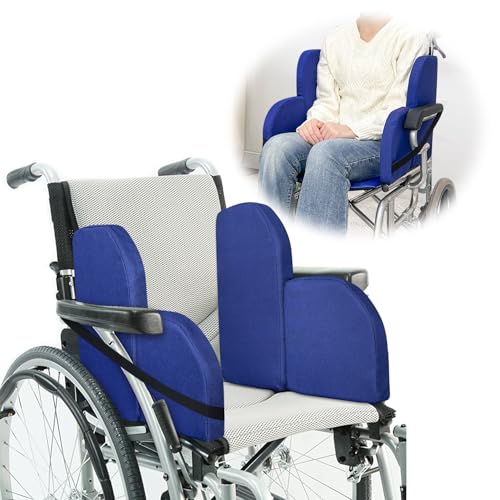
This pair of L-shaped cushions provides targeted support to both the armpit and waist areas, promoting a centered posture for petite users, hemiplegic patients, or those with Parkinson’s who lean to one side. The double-layer filling combines comfortable inner foam with firmer outer support for lasting stability. Best for users needing structured lateral alignment and pressure relief on chair sides.
Why choose this: enhanced lateral stability with a two-layer design. Best for preventing one-sided leaning; not ideal for chairs with very narrow backrests.
Vive Stand Assist Mobility Rail

The Vive Stand Assist provides safe standing support with dual handles and a sturdy aluminum frame. It is easy to install around the base of cushions on sofas, recliners, or upholstered chairs and supports up to 300 pounds. Best for users who need a stable, simple-to-use aid to rise from seated positions, especially in home settings where mobility is partially limited.
Tip: Best used with cushioned seating and a stable floor. May require space around the chair for maneuverability.
WHLICKS Stand Assist Lift

The WHLICKS Stand Assist Lift is designed for higher-capacity users and taller statures. It features ergonomically cushioned handrails, a split-seat design for even weight distribution, and a robust steel frame that supports up to 400 pounds. It is best for home caregivers and individuals who require a reliable, high-capacity rise-from-sit-to-stand aid. Consider space and setup complexity before purchase.
Limitation: Higher capacity units may take longer to assemble and may require more room than smaller standing aids.
NEPPT Patient Lift Transfer Belt with 4 Handles

The NEPPT transfer belt uses a durable polyester fabric with reinforced handles to distribute weight evenly across the user and caregiver during transfers. Four handles help with positioning and safe transfers from wheelchair to bed or chair. Best for caregivers needing a simple, reusable sling-like belt for assisted transfers. Caution: This belt is designed for general transfers; very weak or bedridden patients may require additional support or different equipment.
Buying Guide
What should you consider when choosing chairs and aids for Parkinson’s patients?
- Transfer and standing needs: Determine whether the user mainly needs support for standing up, sitting down, or both. Choose devices with appropriate weight capacity and grip options.
- Space and furniture compatibility: Check room layout and furniture dimensions to ensure the device fits and can be used safely around chairs, sofas, and beds.
- Posture and pressure relief: For wheelchair users, prioritize cushions and lateral supports that promote a centered posture and reduce pressure on bony prominences.
- Ease of use and maintenance: Opt for devices with simple assembly, intuitive operation, and washable or durable materials suited for daily use.
- Caregiver safety: Choose aids with secure locking mechanisms, stable bases, and features that minimize caregiver strain during transfers.
Frequently Asked Questions
- What type of chair aid is best for Parkinson’s patients who have trouble standing?
– Stand-assist devices with dual handles and stable frames are typically best for aiding rising from chairs and sofas. - Are lateral wheelchair cushions suitable for all wheelchairs?
– They depend on chair width and backrest design. Measure before buying to ensure a proper fit. - Which accessory helps caregivers with safe bed-to-chair transfers?
– Transfer belts and 4-handle transfer aids provide weight distribution and grip options for safer transfers. - Can standing aids be used on soft furniture like recliners?
– Some devices are designed to work with cushioned seating; ensure compatibility with your furniture and space. - Do these aids replace professional medical equipment?
– They are supportive tools for daily living and caregiver assistance; consult a clinician for complex mobility needs. - Which product offers a lot of capacity for taller users?
– Stand assist lifts with higher height range and steel frames are typically better for taller individuals.