Compression stockings can help ease symptoms of venous stasis by improving blood flow and reducing swelling. This guide highlights five top Amazon options that balance comfort, effectiveness, and wearability for different needs. Ideal for travelers, office workers, athletes, and patients seeking edema relief, these picks cover open-toe, thigh-high, and pantyhose styles. The following sections compare each product to help you choose what’s best for your lifestyle and goals.
Summary of chosen products:
| Product | Best For | Compression | Key Benefit |
|---|---|---|---|
| Amazon Basics Medical Compression Stockings | Everyday wear, unisex needs | 20-30 mmHg | Open toe, stay-in-place grip for active days |
| Laite Hebe Compression Socks (3 Pairs) | All-day wear, travel, recovery | 15-20 mmHg | Ergonomic fit, gradient pressure for circulation |
| SIGVARIS Style Soft Opaque Pantyhose | Professional/home use, discreet wear | 20-30 mmHg | Opaque, durable, fashionable yet medical-grade |
| Truform 20-30 mmHg Socks (Beige, Thigh High) | Travel, long periods of sitting or standing | 20-30 mmHg | Open toe, defined heel for fit |
| CHARMKING 15-20 mmHg Compression (3 Pairs) | Athletes, travel, pregnancy support | 15-20 mmHg | High-variance fabric for comfort and durability |
Amazon Basics Medical Compression Stockings, Women & Men

Best for general, everyday wear and unisex needs, these stockings provide 20-30 mmHg of graduated compression. The toe-less design improves breathability and inspection during recovery, while the silicone grip-top lining helps prevent rolling. The knit heel pocket keeps the garment properly positioned for walk-friendly support. This option is well-suited for users who want reliable, low-friction daily compression with easy inspection of the toes.
Who this is best for: people seeking practical, everyday compression with a simple open-toe style and anti-slip support. Why chosen: it combines consistent compression with a keep-in-place fit and breathable design. Limitation: open-toe may not fully cover the toes for some medical needs requiring closed-toe protection.
Laite Hebe Compression Socks (Three Pairs)

Best for all-day energy and recovery, these 15-20 mmHg socks aim to improve circulation, reduce fatigue, and prevent swelling during extended siting or standing. The gradient compression is designed to push blood back toward the heart, while a wide band minimizes slipping. The 360-degree stretch supports movement across activities, from office work to travel. The set is ideal for those who need comfortable compression at a lighter level.
Who this is best for: individuals seeking comfortable, lightweight compression for long days or travel. Why chosen: strong emphasis on energy, pain relief, and recovery with ergonomic fit. Cautions: lower compression level may be less effective for serious edema or venous insufficiency without medical guidance.
SIGVARIS Women’s Style Soft Opaque 840 Pantyhose

Best for discreet wear with a professional look, these 20-30 mmHg opaque pantyhose offer leg health benefits without sacrificing style. They feature durable material, with a blend of Nylon and Spandex designed for longevity and moisture management. This option is ideal for office attire, events, or any setting where a pantyhose appearance is preferred while providing reliable compression.
Who this is best for: professionals and everyday users wanting a fashionable, opaque compression pantyhose. Why chosen: blends fashion with medical-grade support. Limitation: opaque fabric may feel warmer in hot climates or during intense activity.
Truform 20-30 mmHg Compression Stockings (Beige, Thigh High)
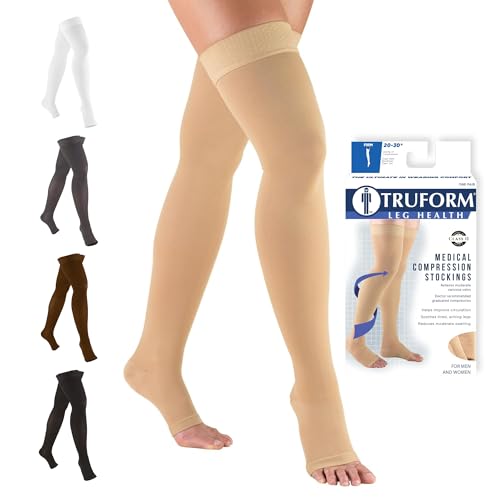
Best for extensive sitting or standing, these thigh-high stockings offer a defined heel and open-toe design for easy inspection. The 20-30 mmHg gradient helps support leg circulation and reduce edema, with a silicone grip-top for a secure fit. This option is suitable for users who need higher-grade compression and thigh-high coverage for improved venous return during long days or travel.
Who this is best for: people requiring thigh-high coverage and stronger compression. Why chosen: robust support with a comfortable top band and easy toe inspection. Caution: thigh-high length may require careful sizing to avoid rolling in taller individuals.
CHARMKING Compression Socks (Three Pairs)

Best for athletes, travel, and pregnancy support, these 15-20 mmHg socks focus on circulation and oxygen flow to reduce fatigue and enhance recovery. The fabric mix blends comfort with durability, offering a wide range of motion for daily activities. This option suits users who want light-to-moderate compression with high breathability and flexible wear for varied activities.
Who this is best for: active individuals seeking versatile, breathable compression for performance and travel. Why chosen: good balance of comfort, durability, and efficacy at moderate compression. Limitation: may be too light for severe venous insufficiency without medical advice.
Truform 30-40 mmHg Compression Stockings (Knee High)

Best for more serious symptoms or vascular conditions, these knee-high stockings provide a higher 30-40 mmHg compression. They include a soft top that won’t constrict the leg and a defined heel for improved fit, plus a roomy toe area for sensitive feet. This option is typically chosen when medical guidance suggests stronger support and targeted compression for venous issues.
Who this is best for: individuals with moderate to severe venous symptoms requiring stronger compression. Why chosen: higher-grade compression with a fit designed for comfort and stability. Caution: higher compression requires proper sizing and may be less comfortable for first-time users.
Buying Guide: Key Considerations For Choosing Compression Stockings
- Compression level: Common ranges include 15-20 mmHg (light), 20-30 mmHg (moderate), and 30-40 mmHg (strong). Choose based on symptoms, activity, and medical advice.
- Length and coverage: Open-toe, knee-high, thigh-high, or pantyhose styles suit different activities and areas of concern. Open-toe options aid inspection; pantyhose offer discreet wear.
- Fit and sizing: Accurate measurements for ankle, calf, and thigh circumference ensure effective compression and comfort. Look for products with easy-to-understand size charts.
- Material and breathability: Look for blends that balance elasticity, moisture management, and temperature control to maintain comfort during wear.
- Durability and inspection: Some models include reinforced heels, silicone grip, or heel pockets for long-term wear and better positioning.
- Activity compatibility: Consider daily routines, travel, workouts, or pregnancy when selecting a compression level and length.
- Care and maintenance: Check washing instructions to preserve elasticity and compression over time.
FAQ
- What compression level is best for venous stasis symptoms? Answer: Moderate levels (20-30 mmHg) are commonly recommended for daily relief; consult a clinician for personalized guidance.
- Do I need a prescription for compression stockings? Answer: Many over-the-counter options are available, but medical-grade or higher compression levels may require a clinician’s recommendation.
- Are open-toe stockings as effective as closed-toe versions? Answer: Both provide compression; open-toe variants offer easier inspection and ventilation, while closed-toe can provide more coverage for some conditions.
- How long should I wear compression stockings each day? Answer: This depends on your condition and activity; many users wear them during waking hours and remove them at night unless advised otherwise.
- Can I wear compression stockings with shoes or during workouts? Answer: Yes, many designs are suitable for daily wear and activities, but choose appropriate compression and fit to avoid discomfort during exercise.
- What should I do if stockings roll down or feel uncomfortable? Answer: Ensure proper sizing, consider silicone-grip tops, and review length to match your leg measurements; replace worn stockings as elasticity declines.