Answer: If you’re seeking support for drop foot, ankle-foot orthosis (AFO) devices are designed to lift and stabilize the foot during walking. This guide highlights five top drop foot devices, explaining who they’re best for, why they were selected, and practical considerations to help you choose. Ideal buyers include those recovering from stroke, dealing with diabetic neuropathy, or managing neuromuscular conditions that affect foot lift and balance.
| Product | Brand | Best For |
|---|---|---|
| TENB Adjustable Drop Foot Brace | TENB | All-day comfort with breathable fabric; best for long wear |
| Dosh AFO Foot Drop Brace | Dosh | Low-profile, discreet fit; best for wearing under clothing |
| Furlove AFO Foot Drop Brace | Furlove | Ultra-lightweight with durable shell; best for active use |
| JOMECA Drop Foot Brace with Reel-Adjust | JOMECA | One-handed donning and precise dorsiflexion control; best for limited hand strength |
| Brace On AFO S-Type | Brace On | Customizable fit; best for personalized sizing |
TENB Adjustable Drop Foot Brace Foot Up AFO Brace

The TENB brace is designed for pain relief and gait improvement across varied conditions, including post-stroke drop foot and neuropathies. Its velvet, breathable material supports daily wear without bulk, making it well-suited for users who need comfort during long walking sessions.
Best for: daily use by individuals seeking a comfortable, breathable AFO that can be worn with multiple shoe types. Why selected: the soft fabric and sandwich sponge offer extended wear comfort, reducing irritation during long days.
Caution: provided data emphasize comfort over high-performance rigidity; may be less suitable for users needing aggressive dorsiflexion adjustments.
Dosh AFO Foot Drop Brace

The Dosh brace emphasizes a secure buckle strap and low-profile design for discreet daily wear, including use with or without shoes. It supports walking and can also be worn during sleep in some configurations.
Best for: individuals who want a discreet, low-profile AFO that remains comfortable under clothing. Why selected: its compact build makes it less intrusive than bulkier braces.
Caution: not all wearers will experience strong dorsiflexion adjustments; may require pairing with appropriate footwear for best effect.
Furlove AFO Foot Drop Brace Orthosis

The Furlove brace is ultralight and designed to improve gait with a rigid shell and moisture-wicking lining. It emphasizes comfort without bulk and is suitable for wearing with shoes, supporting longer walking sessions.
Best for: users who prioritize lightweight construction and durable support. Why selected: it blends a strong shell with breathable interior for extended wear without overheating.
Caution: although lightweight, some wearers may notice a slight presence inside snug footwear; ensure proper shoe fit before use.
JOMECA Drop Foot Brace With Reel-Adjust

JOMECA uses a dial-adjustable mechanism to set dorsiflexion angle precisely, with a reel for easy adjustment. The open-style design fits most lace-up shoes and allows one-handed operation, benefiting users with limited hand strength.
Best for: those needing adjustable, one-handed donning and precise control of dorsiflexion. Why selected: the reel-adjust feature and compatibility with many shoe styles enhance usability for active individuals.
Caution: bulk inside some shoe types may occur; verify shoe compatibility and comfort with your usual footwear.
Brace On AFO S-Type – Drop Foot Stabilizer
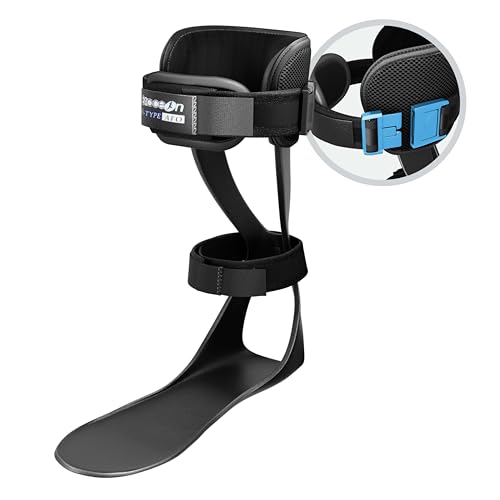
Brace On’s S-Type focuses on customizable sizing with a trimmable footplate and adjustable straps. Its open-heel, low-profile design makes it discreet inside most shoes, suitable for both men and women.
Best for: users who need a personalized fit and a discreet, shoe-friendly brace. Why selected: adjustable sizing and trimming options support a secure, comfortable, long-term fit.
Caution: accurate sizing is essential; follow the sizing guide to avoid poor fit and comfort issues.
Buying Guide: Key Considerations For Selecting A Drop Foot Device
- Footwear compatibility: Choose a brace that fits with your regular shoes and activities. A low-profile design is often easier to wear with pants and dress shoes.
- Adjustment and fit: Look for adjustable straps, build materials, and whether the brace is trim-able or dial-adjustable for a personalized fit.
- Weight and bulk: Lighter braces reduce fatigue during long walks, but ensure they still provide adequate dorsiflexion support.
- Donning ease: For users with limited hand strength, consider open-heel, reel-adjust, or one-handed closure designs.
- Durability and materials: Breathable fabrics and rigid shells balance comfort with long-term support; ensure moisture-wicking interiors for daily wear.
- Intended use: Some braces excel for walking, others for sleeping or mixed use. Match the brace to your daily routine and goals.
FAQ
- What is a drop foot device used for?
It provides dorsiflexion support to lift the foot during walking, improving gait and reducing trips for people with foot drop and related conditions.
- Which brace is best if I need one-handed donning?
One with a reel-adjust or dual-side opening design, such as the JOMECA model, offers easier handling with limited hand strength.
- Are these braces suitable for wearing with sandals?
Many AFO braces are designed for use with shoes; check the product description for compatibility with sandals or open footwear.
- Can I wear these all day?
Most products are intended for daily use, but comfort varies by individual; start with shorter wear times and increase gradually as tolerated.
- How do I know my size?
Follow the manufacturer’s sizing guide, which typically uses heel width and foot length rather than shoe size alone.
- What’s a key trade-off between weight and support?
lighter braces are more comfortable but may offer less rigid dorsiflexion; heavier shells provide stronger support but can feel bulky.