Looking for a reliable digital blood pressure cuff for home use? This guide highlights top options that suit different needs—from easy one-button operation to large, easy-to-read displays and smartphone connectivity. The best picks are organized by user type: busy adults seeking quick readings, seniors needing readable screens, tech-savvy users who want app-backed tracking, and households requiring multi-user memory. Each entry explains who it’s best for and why it stands out, plus practical cautions to consider before buying.
| Product | Best For | Key Benefit |
|---|---|---|
| iHealth Track Smart Upper Arm Blood Pressure Monitor | Tech-friendly users who track readings on a phone | Bluetooth sync and large backlit display |
| Oklar Blood Pressure Monitor Upper Arm | Families needing multiple measurements stored | Two users, 240 readings capacity |
| Oklar Wrist Blood Pressure Monitor | Compact, portable monitoring with voice assist | Voice broadcast and two-user memory |
| Sinocare Upper Arm Monitor | Simple operation with solid accuracy | One-button use and dual power options |
| OMRON Iron Blood Pressure Monitor | Trusted brand with clinician-style features | Advanced accuracy and irregular heartbeat detection |
Note: The table above previews the main strengths of each product. Details below explain who benefits most from each model and how to compare options across display clarity, memory capacity, power sources, and data sharing capabilities.
iHealth Track Smart Upper Arm Monitor
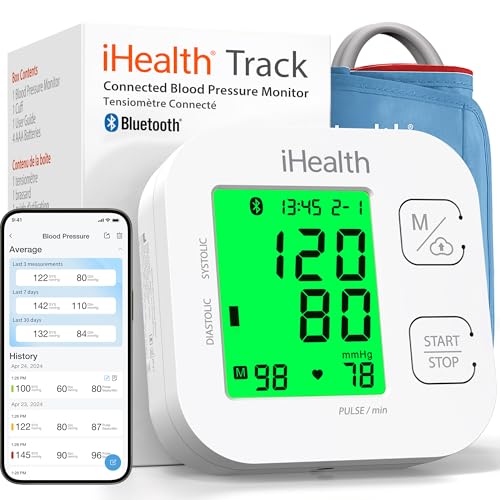
This upper-arm monitor emphasizes easy operation with two buttons and an oversized, multi-color backlit display. The device provides clinically framed accuracy and requires no calibration. It stores up to 99 readings on the monitor and offers unlimited smartphone storage via the iHealth app on iOS and Android. Best for tech-savvy individuals who want quick synchronization with a mobile device. Caution: Bluetooth setup is needed to leverage unlimited phone storage, and users should confirm phone compatibility with iHealth software versions.
Oklar Blood Pressure Monitor Upper Arm
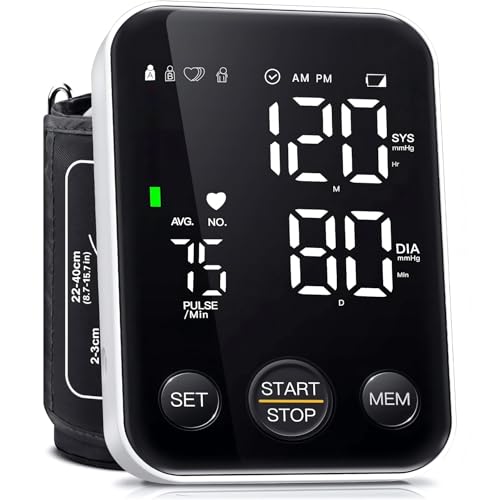
This device supports two users with 240 total readings capacity, making it suitable for households tracking multiple family members. It features a one-button design and a large LED display for quick reading, even in low light. Best for households needing shared access without multiple devices. Limitation: It stores readings per user but does not specify smartphone app integration, so those who prefer mobile data tracking may consider the other options.
Oklar Wrist Blood Pressure Monitor

This wrist monitor offers a compact alternative with two-user memory and a voice broadcast feature, which helps users with limited vision. It provides fast measurements and automatic shutdown after inactivity. Best for travelers or desk-people who need quick checks without lifting an arm. Caution: Wrist measurements can be less consistent than upper-arm readings for some users, especially if the cuff is not placed correctly.
Sinocare Blood Pressure Monitor

Designed for simple operation with a one-button start, this model emphasizes clear display and dual-power options (AAA batteries or USB-C charging). It’s a practical choice for users who want dependable measurements without extra features. Best for individuals who prioritize straightforward use and flexible charging. Limitation: Battery-powered operation may require spare batteries or regular USB-C charging to ensure ongoing use, depending on location and access to power.
OMRON Iron Blood Pressure Monitor

OMRON’s Iron monitor emphasizes confidence with advanced accuracy and irregular heartbeat detection. It supports quick, one-button operation and provides early visibility into potential heart-related issues. Best for users who want a clinically oriented device from a trusted health brand. Caveat: While it offers robust features, it may be more feature-rich than some casual users need, potentially complicating use for those who prefer ultra-simple models.
Buying Guide: Key Purchase Considerations
- Display readability: If you value large fonts and backlighting, prioritize models like iHealth or Sinocare with bright, easy-to-read screens.
- Memory and sharing: For households tracking multiple people, look for devices with multi-user memory and the option to store data on a phone.
- Arm vs. wrist: Upper-arm cuffs generally provide more stable readings than wrist models; choose wrist only if portability or space is a premium.
- Power options: Consider whether you need battery-only use or USB-C/charging options for continuous home use.
- Accuracy features: Some devices include irregular heartbeat detection or clinically validated accuracy; these are beneficial for users monitoring heart health.
- Connectivity: If you want app-based trend analysis, select a model with Bluetooth or app compatibility and ensure your phone supports the app version.
- User-friendliness: One-button operation is ideal for seniors or those wanting quick checks without a learning curve.
FAQ
What is the difference between upper-arm and wrist blood pressure monitors?
Upper-arm monitors typically provide more consistent readings and are recommended for home use. Wrist models are more portable but readings can vary with cuff placement and body position.
Do these devices require calibration?
Most consumer models do not require regular calibration; they are designed to be ready out of the box. Check the manufacturer’s guidelines for your specific model.
Can I store readings on my phone?
Many models support smartphone syncing via Bluetooth. This allows long-term trend tracking beyond the device’s own memory.
Is irregular heartbeat detection important?
Irregular heartbeat detection can flag potential concerns and help you discuss results with a clinician, but it does not replace medical advice.
Which model is best for seniors?
Models with large displays, simple one-button operation, and audible or voice feedback are well-suited for seniors. Examples include devices with bright LED screens and large numbers.
Should I choose a model with two users or more?
Two-user memory is sufficient for most households. If multiple family members need tracking, opt for devices with higher memory capacity or app storage.