Answering the question “which DNA test is best for building a family tree?” this guide highlights five top options designed for different needs. Whether you want deep ancestry breakdowns, relative matching, or access to extensive genealogical databases, these kits are chosen for clear value in exploring your heritage. The buyer profiles below explain who benefits most from each kit and why they were selected. A quick comparison table follows to help you decide at a glance.
| Product | Main Benefit | |
|---|---|---|
| AncestryDNA | Massive database, 3,600+ regions, strong family connections | Users prioritizing broad relative matching and historical records |
| 23andMe Ancestry Service | Geographic breakdown and ancestry timeline, plus relatives | Users who want nuanced regional detail and timeline context |
| FamilyTreeDNA Family Finder | Deep genetic genealogy tools, chromosome browser, ancient origins | Power users who want interactive tools for tracing distant relatives |
| 23andMe Health + Ancestry | Health insights alongside ancestry and relatives | Users who want health-related context with family history |
| AncestryDNA + World Explorer Membership | Integrated family history records with 3-month World Explorer access | Family historians seeking records in addition to DNA data |
AncestryDNA: Full Ethnicity And Relatives Kit

Product overview: AncestryDNA offers a broad view of your origins across 3,600+ regions with strong emphasis on living relative connections. This kit is designed for users who want a seamless path to discovering relatives and building a family tree through a large interconnected database. Results are accessible online after activating the kit and sending in a saliva sample, typically within six weeks. Data privacy is highlighted, giving you control over what you share.
Best for: Individuals seeking a widely used, long-standing DNA database to connect with relatives and explore lineage. The kit’s strengths lie in extensive match opportunities and deep integration with Ancestry’s family history resources.
Limitation: If you prefer a broader set of health reports or deep ancestral timelines beyond ethnicity estimates, you might want to supplement with another service for richer context.
23andMe Ancestry Service
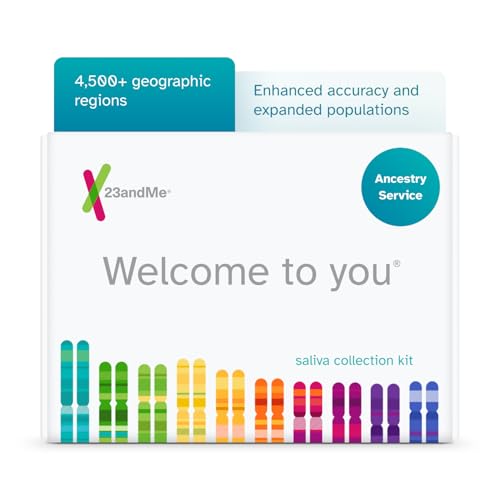
Product overview: 23andMe Ancestry Service offers a 4,500+ geographic region breakdown with lineage insights, including connections to historical migrations and notable ancestral lines. It provides the Ancestry Timeline to place family members in time, with options to opt into the DNA Relative Finder to connect with others who share your DNA. Trait reports add a personal dimension to your genetic story.
Best for: Users who want a detailed geographic map of ancestry, a clear timeline, and the ability to link to relatives within a broad network. The timeline feature helps frame when ancestral movements occurred within your family history.
Limitation: While rich in ancestry detail, some users may value additional health insights that require separate services or bundles.
FamilyTreeDNA Family Finder
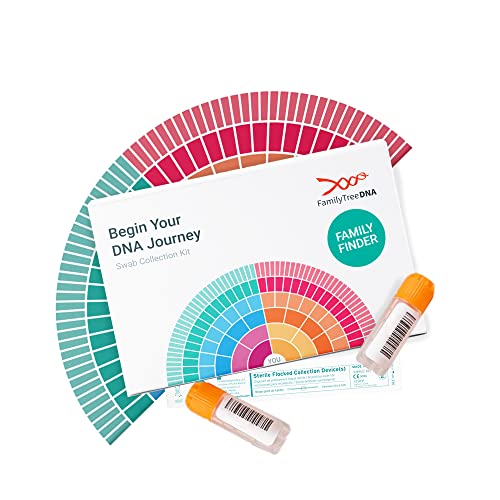
Product overview: FamilyTreeDNA emphasizes advanced genealogy tools, including a Chromosome Browser and myOrigins Chromosome Painter. It enables users to explore both recent and ancient roots, with features designed to visualize which genome segments originated from different populations. AncientOrigins adds depth by highlighting contributions from Neolithic and Bronze Age groups.
Best for: Genealogy enthusiasts who want interactive tools to trace distant relatives and visualize the geographic origins of genomic segments. This kit excels for those who enjoy in-depth data visualization of ancestry.
Limitation: The interface and tools can be more complex; new users may require time to learn how to interpret the chromosome-level data.
23andMe Health + Ancestry Service

Product overview: This bundle includes the full Health + Ancestry Service, offering 100+ personalized genetic insights, including health predispositions and carrier status, alongside ancestry features and access to family connections. It also notes potential FSA/HSA reimbursement eligibility and highlights an emphasis on actionable health information compatible with consumer needs.
Best for: Users who want both ancestry detail and health-related genetic insights in one package, enabling a broader understanding of genetic factors alongside family history.
Limitation: Health reports are informational and should not replace professional medical advice; interpretation may require caution regarding how to act on results.
AncestryDNA With World Explorer Membership
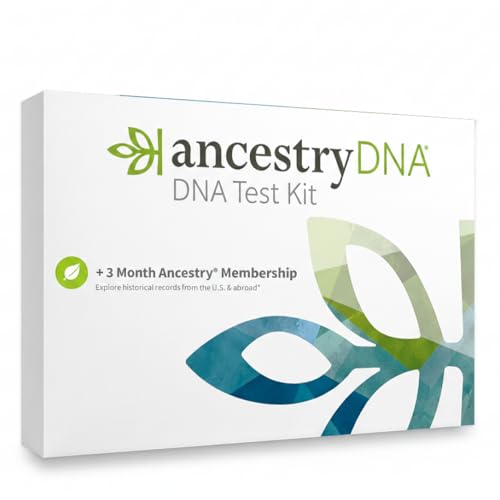
Product overview: This AncestryDNA kit pairs genetic ethnicity results with a 3-month World Explorer membership, granting access to billions of historical records. The combination supports an integrated approach to discovering family history and connecting DNA results to documented genealogies. It emphasizes ownership of your data and sharing controls.
Best for: Family historians who want immediate DNA results plus substantial historical records access to enrich their tree-building with documented sources.
Limitation: The 3-month membership is time-limited; users may need to upgrade to an auto-renewing plan to continue full access to records.
Buying Guide
DNA testing for family trees varies in database size, relative matching, and genealogical tools. Consider these factors when choosing a kit:
- Database size and match opportunities: Larger databases often yield more relative connections. If connecting with relatives is your main goal, prioritize kits with broad match networks.
- Geographic and population detail: Some services provide deeper regional breakdowns or migration timelines; choose based on how granular you want your ancestry to appear.
- Genealogy tools and visualization: Chromosome browsers, painting, and timeline features help translate raw data into a family narrative. If you enjoy data visualization, pick a kit with interactive tools.
- Health and lifestyle reports: Decide if you want genetic health insights alongside ancestry or a pure genealogical focus.
- Privacy and data control: Look for clear settings on data sharing and opt-in/opt-out controls to protect personal information.
- Subscription and records access: Some products include short-term memberships to historical records—evaluate ongoing needs for access to family history sources.
FAQ
What is the best kit for finding relatives quickly?
AncestryDNA and 23andMe Ancestry Service are known for robust relative-matching networks and user-friendly interfaces that can help you locate potential relatives faster.
Which kit provides the most detailed geographic breakdown?
23andMe Ancestry Service and 23andMe Health + Ancestry offer extensive geographic region breakdowns, often with timeline context to place migrations in time.
Do I need health reports to build a family tree?
No. Health reports are optional; you can focus on ancestry and relatives. Health insights are useful if you want broader context about genetic predispositions.
Can I control what data I share with others?
Yes. All major providers emphasize data sharing controls, allowing you to choose what to share and with whom.
Is there value in combining two services?
Yes. Using two services can broaden match opportunities and provide complementary features, such as one service’s strong relative matching with another’s deep historical records.
What should I consider before buying?
Consider your primary goal (relatives vs. records), desired depth of geographic detail, comfort with health information, and how you plan to use the findings to build your family tree.