Answering the question “Which DNA test is best for family lineage?” starts with understanding what you want: deep ancestry mapping, matching living relatives, or both. This guide highlights five leading at‑home tests focused on lineage insights, helping you decide who benefits most—from eager genealogists to curious beginners. Each kit is evaluated for family connections, geographic reach, and ease of use.
| Product | Main Strength | Best For |
|---|---|---|
| FamilyTreeDNA Family Finder | Global relative matching and chromosome browser | Connecting distant relatives and building a genetic family tree |
| AncestryDNA | Massive family tree integration and deep geographic insights | People building or expanding a family tree and finding matches |
| 23andMe Ancestry Service | 4,500+ geographic regions with strong relative finder | Exploring broad ancestry and discovering genetic connections |
| 23andMe Health + Ancestry Service | Comprehensive health and ancestry reports | Those seeking both lineage data and health insights |
| HomePaternity / Genetrace / AffinityDNA family lineage kits | Focused paternal or maternal lineage insights and quick results | People tracing paternal or maternal lines or confirming family relationships |
FamilyTreeDNA Family Finder
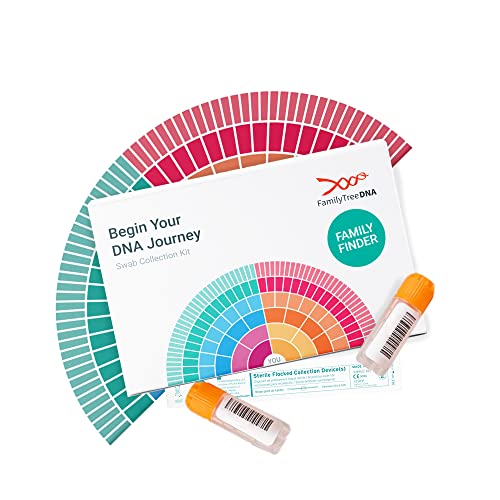
Best for: Researchers who want robust relative matching and a Chromosome Browser to compare shared DNA segments. This kit emphasizes connecting with genetic relatives worldwide and tracing relationships across generations. It uses interactive tools to map your genealogy alongside your genetic data, making it suitable for users who already have some family history and want to expand it with DNA evidence.
Why selected: It offers focused family matching and a visual chromosome view, which helps in pinpointing where shared segments come from and how relatives are connected. It’s a strong choice for building or validating a family tree with precise segment comparisons.
Caution: The toolset is powerful, but the learning curve can be steeper for beginners who primarily want a simple ethnicity breakdown. Data interpretation may require time and patience.
AncestryDNA

Best for: Family historians who want broad tree-building capabilities and a large pool of living relatives. AncestryDNA integrates seamlessly with its extensive family tree platform, helping users trace both genealogical and genetic connections across generations.
Why selected: It emphasizes a connected experience—genetics plus family trees—making it easier to discover relatives and place ancestors within historical contexts. It’s especially useful for users who already use Ancestry’s family tree tools.
Caution: Results depend on others also being active in the platform; some users may have fewer matches if their extended family is not on Ancestry’s network.
23andMe Ancestry Service
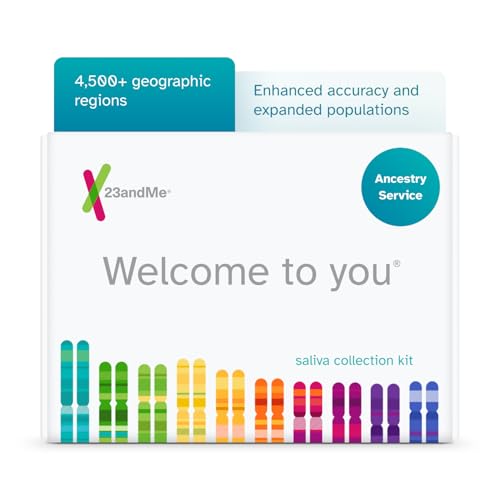
Best for: Those seeking a detailed geographic breakdown and a responsible relative finder. The test covers a broad set of regions and offers a clear path to family connections, including potential links to historical migrations.
Why selected: Its expansive region coverage helps map your ancestry with location context, and the Automatic Family Tree feature facilitates understanding genetic relationships within a genealogical framework.
Caution: More detailed ancestry insights come with optional features; users should review what data is shared and how relative matching works before opting in to broader data sharing.
23andMe Health + Ancestry Service

Best for: Users who want a combined view of ancestry alongside health predispositions and carrier status. This service integrates ancestry reporting with health insights, useful for a comprehensive genetic picture.
Why selected: It provides a more complete picture of your genetic history, including risk assessments and trait insights, which can complement lineage research.
Caution: Health reports require careful interpretation, and some results may be complex or are subject to evolving scientific understanding. Review test information before purchase.
HomePaternity DNA Paternity Testing
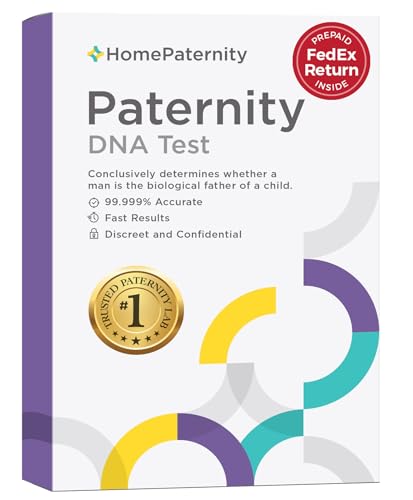
Best for: Individuals seeking definitive paternal lineage clarification within a family. This kit focuses on paternity confirmation and is useful when confirming father-child relationships.
Why selected: It offers rapid results and very high confidence, with a simple at‑home collection process and a straightforward online portal for results.
Caution: This test focuses on paternal lineage; it does not provide maternal haplogroup data or broader ancestry mapping. Consider complementary tests for full lineage context.
Genetrace Paternity Test Kit
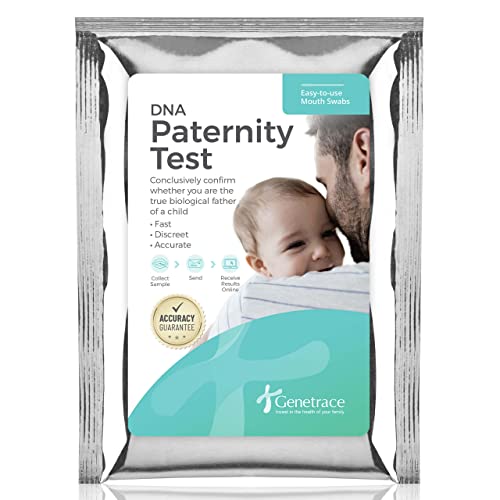
Best for: Families seeking a simple at‑home solution to determine true paternity with clear, fast results.
Why selected: It includes all needed materials with no hidden fees and promises quick turnaround after testing begins, helping families resolve questions efficiently.
Caution: Like many paternity tests, this kit is most relevant for father-child questions; for broader family lineage, pair it with a broader ancestry kit.
AffinityDNA Paternal Lineage

Best for: Individuals seeking deep paternal ancestry and Y-chromosome/haplogroup context over thousands of years.
Why selected: It targets paternal heritage with a detailed haplogroup description and a direct focus on ancient origins, offering a distinct view of your male-line lineage.
Caution: This test is suitable for males; a female may need a male relative to unlock paternal lineage insights.
AffinityDNA Maternal Lineage
Best for: Those wanting to explore maternal ancestry and mitochondrial DNA haplogroups with a clear, family-focused lineage map.
Why selected: It centers on maternal origins, providing a complementary perspective to paternal lineage tests and helping complete a two-sided family history.
Caution: Maternal lineage tests focus on mtDNA; they do not provide a full genome view. Use alongside autosomal tests for a complete lineage picture.
Buying Guide: Key Considerations For Family Lineage Tests
- What is your primary goal? If you want to connect with living relatives, prioritize tests with strong relative matching and a broad network (e.g., AncestryDNA, 23andMe).
- Geographic and ethnic coverage: A test with 4,500+ regions or robust population painting helps place ancestors in more precise contexts.
- Maternal vs paternal focus: If you want direct maternal or paternal lines, consider mtDNA or Y-DNA–focused options in addition to autosomal tests.
- Tree integration: Tests that synchronize with genealogical software or online trees can streamline building a family history.
- Data privacy and control: Review how you manage data sharing, consent, and who can access your results.
- Turnaround time and delivery: Some tests return results in weeks, others in days for specific services; plan according to urgency.
- Health data considerations: If you’re primarily researching lineage, consider avoiding health-focused reports to minimize extra data processing.
FAQ
- What type of DNA test is best for discovering relatives?
- Do these tests require a lot of effort to build a family tree?
- Can tests reveal my exact ancestral origin by country?
- Is my genetic data safe and private?
- Do paternal or maternal lineage tests require male participants?
- Can I use more than one kit to get a fuller lineage picture?
Autosomal DNA tests provide the broadest relative matching, connecting you to a wide range of cousins across generations.
Yes, leveraging a test with a built-in family tree feature or a large matching network helps; some platforms encourage tree construction and link your DNA results.
Tests estimate geographic origins based on reference populations; results are often broad and probabilistic, not exact country-level determinations.
Most providers offer privacy controls and options to share or restrict access; review terms and opt-in settings before proceeding.
Paternal lineage tests often rely on Y-chromosome data, which is only present in males; maternal lineage tests use mitochondrial DNA and can be taken by anyone.
Yes. Using multiple kits can broaden relative matches and offer complementary insights, especially when focusing on paternal and maternal lines.