When caring for an elderly loved one or a dementia patient, reliable door alarms can provide timely alerts, improve safety, and offer peace of mind for caregivers. This guide highlights five top door alarm kits designed to detect door or movement events, with options suitable for homes, small businesses, and travel. Each pick balances loudness, range, ease of use, and versatile mounting to help you monitor exits and minimize wandering risks.
| Product | Brand | Key Benefit | Range |
|---|---|---|---|
| YisTech Caregiver Pager Door Alarm (Three Sensor, Two Receiver) | YisTech | Extended coverage; hearing-friendly options | Up to 260 ft |
| SanJie Wireless Door Chime Sensor (2 Sensors + 1 Receiver) | SanJie | Easy install; multi-room alerts | Up to 500 ft |
| Flyoukki 120 dB Door/Window Alarm (3 Pack) | Flyoukki | Very loud; portable and versatile | Audible across large spaces |
| SECURITYMAN Door Handle Alarm (2 Pack) | SECURITYMAN | Simple setup; two alarm modes | 130 dB siren |
| Nesthao Upgraded Bed Sensor Alarm (Motion Sensor) | Nesthao | Fall prevention; bed placement option | Up to 918 ft open area |
YisTech Three-Sensor Door Alarm System

The YisTech system is designed for broad coverage and clarity. With a wireless door sensor network spanning up to about 260 feet, the setup can monitor multiple entry points—great for homes, small businesses, or facilities with several doors. Receivers beeping or chiming alert you when a door or window is opened, aiding prompt supervision of elderly dementia patients, children, or visitors. A built-in LED indicator assists those with hearing impairment, making this system a practical choice for diverse households. The package includes three sensors and two receivers for flexible placement.
Key features in context
- Multiple melodies and adjustable volume (0–110 dB) support customizable alerts.
- Long-range wireless transmission to ensure coverage across rooms or storefronts.
- LED visual cue complements audio alerts for better accessibility.
SanJie Wireless Door Chime Sensor Set

The SanJie door chime system emphasizes quick, plug-and-play installation with two sensors and a receiver. Its 500-foot range makes it suitable for larger homes or small offices, while pre-paired components simplify setup. This option supports reminders for caregivers and can serve as an alert for dementia-related wandering. For environments with variable noise, the system’s multiple chimes help differentiate doors or rooms, aiding rapid response when a door is opened unexpectedly.
Usage considerations
- Pre-paired components reduce setup time and confusion.
- Efficient for families needing door activity monitoring across multiple areas.
- Adaptable to commercial use as a customer or employee entry alert.
Flyoukki 120 dB Door And Window Alarm 3-Pack
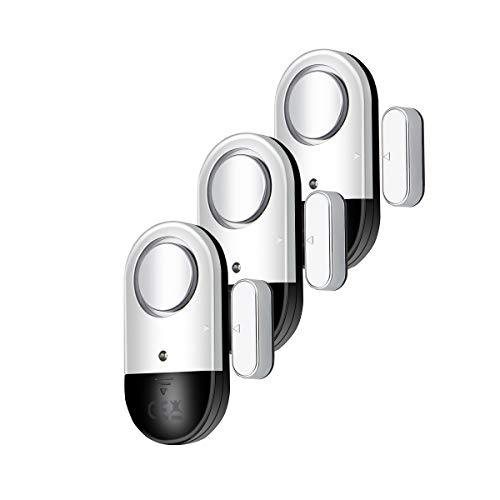
The Flyoukki three-pack delivers a very loud 120 dB alert, helpful for households with hearing concerns or larger spaces where a strong cue is needed. Batteries are included, and the wireless design supports quick installation without wiring. The kit aims to deter unauthorized entry and prevent children from wandering by signaling door activity clearly from a distance. Its compact sensors make it easy to place on doors or windows with minimal disruption.
Strengths and limitations
- High-volume alert increases the likelihood of timely caregiver response.
- Wireless, battery-powered design supports temporary setups or travel use.
- Requires routine battery checks to prevent unexpected silence.
SECURITYMAN Door Handle Alarm (2 Pack)

This two-pack from SECURITYMAN uses a robust 130 dB siren triggered by door handle movement. It is designed for quick deployment—no complex wiring is required. It offers two operational modes: a shorter 30-second alert and continuous monitoring, along with adjustable sensitivity. The compact form is suitable for bedrooms, hotel rooms, or travel scenarios. The device’s portability makes it a versatile option for caregivers managing dementia patients who frequently attempt to exit rooms or facilities.
Practical deployment tips
- Choose a door or handle that is frequently accessed by the person being monitored.
- Test sensitivity and mode to balance alerts with avoiding false alarms from routine activities.
- Keep spare batteries handy for uninterrupted alerts during a trip or hotel stay.
Nesthao Bed Sensor Alarm And Motion Detection
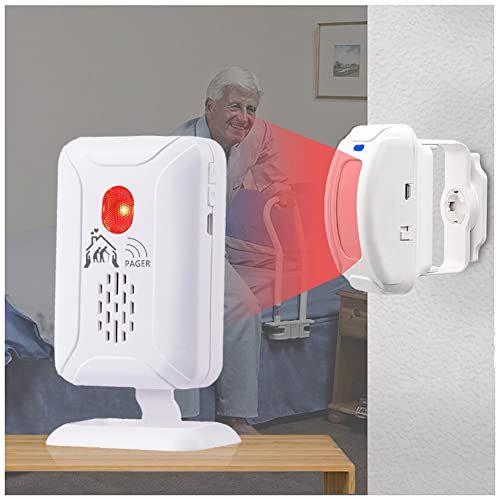
The Nesthao bed sensor approach focuses on fall prevention by detecting foot contact with the floor, using a floor-placed motion sensor rather than a traditional pad. This design can minimize false alarms caused by incontinence or movement. It transmits within a broad open-area range (up to 918 feet), enabling monitoring across rooms or floors. The system supports caregivers who want to observe when a loved one attempts to rise, while reducing the chance of startling a patient during the night.
Considerations for choosing a bed-based sensor
- Assess whether a floor-mount motion sensor better suits your room layout than a mattress pad.
- Verify transmitter range and receiver placement to ensure reliable alerts during the night.
- Test the self-test procedure and verify there are no false positives before regular use.
Buying Guide: Key Purchase Considerations And Comparisons
Choosing the right door alarm system involves balancing coverage, loudness, ease of use, and the environment where it will operate. Here are essential factors to compare across options.
- Coverage and range: For multi-door homes or small facilities, choose systems with multiple sensors and longer range to prevent missed alerts.
- Alert types: Consider whether you need audible alarms, flashing LEDs, or both to accommodate hearing impairment and noisy environments.
- Volume levels: Systems offering adjustable volume help tailor alerts to different rooms and times of day.
- Installation: Wireless kits with pre-paired components simplify setup; assess if you require temporary or permanent placement.
- Power source and battery life: Battery-powered devices offer flexibility for travel or rental housing; check expected battery life and indicators for replacements.
- False alarms: Some sensors are sensitive to drafts or pets. Look for adjustable sensitivity and testing procedures to minimize nuisance alerts.
- Portability: If travel or hotel stays are common, compact units with easy setup are beneficial.
- Accessibility: LED indicators and clear audible alerts help users with hearing or cognitive challenges.
- Durability and design: Theft-resistance, weather tolerance, and unobtrusive aesthetics matter for daily living spaces.
- Return and support: Favor products with reliable customer support and straightforward return policies in case the system does not fit your needs.
In sum, the five selected options provide a spectrum of coverage, alert styles, and installation simplicity to suit American homes and care settings. Whether you need a multi-sensor setup for a larger residence or a compact bed-monitoring approach for fall prevention, these choices address safety without overwhelming caregivers or patients.