Answer: For nephrostomy drainage, choose bags with clear volume markings, a secure twist drain valve, and a long kink-resistant silicone tube for mobility. The top picks below are best for patients needing discreet wear, reliable drainage control, and comfortable all-day use. This guide highlights five practical options, suited for patients, caregivers, and healthcare settings seeking straightforward monitoring and secure drainage. A quick summary table is included to compare capacity, tube length, and key features at a glance.
| Product | Capacity | Tube Length | Valve | |
|---|---|---|---|---|
| Filigan 600ml Nephrostomy Bags (Pack of 5) | 600 ml | 24 inches | Twist Drain Valve | Short-term and multi-pack needs |
| Opstra Yee 3-Pack 600ml Nephrostomy Bag | 600 ml | 24 inches | Drain Valve | Two-leg-strap stability, easy monitoring |
| Lifevv 600 ML Urine Drainage Bag (1 Pack) | 600 ml | 24 inches | Twist Drain Valve | Compact, discreet wear |
| Filigan 4-Pack 1000ml Nephrostomy Bags | 1000 ml | 47 inches | T-Tap Drain Valve, Robert Clamp | Long reach, higher drainage needs |
| Urosagan 3-Pack 750ml Nephrostomy Drainage Bag | 750 ml | 24 inches | Twist Drain Valve | Clear monitoring with comfortable sizing |
Filigan 600ml Nephrostomy Bags (Pack of 5)

Capacity and visibility: A 600 ml clear bag with graduated markings allows easy volume monitoring. The clear design helps caregivers and patients quickly assess drainage levels during daily activity. Best for: patients who need compact, reliable bags for short-term use or when a small, discrete option is preferred.
Drainage control: Features a twist drain valve for hygienic, one-handed operation. This makes emptying predictable and reduces handling complexity in busy care routines. Best for: users prioritizing straightforward, controlled emptying.
Tube and mobility: Comes with a 24-inch silicone tube that is flexible and kink-resistant, improving comfort and movement. Best for: active patients who require freedom of movement without tubing becoming a snag risk.
Considerations: While ideal for daily wear, large volumes require occasional monitoring for tubing length comfort and the need to manage bag size during extended use.
Opstra Yee 3 Pack 600ml Nephrostomy Bag
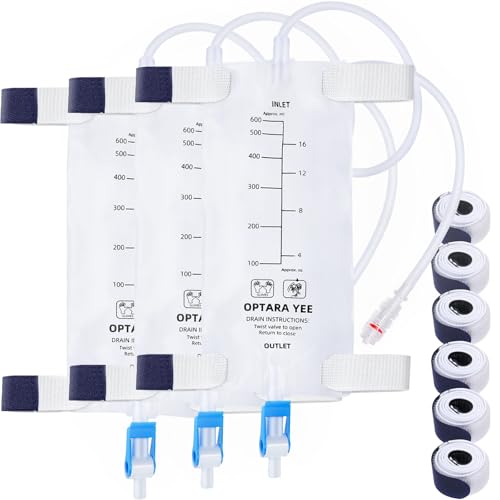
Design and stability: The 3-pack includes two adjustable leg straps for secure wear, helping keep the bag in place during movement. Best for: individuals who value secure attachment and stability during daily activities.
Monitoring features: A visible scale on the transparent 600 ml bag allows quick volume checks at a glance. Best for: caregivers who need easy, at-a-glance measurements without removing the bag.
Tube flexibility: A 24-inch soft tubing design supports natural body movement and varied positions. Best for: users who require flexibility in positioning the drainage line.
Limitations: The set relies on leg straps for stability; users with different leg sizes may need adjustments for optimal fit.
Lifevv 600 ML Urine Drainage Bag (1 Pack)

Size and discretion: The 600 ml capacity is designed to be not too heavy when full and discreet when worn under clothing. Best for: patients who prefer a compact, low-profile bag for daily wear.
Anti-reflux and valve features: Anti-reflux valves minimize retrograde contamination, and twist-valve ports provide controlled emptying. Best for: ensuring safer drainage and reducing backflow risk.
Tube length: Pre-attached 60 cm (24 in) silicone tube fits most users and can be cut to length. Best for: patients needing a customizable setup without extra fittings.
Caution: In some cases, ensure the cut length does not compromise reach or cause tension on the catheter.
Filigan 4-Pack 1000ml Nephrostomy Bags

Capacity and reach: Each 1000 ml bag offers higher drainage capacity, useful for extended drainage needs. Best for: users requiring less frequent bag changes or higher volume management.
Tubing and drainage control: A long 47-inch silicone tube provides extended reach, with a T-tap drain valve and Robert Clamp for reliable, mess-free drainage. Best for: caregivers prioritizing secure, controlled emptying in diverse positions.
Practical note: The longer tubing adds comfort for patients with mobility limits, but may require careful routing to avoid tugging on the catheter.
Urosagan 3-Pack 600ml Clear Nephrostomy Bags

Capacity and comfort: 600 ml bags with clear markings for easy monitoring. Best for: individuals seeking standard-size bags with straightforward capacity checks.
Tubing and belt option: Includes a waist belt to help stabilize the bag and tubing, enhancing comfort during daily activities. Best for: users who appreciate an integrated wear solution for extended use.
Limitation: The included belt may require adjustment for users with unique abdominal measurements; ensure proper fit to prevent movement during activity.
Dedsio 3-Pack 750ml Nephrostomy Drainage Bags

Capacity and clarity: 750 ml capacity with clear markings supports reliable monitoring. Best for: users who need a balance between size and readability.
Tubing and connection: 24-inch silicone tubing with a flexible luer lock connector provides a secure fit and reduces wound contact. Best for: ensuring a tight, leak-minimized connection.
Consideration: The luer lock connection improves leak protection, but compatibility with non-Luer lock accessories should be verified.
Buying Guide: How to Choose the Right Nephrostomy Drainage Bag
What capacity do you need?
Bag capacity varies from 600 ml to 1000 ml. Larger bags reduce the frequency of changes but can be heavier and bulkier. Smaller bags are lighter and less conspicuous but require more frequent monitoring and changes.
Is the tubing length sufficient for daily activities?
Standard tubes are around 24 inches (about 61 cm). Longer tubes provide more flexibility for movement and seating. Shorter tubes may limit positioning and require more careful bag placement.
What drainage valve design matters?
Twist valves offer simple, one-handed control and are common in many models. T-tap valves with clamps provide a secure, leak-resistant drainage option for higher assurance in transit and emptying.
How important is stability and comfort?
Leg straps or waist belts help secure the bag during movement. Adjustable straps improve comfort for long wear. For active users, consider long tubing and secure mounting to prevent tugging or snagging.
What are the monitoring features?
Clear, graduated bags allow quick visual checks of fluid volume without removing the bag. A visible scale reduces the need for frequent handling, aiding caregivers and patients in daily routines.
What are potential limitations to watch for?
Some bags may be bulkier due to higher capacity, and longer tubes can complicate routing around clothing or seating. Ensure proper fit around the torso or leg and confirm compatible fittings with your catheter system.
Who should consider these bags?
These bags are suitable for patients with nephrostomy drainage needs and caregivers seeking practical, monitorable, and comfortable options. Select packages that match daily activity level, preferred wear location (waist vs. leg), and anticipated drainage volume.
Frequently Asked Questions
- What is the typical capacity for nephrostomy drainage bags?
Common capacities range from 600 ml to 1000 ml, chosen based on daily drainage volume and change frequency. - Can I mix and match bags from different brands?
Mixing is possible if tube length and valve compatibility are suitable for your catheter system; verify connections to prevent leaks or contamination. - How do I know if a bag is comfortable for daily wear?
Look for lightweight materials, secure straps (leg or waist), and tubing that allows natural movement without kinking. - Is a longer tube always better?
Longer tubing offers more positioning flexibility but requires careful routing to avoid snagging or tugging on the catheter. - What maintenance is required for these bags?
Regularly inspect valves for signs of wear or leakage, ensure tubing is kink-free, and replace bags per care plan or manufacturer guidance. - Are there safety considerations for nocturnal use?
If sleeping positions place strain on the tubing, switch to a bag with a more secure strap or shorter tubing to minimize tension.