Answering the need for calm, focused listening in loud environments, these ear defenders are designed for children and teens with autism or sensory sensitivities. The best options balance effective noise reduction with comfort and speech clarity. The top picks below are tailored to different situations—school, travel, concerts, and daily activities—so you can choose what fits best for the wearer. This guide highlights who each product is best for and why it stands out.
| Product | Best For | Key Benefit |
|---|---|---|
| Dr.meter EM100 Noise Cancelling Headphones for Kids Adults, Ear Muffs | Most versatile everyday use | Memory foam comfort with 27.4 dB SNR protection |
| iClever EM01 Noise Cancelling Headphones for Kids Adults | Children with autism, multi-scenario protection | 29 dB SNR, foldable design, safety certifications |
| ProCase Kids Noise Cancelling Headphones Ear Hearing Protection, Red | Young children with sensitivity to crowds | NRR 24 dB, ANSI/CE certified, adjustable for growing kids |
| Vanderfields Kids Noise Canceling Headphones | School and home use | 19 dB NRR, durable, kid-friendly design |
| ZOHAN Kids Ear Protection 2 Pack | Two-ear protection for school and home | 2-pack convenience with sensory-friendly foam |
Dr.meter EM100 Noise Cancelling Headphones for Kids Adults, Ear Muffs

The Dr.meter EM100 offers a comfortable fit with memory foam padding and PU leather for all-day wear, making it suitable for children with sensory needs and long events. This model emphasizes comfort to prevent pressure points during concerts, fireworks, or school assemblies. It reduces noise by about 27.4 dB SNR, which helps maintain speech clarity so kids can hear caregivers and teachers while still blocking overwhelming sounds. The adjustable headband accommodates growing kids and even adults, supporting a wide range of users. Best for families seeking a balance of comfort and reliable noise reduction.
Who it’s best for: Kids who are sensitive to loud noises yet need to stay engaged in conversation or instruction. Why chosen: Strong emphasis on comfort with a reasonable reduction level makes it versatile for daily use and travel. Caution: The earmuffs are not a complete noise blocker; some auditory cues will remain, which is beneficial for safety and situational awareness.
iClever EM01 Noise Cancelling Headphones for Kids Adults
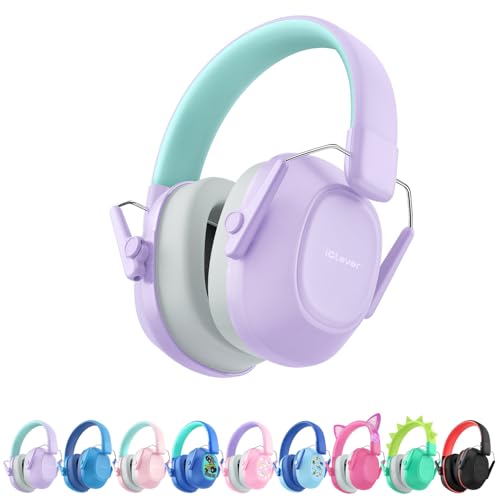
The iClever EM01 provides a higher noise reduction with an SNR of 29 dB and potential reductions up to 46 dB in certain contexts. It uses double-certified safety features (ANSI S3.19-1974 and CE EN 352-1) and BPA-free ABS materials, making it a robust choice for autistic children and sensory-sensitive users. Foldable for travel and storage, this model supports multiple settings—from classrooms to loud events—without compromising safety. Best for: families needing substantial noise protection that remains portable and safe. Caution: Do not rely on complete noise elimination; some ambient sound is still perceptible to ensure situational awareness.
ProCase Kids Noise Cancelling Headphones Ear Hearing Protection, Red

ProCase’s kids model focuses on younger wearers with an NRR rating of 24 dB and ANSI S3.19 (US) and CE EN352-1(EU) certifications. The one-size-fits-all approach relies on retractable stainless steel and rotatable ear cups, making it adaptable for varying head sizes as a child grows. Best for: younger children who need reliable protection during flights, crowded events, or busier classrooms. Caution: Initial snugness is normal; user may need to wear with the box to adjust fit for a few hours.
ZOHAN Kids Ear Protection 2 Pack
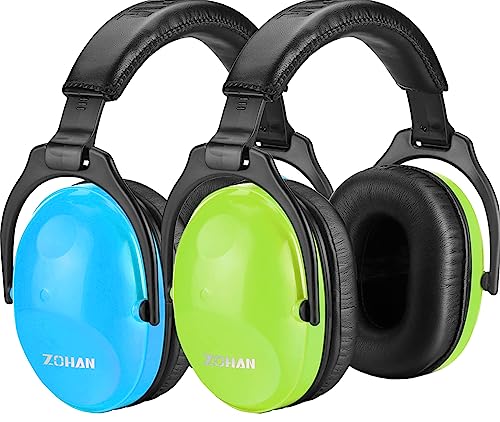
The ZOHAN 2-pack is designed for school and home use, specifically addressing sensory needs with a focus on durability and comfort. The 2026 upgraded durability emphasizes reinforced ear pads, making them suitable for rough daily use. Best for: families who want a dependable pair for both school and at-home activities, plus the convenience of a spare. Caution: Data notes no detailed SNR/NRR figures beyond the described 25 dB range; verify compatibility with specific environments before heavy use.
Buying Guide
What to consider when choosing ear defenders for autism
- Noise reduction level: Higher dB numbers offer more quiet, but too much reduction can hinder safety and hearing cues. Look for a model with a balanced SNR/NRR that preserves speech while reducing background noise.
- Comfort and fit: Memory foam, soft padding, and adjustable bands reduce wear fatigue. Consider head size range (kids vs. teens/adults) and whether the cups fit around eyeglasses if needed.
- Safety certifications: ANSI S3.19 and CE EN352-1 certifications indicate standards compliance for hearing protection. This is important for durability and reliability in various environments.
- Portability: Foldable or compact designs are beneficial for travel, school bags, and daily commutes.
- Speech clarity: For autism-focused use, prioritize models that reduce noise without muffling voices, so instructions and conversations remain understandable.
- Durability: Look for reinforced frames and stitch bonding on ear pads if rough daily use is expected.
- Two-pack options: If you have more than one child or want a spare, a 2-pack can be cost-effective and practical for school and home use.
FAQ
- What is a typical noise reduction range that helps kids with autism?
- Are these safe for everyday wear?
- Should I choose higher or lower dB protection?
- Can these be used for school and classroom settings?
- Do ear protectors affect language development?
- Are two-pack options beneficial?
A practical range is 20–30 dB SNR/NRR, which reduces overwhelming sounds while keeping speech audible for instruction and conversation.
Yes, when used as directed, with appropriate fit, and certifications like ANSI S3.19/CE EN352-1, these protect hearing during loud activities without complete sound isolation.
Balance is key. Higher dB protection helps in loud environments (concerts, sports events) but may hinder alertness. Start with moderate protection and adjust based on comfort and safety needs.
Yes. Several models are foldable and comfortable for long wear, designed to filter background noise while keeping teachers’ voices audible.
Properly selected devices preserve essential speech cues, which can support communication and learning in sensory environments when used appropriately.
Two-pack options are convenient for homes with multiple children or for keeping a spare in school bags, reducing the chance of forgetting protection.