Looking for an electronic blood pressure monitor you can trust at home? This guide highlights five top options that balance accuracy, ease of use, and memory features. Each pick suits a different buyer type—from seniors needing large displays to tech-savvy users who want smartphone syncing. Use the quick comparison table below to decide which monitor best fits your needs, then read detailed sections to understand who benefits most from each model and any practical limitations.
| Product | Best For | Why It Stands Out |
|---|---|---|
| iHealth Track Smart Upper Arm Monitor | Tech-friendly households | Bluetooth syncing with iOS/Android; large backlit display |
| Oklar Blood Pressure Monitor (Upper Arm) | Families with multiple users | Two-user memory, large LED display |
| OMRON Iron Blood Pressure Monitor | Medical-grade confidence | Advanced accuracy, irregular heartbeat detection |
| Oklar Wrist Blood Pressure Monitor | Seniors or visually impaired | Voice broadcast, dual-user memory |
| yuwell Blood Pressure Monitor | One-button simplicity | Voice feedback, high accuracy, large cuff |
iHealth Track Smart Upper Arm Monitor
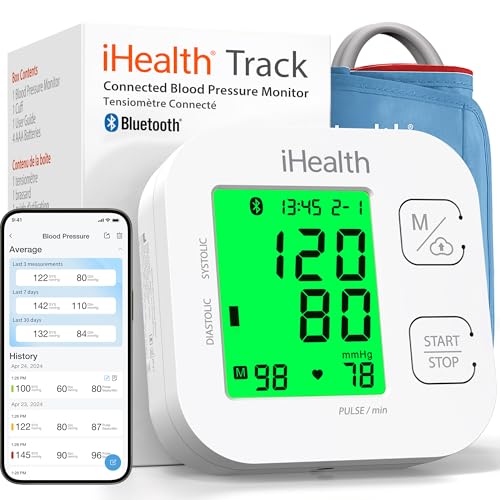
This monitor is best for tech-aware users who want to track readings via a smartphone app. It features clinically accurate operation with two front buttons for ease of use and a large, color-coded display to quickly assess results. It stores up to 99 readings on the device and supports unlimited readings on compatible iOS/Android apps, making it suitable for people who want ongoing trends and remote monitoring. Potential limitation: Bluetooth pairing requires a recent smartphone OS and the appropriate app version.
Oklar Blood Pressure Monitor (Upper Arm)
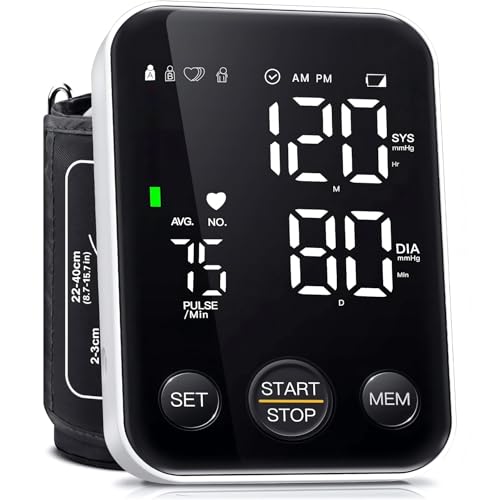
Choose this if you need simple operation and strong memory for two users. It offers a one-button start, a large LED display, and the ability to store up to 240 readings—120 per user—making it a practical option for households tracking blood pressure over time. Best for: users who value straightforward use and clear, quick readings. Limitation: the device relies on manual cuff positioning for accuracy, and older displays may still be less legible for some users with visual impairment.
OMRON Iron Blood Pressure Monitor

Best for users seeking clinician-like confidence at home. The OMRON Iron monitor emphasizes advanced accuracy and includes irregular heartbeat detection to flag potential concerns. A simple one-touch operation helps users measure quickly, and regular monitoring can reveal fluctuations early. Caution: while highly reliable, some users may find the cuff a bit bulky for smaller arms, so verify cuff fit before purchase.
Oklar Wrist Blood Pressure Monitor

This model is ideal for seniors or users who prefer a compact form factor and voice guidance. The wrist monitor provides quick readings with a 35-second measurement window and dual-user memory (240 readings total). A built-in voice broadcast helps users follow results without needing to glance at the display. Limitation: wrist devices can be less accurate than upper-arm monitors if not positioned correctly on the wrist level with heart. Ensure proper placement for reliable results.
yuwell Blood Pressure Monitor
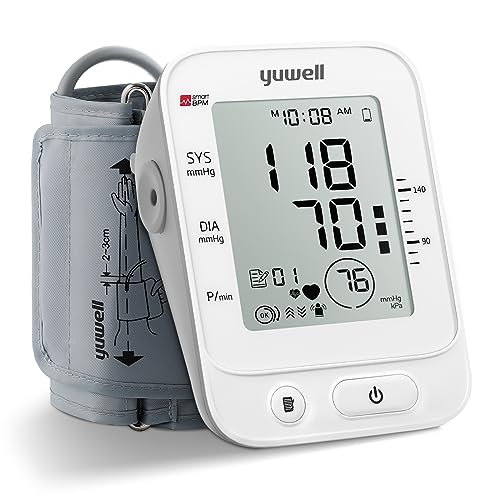
Best for users who want a large display and one-button operation. The yuwell monitor includes voice broadcasting for guidance and a cuff designed to fit a broad range of upper-arm circumferences (8.7–17.7 inches). With accurate readings based on established standards and a simple workflow, it suits households prioritizing ease of use and audible feedback. Consider cuff fit if you have an unusually small or large arm, and verify that the power options suit your setup.
Buying Guide: Key Purchase Considerations
- Arm type: Upper-arm monitors tend to be more accurate than wrist models and are recommended for home use by many clinicians.
- Display size and clarity: Large, backlit displays help in low-light conditions and for visually assisted users.
- Memory and data management: Look for devices that store multiple readings and offer smartphone syncing if you want long-term trend tracking.
- Accuracy features: Consider models with irregular heartbeat detection or clinically validated readings for peace of mind.
- Ease of use: One-button operation and simple setup reduce user friction, especially for seniors or those with limited tech experience.
- Cuff fit range: Ensure the cuff accommodates the arm circumference of all potential users in the household.
- Power options: Battery-powered devices support portability, while USB-C or power adapters offer continuous use at home.
Frequently Asked Questions
- What should I look for in a home blood pressure monitor? Look for cuff type (upper-arm preferred), accuracy features, cuff sizing range, memory capacity, and optional smartphone syncing.
- Is a wrist monitor as accurate as an upper-arm monitor? Generally, upper-arm monitors are more consistent and accurate; wrist models can be affected by positioning.
- Do I need a monitor with irregular heartbeat detection? It helps flag potential concerns but is not a replacement for professional medical advice.
- How many readings should I record daily? A practical approach is one measurement in the morning and one in the evening, over several weeks to establish a trend.
- Can multiple users share one device? Yes, many models store memories for two users or more. Check memory limits and app compatibility for your household.
- Will smartphone syncing improve accuracy? Syncing helps track trends over time and share data with healthcare providers, but it does not necessarily improve measurement accuracy itself.