When a medical emergency occurs, having clear, at-a-glance information in your wallet can save precious time. This guide highlights five wallet-ready emergency medical cards designed for quick visibility and reliable information delivery to first responders. The best choices suit different needs: some are multi-pack for families, others emphasize durability or legibility. Use this list to decide which card type fits your daily routine, whether you want lightweight engraving, waterproof plastic, or simple, write-on red cardstock.
Summary table of chosen products:
| Product | Best For | Key Benefit | Limitations |
|---|---|---|---|
| RXBC2011 Emergency Medical Information ID Card Pack of 5 | Individuals who want easily writable cards | Bright red header; 14pt stock; write-on surface | Not waterproof |
| Emergency Medical Information ID Card Pack of 5 (LEE S A.M.) | Wallet users needing 5 copies | Compact wallet size; clear emergency data | Paper/cardstock variation |
| MEDMAX 8 Pack Emergency Medical Cards Z-Folding | Caregivers or households | 8 cards with sleeves; standout red sleeve | Includes sleeves; bulk packaging |
| 4 Pack Medical Alert Emergency Contact Information Id Card (JUCARA) | Multiple forms of storage (wallet, keychain) | Includes card holders and keychain tag | Plastic/foil details not specified |
| Custom Emergency Contact Wallet Card | Waterproof Ice Card (Secure ID, LLC) | Waterproof, long-lasting data | Waterproof PVC; laser-engraved data; includes key tag | More premium option |
RXBC2011 Emergency Medical Information Card Pack of 5
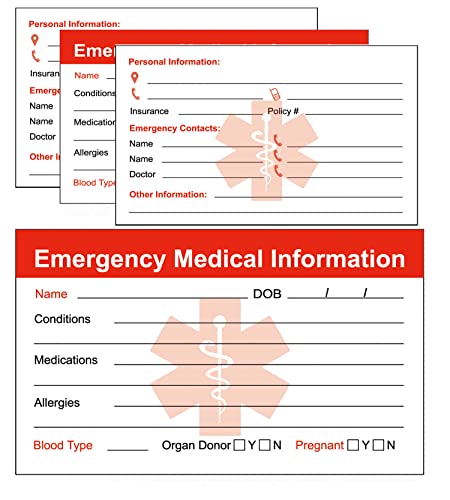
Best for: Individuals who want a simple, write-on emergency card that stands out in a wallet. The pack includes five 14-point stock cards with a bright red header designed for quick recognition by first responders. The smooth surface facilitates easy handwriting of allergies, medications, and conditions. Caution: cards are not waterproof, so avoid exposure to moisture if possible.
4 Pack Emergency Medical Information Id Card Red

Best for: Home users who want multiple red emergency cards with visible “Star of Life” symbols. The pack includes four red cards with large text and a tri-fold design that accommodates extensive medical details. Limitation: data entry relies on the user’s handwriting, and the product is paper-based.
Emergency Medical Information ID Card Pack of 5 (LEE S A.M.)

Best for: Wallet users who want a compact card with clear emergency data across multiple copies. The pack provides five cards suitable for wallets, purses, or phone cases. Better for those who value immediate readability and simple layout. Caution: appearance and materials may vary since multiple similar designs exist in this line.
Custom Emergency Contact Wallet Card | Waterproof Ice Card

Best for: Users needing long-lasting, waterproof information with laser-engraved data and a matching key tag. This PVC card is designed to resist water and smudging, making it suitable for daily wear and wet conditions. Choose this if you prioritize durability and legibility over cost. Limitation: laser-engraved text limits the amount of data compared to fill-in options on paper.
4 Pack Medical Alert Emergency Card + Keychain (JUCARA)

Best for: Caregivers who want redundancy across storage options. The set includes 4 cards with holders and 2 see-card-in-wallet keychains, helping ensure critical data is accessible even if one card is misplaced. Limitation: intended as a multi-item kit rather than a single-purpose card, which may add bulk for some users.
10 Pack With Sleeves Emergency Card By In Shine
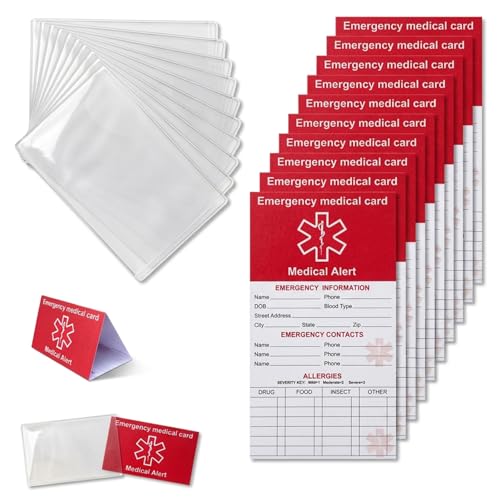
Best for: Large households or facilities needing many identical cards with protective sleeves. The set provides ten thick, write-on red cards along with ten sleeves to protect each card from wear. A practical choice for caregivers, retirement communities, or schools. Caution: paper stock may wear over time with heavy handling.
Buying Guide: How to Choose The Right Wallet Card
- What is your primary use? Single user, family packs, or facility-wide distribution?
- Do you prioritize durability or cost? Waterproof PVC and laser engraving offer longevity; write-on paper or cardstock is cheaper but less durable.
- How much data do you need to record? Consider space for medical conditions, allergies, medications, and emergency contacts.
- What storage options do you want? Wallet cards, card sleeves, or keychain tags for quick visibility?
- Are readability and accessibility important? Look for cards with bright headers, large text, and high-contrast layouts.
- Will you need multiple copies? Packs of five or more are useful for sharing with caretakers or family members.
Frequently Asked Questions
- What information should I include on a wallet emergency card? — Include your name, major medical conditions, allergies, medications, emergency contacts, and any critical alerts (e.g., implants, special needs).
- Are all emergency cards waterproof? — Not all cards are waterproof. PVC cards are usually waterproof, while cardstock or paper cards are not.
- Can emergency cards be engraved or printed? — Some options offer laser engraving for durability; others provide writable surfaces for customization at home.
- Where should I store the card in my wallet? — Place it in a dedicated slot or sleeve where it remains easily visible and protected from wear.
- Should I carry more than one card? — Having multiple copies reduces the risk of losing a card and allows placement in various locations (wallet, purse, car, caregiver’s bag).
- Is a key tag or sleeve helpful? — Yes, key tags or protective sleeves can improve visibility and durability, especially for frequent travelers or caregivers.