Answering the needs of families seeking reliable mobility aids for children with cerebral palsy or other mobility challenges, this guide highlights top options that balance safety, adjustability, and comfort. Each product is best for a specific situation — from early standing practice to supported walking and seated activities. Use the quick comparison below to pick the best fit for your child’s size, activity level, and therapy goals.
| Product | Best For |
|---|---|
| 6-Wheels Walkers Disabled Children Cerebral Palsy… | Younger children needing cushioned support and adjustable height |
| Walkers Disabled Children Cerebral Palsy Six Wheel… | Postoperative rehab and balance support |
| QIQIZHANG Walkers for Seniors Children… | Height and width adjustable, versatile for growing children |
| Walker Disabled Children Cerebral Lower Limb… | Standing frame with anti-rollover safety |
| AoForce Walkers for Walker Children with Cerebral Palsy | Multi-size options for growing kids and varied terrains |
6-Wheels Double-Cushion Walker For Kids

The 6-Wheels Walker is designed for pediatric rehabilitation, supporting children from about 28 to 48 inches tall. It features double cushions for comfort in various seasons and a safer, safer-one-piece armrest design. Solid tires reduce slip and offer adjustable wheel speed. Best for younger children who need consistent trunk and leg support during early gait training. This option is especially suitable for hemiplegia or post-injury rehabilitation under supervision.
Who it’s best for: active toddlers and preschoolers needing stable standing support and a gentle introduction to walking. Why selected: combines safety-focused cushioning with adjustable height and reliable wheels. Caution: ensure proper supervision and fit; the product’s effectiveness depends on correct height alignment and secure fastenings.
Six-Wheel Walker With Foldable Belt Seat
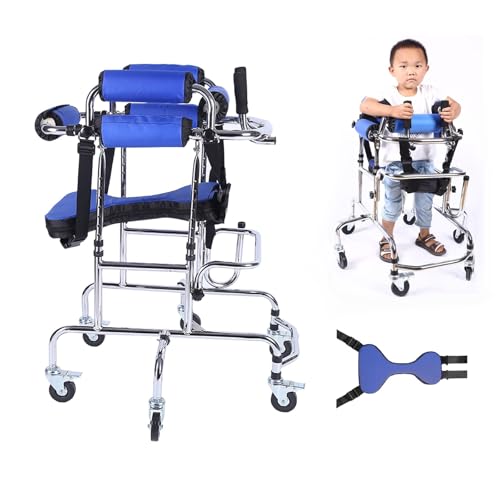
This walker uses a six-wheel, foldable design with a supportive handrail and thickened stainless steel. It’s best for children who need steady balance aid while standing or during short seated mobility. The high-density sponge handrail helps with grip stability, particularly for users with weak arms. Pick this when durability and a comfortable, sweat-absorbent grip are priorities.
Who it’s best for: children recovering from surgery or those needing postural support during rehab. Why selected: robust construction and a supportive handrail reduce fall risk. Caution: folding and unfolding should be performed by an adult to prevent pinching or misalignment during setup.
Height-Adjustable 6-Wheel Walker For Seniors And Kids

QIQIZHANG offers a height- and width-adjustable six-wheeled walker with a detachable cushion. It’s suited for both taller children and youth who require frequent sizing changes as they grow. A high-density sponge handrail helps with grip, and the cushion can be customized for comfort. Best for kids who need a longer-term, adjustable mobility aid that adapts to growing bodies.
Who it’s best for: families wanting a scalable walker that can adapt across multiple therapy stages. Why selected: adjustable dimensions and comfortable padding improve long-term wearability. Caution: ensure height and width are locked securely after adjustment to prevent shifting during use.
Standing Frame With Seat For Cerebral Palsy

This standing frame balances stability and mobility for children who need support during upright training. Its adjustable height and width accommodate different body types, helping prevent falls while encouraging a natural walking posture. Best for therapy sessions focused on trunk alignment and leg extension. Caution: ensure a secure, flat surface to prevent tipping and check seat height regularly as a growth aid.
AoForce Multi-Size Walkers For Cerebral Palsy

AoForce offers three size options to fit children at different stages of growth. The walker is designed for walking training and daily mobility, with all-terrain wheels and stable supports. Choose this when a child’s height varies significantly over time, or when you want a single device to grow with the child. Caution: verify the specific dimensions (S, M, L) align with your child’s height and width needs to avoid discomfort or improper support.
Buying Guide: How To Choose The Right Pediatric Walker Or Standing Frame
What is the child’s size and growth pattern? Measure height, arm span, and leg length. Look for adjustable height, width, and seat options to accommodate growth without compromising safety.
Is the device primarily for standing practice, mobility, or seated therapy? Standing frames emphasize upright posture; walkers provide continuous support during gait training. Some models combine both features for versatile therapy.
What materials and cushion quality matter? Durable metal frames with rust resistance, cushioned handrails, and breathable seats improve comfort and longevity. Cushions should be removable for cleaning and tailored to the child’s size.
How important is portability and storage? Foldable or lightweight designs are easier to transport between home and therapy sessions, while solid wheels offer stability on varied surfaces.
Safety features to look for include anti-slip wheels, secure locking mechanisms, wide bases for balance, and user-friendly adjustment tools to reduce the risk of misalignment during use.
Maintenance and care: check fabric cushions, rails, and fasteners regularly. Clean with mild soap and water; dry thoroughly to prevent corrosion or mold. Keep a spare adjustment tool kit handy for caregivers.
Frequently Asked Questions
- What age is best for starting a walker or standing frame? — Start when a child demonstrates stability in supported standing and a therapist recommends gait training with supervision.
- Can these devices be used at home and school? — Yes, many models are portable and suitable for home, clinic, and classroom settings, with locking adjustments for safety.
- Do these walkers support uneven surfaces? — Some models are designed for all-terrain use, but smooth indoor floors are safest for beginners.
- How do I know which size to buy? — Follow the manufacturer’s height and width adjustment ranges, and consult a pediatric therapist for precise fitting guidance.
- Are cushions important for safety? — Cushions improve comfort and grip, reducing slipping risk and encouraging longer, safer use during therapy sessions.
By prioritizing adjustable fit, supportive cushioning, and durable construction, the best equipment for disabled children can enhance mobility training and daily activities. Each option above addresses different therapy stages, body sizes, and environments, making it easier to choose the right aid for your child’s needs.