Choosing the right finger pricker, or lancing device, is essential for comfortable and accurate at‑home blood sugar or blood sample testing. This guide highlights top options, comparing depth settings, safety features, and compatibility with various lancets. Each product section includes direct links and visuals to help you decide which device best fits your testing routine and skin sensitivity. The selection emphasizes reliability, safety, and user-friendly design to support consistent, pain-minimized sampling at home.
| Product | Depth Settings | Key Benefit |
|---|---|---|
| One Step Lancing Device Pen | 5 depths | Fast, adjustable depth for reduced pain |
| JJ CARE Lancing Device | 10 depths | Wide compatibility with many lancets |
| ONE-CARE Safety Lancets | Pre-loaded, 30G | Push-button activation with auto-retract safety |
| Medline Sterile Safety Lancets | 28G x 1.6 mm | Spring-loaded, controlled penetration |
| Care Touch Lancing Device | 10 depths | Quality construction with practical ejector |
One Step Lancing Device Pen

The One Step Lancing Device Pen offers an adjustable depth system with five settings, enabling customization to skin thickness and sensitivity. It features an easy arming system and a sliding lancet ejector, designed to minimize motion and ensure swift, controlled lancet release. The device is compatible with twist top lancets (various gauges), supporting flexibility in choosing lancets for different testing needs. It emphasizes a reduced pain experience through a fast release mechanism, helping users obtain a blood sample with less discomfort.
JJ CARE Lancing Device

The JJ CARE lancing device provides ten adjustable depth settings, offering broad customization for user comfort. The ejector button facilitates painless lancet insertion into the skin, and the device is designed to be compatible with a wide range of round lancets. Its ergonomic grip emphasizes ease of use and dependable performance, making it a practical choice for regular diabetes testing and blood sampling at home.
ONE-CARE Safety Lancets
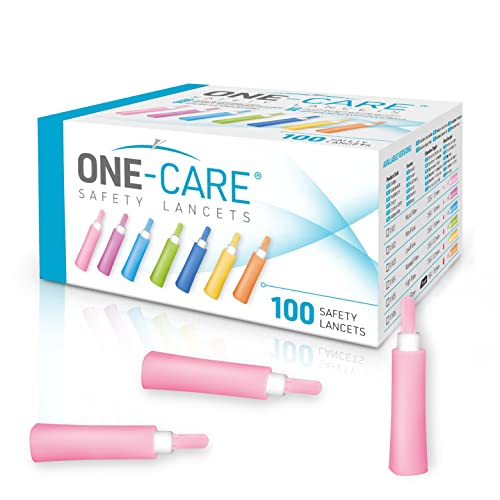
ONE-CARE Safety Lancets are pre-loaded and feature a push-button activation with a retracting needle for safety. The unit is designed for a simple, three-step use, aligning with ease for both beginners and experienced users. Ultra-thin lancets aim to minimize discomfort while delivering reliable blood samples for glucose monitoring and other testing needs. The sterile design reduces infection risk and supports convenient, single-use disposal.
Medline Sterile Safety Lancets

Medline Sterile Safety Lancets feature a push-button, spring-loaded mechanism with controlled penetration (28G x 1.6 mm). Each lancet is sterile and designed for single-use, reducing contamination risk. The safety features aim to protect users from accidental needle sticks after sampling, while maintaining a straightforward, reliable testing process that fits standard glucose and other capillary blood tests.
Care Touch Lancing Device

The Care Touch lancing device features a convenient ejector button and a robust build with ten adjustable depths. Designed for compatibility with many standard lancets, this device emphasizes ease of use and a secure grip. The adjustable depths allow users to tailor the puncture to comfort level and required blood yield, supporting consistent sampling for home glucose monitoring or general blood testing needs.
Pip Lancets

Pip Lancets integrate the lancet into a compact all-in-one design, removing the need for a separate lancing device. The 30G ultra-thin needles reduce discomfort, and the single-use sterile lancets ensure hygiene and safety for routine blood glucose testing or other capillary measurements. This option emphasizes portability and simplicity for quick, on-the-go testing.
Buying Guide
Key considerations when selecting a finger pricker include depth adjustability, safety features, lancet compatibility, and ergonomics. Depth settings influence pain and blood yield; more settings offer better customization for different skin thickness and sensitivity. Safety features such as push-button activation, auto-retract mechanisms, and protective shielding reduce the risk of accidental sticks and contamination. Lancet compatibility matters for those already using specific lancet brands or gauges. Ergonomics, including grip comfort and ease of use, affects consistency and testing speed, especially for users with dexterity challenges.
Depth and Comfort
Devices with multiple depth options allow users to fine-tune puncture depth, balancing comfort and adequate blood collection. Pain perception varies by lancet gauge and depth, so models offering a wide range—approximately 5 to 10 settings—accommodate most users. For sensitive individuals, shallower settings paired with ultra-thin lancets provide a noticeable reduction in discomfort during frequent testing.
Safety and Hygiene
Single-use, sterile lancets paired with safe piercing mechanisms protect users and reduce infection risk. Look for auto-retractable needles or protective covers that minimize exposure after testing. Ejector features should function smoothly to avoid hand strain or accidental lancet exposure. A reputable safety design supports consistent, hygienic testing routines at home.
Lancet Compatibility and Convenience
Some devices are designed to work with a broad range of lancets, while others are product-specific. If you already own lancets, choose a device that matches your preferred gauge and brand. Convenience features such as push-button ejection and twist-top designs improve portability and reduce preparation time, making home testing simpler, especially for caregivers assisting others.
Ergonomics and Durability
Ergonomic grips help maintain steady handling during testing, reducing finger fatigue over time. Durable materials and solid construction ensure reliable performance with repeated use. For frequent testers, consider devices that balance weight, size, and grip texture for comfortable, repeatable sampling.
Cost and Accessibility
While price is a factor, prioritize safety, reliability, and compatibility. If multiple people in a household require testing, devices with universal lancet compatibility can simplify purchases. Availability of replacement lancets and refills, along with compatibility with commonly used test strips, is important for long-term practicality.