When choosing gloves for hospital use, prioritize durable, latex-free nitrile options that protect against pathogens while providing tactile sensitivity. This guide highlights five medical-grade gloves well-suited for doctors, nurses, paramedics, and hospital staff, plus home care and clinic settings. Each pick is chosen for reliability, comfort, and practical use in busy medical environments. The table below helps compare what each product brings to your PPE kit.
| Product | Why It Stands Out |
|---|---|
| MED PRIDE Nitrile Medical Exam Gloves Large | High puncture resistance, large supply, ambidextrous design |
| Caring Nitrile Exam Gloves (100ct) Medium | Textured fingertips, ambidextrous, powder-free |
| MED PRIDE Black Medical Gloves Large | Heavy-duty nitrile with premium protection, bulk value |
| Schneider Medical Nitrile Exam Gloves (Medium) | Flexible 3 mil nitrile, latex-free, textured grip |
| Dealmed Medical Exam Gloves – 200 Count Large | Ambidextrous, non-irritating, strong protection |
MED PRIDE Nitrile Medical Exam Gloves Large
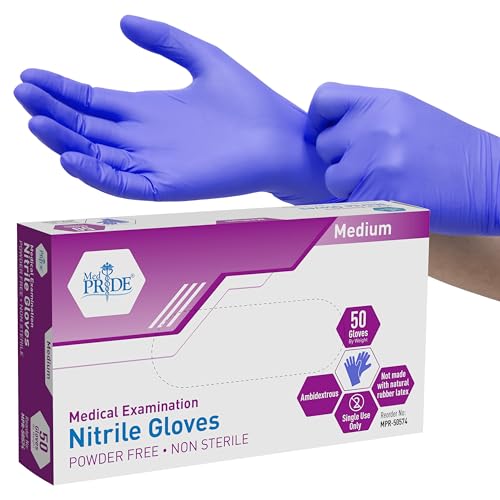
Best for high-volume clinics needing reliable, puncture-resistant protection. These medical-grade nitrile gloves are waterproof and durable, guarding against needles, drugs, and bodily fluids. Ambidextrous and available in multiple sizes, they suit doctors, nurses, paramedics, dentists, and at-home caregivers who require long-lasting gear. A caution: bulk boxes may be bulkier to store in tight spaces, so plan storage accordingly.
Caring Nitrile Exam Gloves (100ct) Medium

Best for clinics valuing tactile sensitivity with strong resistance. These powder-free, latex-free nitrile gloves offer textured fingertips for precise handling and compatibility with touch screens, making them suitable for exam rooms and preparatory tasks. They are ambidextrous for quick donning. Limitation: as with many nitrile gloves, extended wear can lead to hand fatigue if not sized correctly.
MED PRIDE Black Medical Gloves Large
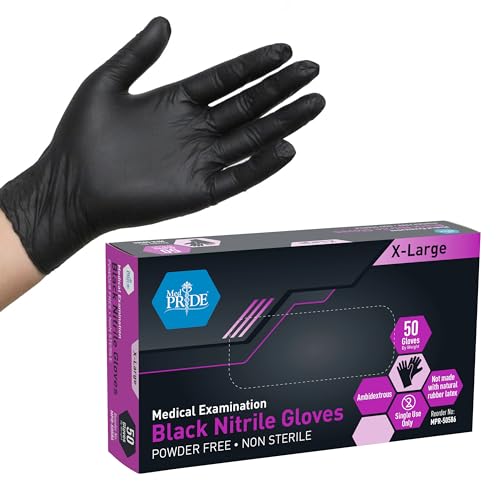
Best for busy hospital environments that require dependable, non-white gloves for inventory variety and concealment of grime. The black nitrile gloves emphasize durability and chemical resistance while maintaining a comfortable fit. They come in bulk packs, reducing restocking frequency. Caution: color may not be preferred in all sterile or visibility-focused procedures.
Schneider Medical Nitrile Exam Gloves (Medium)

Best for precise medical tasks requiring a secure grip. These 3 mil nitrile gloves are latex-free and powder-free, offering a balance of flexibility and protection. Textured fingertips enhance control when handling instruments. Better for tasks needing tactile accuracy; avoid if extremely thick gloves are required for heavy-duty protection.
Dealmed Medical Exam Gloves – 200 Count Large

Best for facilities that require bulk readiness. Dealmed gloves are non-allergenic, non-irritating, and ambidextrous, offering good tactile sensitivity for patient care while maintaining protection against liquids and debris. A potential limitation is that some users may prefer thinner or thicker gloves depending on the procedure type; choose size and thickness to match tasks.
Buying Guide
What material should you choose?
Nitrile gloves provide strong puncture resistance, chemical protection, and are latex-free, making them suitable for most medical settings. Consider powder-free options to reduce skin irritation and avoid powder dust in sterile environments.
What thickness is right for you?
Glove thickness varies from about 3 to 5 mil. Thinner gloves (3-4 mil) offer greater tactile sensitivity, ideal for delicate procedures. Thicker gloves (5 mil and above) provide better protection in high-risk tasks but may reduce dexterity.
How important is texture?
Textured fingertips improve grip on instruments and supplies, especially when hands are wet. For precision work, textured or micro-textured surfaces help prevent slippage and enhance control.
Who are these gloves for?
Different users benefit from different features. Doctors and nurses may prioritize tactile sensitivity and durability. Dentists or lab technicians might require precise grip. Home caregivers and first responders need reliable protection and bulk availability to ensure continuous PPE supply.
Storage and packaging considerations
Consider boxes versus cases for storage. Large orders may require organized shelving and rotation to prevent gloves from exceeding shelf life or becoming misplaced.
Safety and comfort notes
Always check for latex-free labeling if users have latex allergies. Choose powder-free variants to minimize powder exposure and potential irritation. Ensure proper sizing to reduce hand fatigue and improve protection during long shifts.
FAQ
- Are nitrile gloves suitable for all hospital tasks? Yes, they provide protection from fluids and sharps while offering good tactile sensitivity, though select thickness based on the task.
- What size should I choose? Sizes range from Small to XL. If in doubt, measure hand width and refer to manufacturer sizing charts to reduce fatigue and avoid tearing.
- What about powder-free options? Powder-free gloves reduce the risk of skin irritation and are generally preferred in sterile environments.
- Do gloves affect dexterity? Some gloves may slightly reduce dexterity; textured fingertips and thinner options help mitigate this for procedures requiring precision.
- Should I mix glove brands? For best coverage, use a primary brand and size that fits most staff, while keeping a smaller stock of alternate sizes for variability in hands.
- How should I store gloves? Store in a cool, dry place away from direct sunlight to preserve material strength and avoid degradation.