When choosing a health alarm for an elderly loved one, the goal is to balance safety with dignity. These devices alert caregivers before a fall or wandering becomes dangerous, with options ranging from bed and chair sensors to wireless caregiver pagers. This guide highlights five top picks that suit different living situations, including dementia care, independent living, and caregiver-on-the-go needs. Each product is evaluated for best use case, setup ease, and potential limitations so you can select the right system for your needs.
Product Comparison Snapshot
| Product | Best For | Key Benefit | Limitations |
|---|---|---|---|
| Smart Caregiver Bed Alarm with 10″x30″ Pad | Bedbound or largely sedentary seniors | Direct bed-side alert with optional wireless caregiver alerts | Requires bed pad setup under sheet |
| SYNLETT Caregiver Pager Wireless Call Buttons | Caregivers needing mobility | Portable pager system with multiple Wall/Body placements | Dependence on separate pager device |
| Nesthao Bed Sensor Alarm (5-Volume) | Hands-off monitoring from a distance | Long-range wireless with floor-placed sensor | May require testing for range in large spaces |
| Nesthao Upgraded Bed Sensor Alarm + Wireless | High accuracy monitoring | Motion sensor detects floor contact; no alarming in the patient’s room | Some setup steps required for range |
| Lunderg Wireless Early Alert Bed Alarm System | Dignified monitoring for dementia | Alerts via personal pager; hip-level early alert | Requires pager to carry; wireless setup |
Smart Caregiver Bed Alarm for Elderly Adults

The Smart Caregiver bed alarm uses a 10″x30″ weight-sensing pad to detect when the senior leaves the bed. It immediately alerts caregivers, offering reassurance for family members caring for relatives with dementia. This option is best for caregivers who want a straightforward in-bed alert with the option to add a wireless notification kit later for caregivers who move about the home. A potential limitation is the bed pad’s placement under the sheet, which may require bedding adjustments during cleaning or repositioning.
Best for: Seniors who spend time in bed and may be at risk of getting up unsafely, especially with dementia. Best for caregivers who prefer a direct bed alert with an optional wireless alert path.
Why chosen: Combines a reliable bed-sensor approach with flexible alert options that can be extended to caregiver devices without changing the core system.
Caution: Ensure proper bed pad placement under the sheet to avoid false alarms triggered by movement not related to getting out of bed.
SYNLETT Caregiver Pager Wireless Call Buttons

This portable pager system includes two wireless call buttons and a portable pager, enabling caregivers to attend other tasks while receiving alerts. It suits homes where a caregiver must move between rooms or tasks. While simple to use, it relies on the caregiver having the pager accessible and charged. It is best for families who want mobility and direct paging from residents to caregivers.
Best for: Caregivers who need to roam the home while staying connected to alerts from elderly loved ones.
Why chosen: Provides on-the-go alerts without the patient needing to trigger a loud in-room alarm, supporting a calmer home environment.
Caution: The system’s effectiveness depends on the caregiver consistently carrying or wearing the pager during daily activities.
Nesthao Bed Sensor Alarm and Fall Prevention (5 Volume)
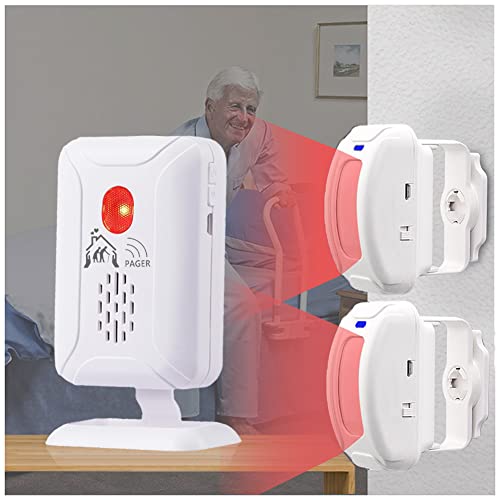
The Nesthao Bed Sensor Alarm uses a long-range motion sensor that can be placed under the bed or at the doorway, transmitting to a receiver up to 918 feet away. It’s easy to set up, with factory pairing and a battery-powered sensor. This system works well for larger homes where distance between the senior’s bed and caregiver is a factor. A potential limitation is testing the sensing range before final placement to minimize false alarms.
Best for: Homes with longer distances between living spaces or multiple rooms where bed alarms need to reach a distant caregiver.
Why chosen: Long-range wireless capability reduces missed alerts in larger layouts and avoids keeping a receiver in the patient’s room, which can lower anxiety for some seniors.
Caution: Test range and sensor direction before final placement to avoid missed alerts or false alarms.
Nesthao Upgraded Bed Sensor Alarm + Wireless
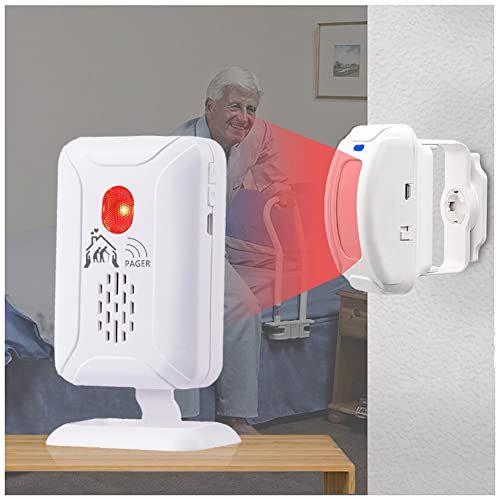
This upgraded Nesthao model uses a floor-based motion sensor to detect when a patient approaches or leaves the bed, transmitting to receivers within 918 feet. Unlike some pad alarms, it minimizes false alarms from incontinence or minor bed movements because detection occurs at the floor level. It also notes a non-intrusive alarm presentation in the patient’s room. It’s best for caregivers who want a discreet solution with robust range and fewer room disturbances.
Best for: Maintaining dignity through a non-intrusive alert system while maintaining reliable early detection of getting up.
Why chosen: Floor-based sensing reduces false alarms caused by bed repositioning and can improve comfort for the senior.
Caution: Some setup steps are required to confirm sensing range and direction for your living space.
Lunderg Wireless Early Alert Bed Alarm System

This system uses a wireless approach with a hip-level early alert bed pad, designed to alert caregivers before a senior fully gets out of bed. It emphasizes dignity, avoiding a loud in-room alarm. A note is that it relies on a carried handheld pager for alerts, which helps caregivers monitor without waking the elder. The set includes long-lasting pads and straightforward setup, suitable for dementia care environments.
Best for: Dementia or mobility-limited seniors where early, non-intrusive alerts are preferred and caregiver mobility is essential.
Why chosen: Hip-level placement aims to reduce false alarms and increase timely caregiver intervention without startling the senior.
Buying Guide: Key Purchase Considerations
What is your living setup?
- Single-room apartments benefit from bed or chair sensors with nearby caregiver notification.
- Multi-room homes may require wireless paging or long-range sensors to reach caregivers across distances.
How important is dignity versus immediacy?
- Bed and chair alarms can be loud and startling; wireless pager systems preserve dignity but require carrying a device.
- Non-intrusive floor sensors reduce room noise but may require precise placement for reliability.
What is your caregiver workflow?
- People who multitask will prefer portable call buttons or pagers to stay productive while staying alerted.
- Homes with a dedicated caregiver near the senior at all times may lean toward in-room alerts for faster response.
Ease of setup and maintenance matters.
- Look for systems with factory pairing, simple battery-powered sensors, and clear reset or silence options.
- Consider whether a system uses USB power or batteries and how easy it is to replace components.
False alarms and reliability are critical.
- Floor-based sensors may reduce false alarms related to bed movement but require correct placement.
- Long-range wireless setups help in larger homes but should be tested for interference and range.
Frequently Asked Questions
- What type of alarm is best for dementia patients?
Bed or chair sensors with wireless caregiver alerts can help caregivers respond quickly without frightening the senior. Floor sensors may offer quieter monitoring for sensitive patients.
- Do these systems require Wi-Fi?
Most options described here do not require home Wi‑Fi; they use local wireless or battery-powered components.
- Can alarms be adjusted for volume?
Yes, several products offer adjustable volumes and ringtones to fit day versus night use and caregiver preferences.
- What if false alarms occur often?
Recheck sensor placement and range, and consider switching to a different sensor type (bed pad vs floor sensor) to minimize false triggers.
- Are wireless pagers easy to carry?
Most pagers are compact, but daily use depends on the caregiver’s routine and pockets or wearing options.
- Can these systems be used for chair monitoring as well?
Yes, some models include chair exit alarms in addition to bed sensors, providing broader room coverage.