For many buyers, the priority is clear, phone-friendly sound from discreet devices. The following selections are Bluetooth-enabled or app-controllable, designed to pair with iOS and Android phones for calls, streaming, and personalized settings. This guide highlights five models best suited for seniors, busy professionals, or anyone seeking an easier, hands-free listening experience. Each entry explains who it’s best for, why it was chosen, and a practical limitation to consider.
Summary of chosen products
| Product | Best For | Key Benefit |
|---|---|---|
| Audien Atom X | Seniors & adults who want touchscreen control | First-of-its-kind touchscreen interface |
| Yeasound RIC700 Plus | Bluetooth streaming and iOS/Android users | Discreet, compact design with app support |
| Vivtone Xpure | Phone calls and music lovers seeking precise fitting | App control and robust Bluetooth streaming |
| Audien Atom Air | All-day wearers needing long battery life | Nearly invisible and strong battery life |
| HEARO OTC | Discreet, cost-conscious adults | Completely-in-canal design with OTC access |
Audien Atom X — Bluetooth Touchscreen Hearing Aid
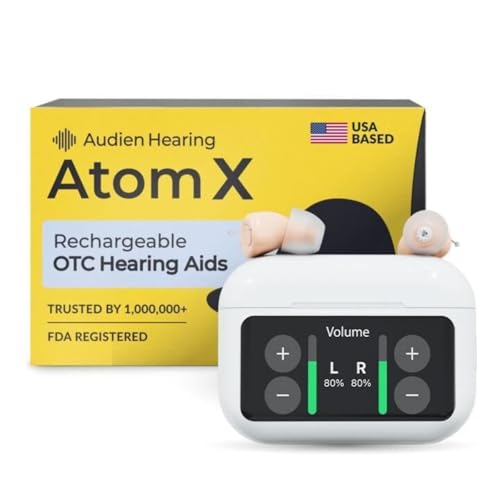
The Atom X is positioned for daily use with a touchscreen interface that replaces small buttons and fiddly controls. It targets seniors and adults who want straightforward operation without a steep learning curve. The device includes The Audien Sound Check—an expert-guided setup designed to tailor fit, mode selection, and volume. Best for users who value a simple, tactile control experience while still benefiting from Bluetooth streaming in calls and media. A potential limitation is reliance on a guided setup to achieve optimal defaults, which may require scheduling a short video session.
Yeasound RIC700 Plus — Bluetooth Streaming
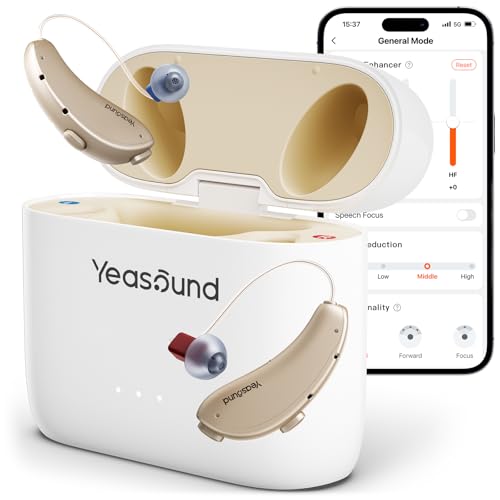
Yeasound RIC700 Plus highlights Bluetooth streaming and iOS/Android compatibility, making it well-suited for users who want hands-free calls and TV/movies with minimal latency. It offers tactile controls and an app-assisted experience for fine-tuning. Best for individuals who prefer quick, reliable Bluetooth connections and a discreet fit. A potential limitation is that some users may rely on the physical controls rather than the app for adjustments in noisy environments.
Vivtone Xpure — App-Controlled Hearing Aids

Vivtone Xpure focuses on app-based control and precise fitting through Bluetooth pairing. It’s crafted for seniors and adults who want a clear path to customizing volume and frequency with an accompanying app, plus multiple sound modes for different environments. Best for users who want a robust mobile control surface and streaming for calls and music. A limitation is dependence on the companion app for maximizing customization, which could require occasional updates or syncing with a phone.
Audien Atom Air — Long-Lasting, Rechargeable

Atom Air emphasizes a long battery life with a ~24-hour runtime per charge, making it suitable for all-day use without frequent recharging. It maintains a discreet, over-the-ear profile and aims to deliver natural, conversational sound for daily interactions. Best for users who prioritize endurance and a comfortable, low-profile design. A potential drawback is that it may rely on standard Bluetooth features without the ultra-fine app-based adjustments found in other models.
HEARO OTC — Small CIC In-Ear Comfort

HEARO offers an OTC, completely-in-canal design that’s nearly invisible and designed for mild-to-moderate hearing loss. It emphasizes ease of use without apps and provides two listening programs to adjust amplification in different environments. Best for users who want a discreet CIC device with straightforward controls. Its limitation is a likely absence of advanced Bluetooth streaming or app customization compared to other models on this list.
Buying Guide: Key Purchase Considerations
What matters most when choosing hearing aids that connect to your phone?
- Device type and discreteness: Consider whether you prefer in-ear, behind-the-ear, or open-ear designs and how visible you want the device to be.
- Bluetooth and app integration: Decide if you want direct streaming for calls from your phone and a companion app for fine-tuning settings.
- Control method: Evaluate touchscreen, physical buttons, or voice controls for ease of use, especially if dexterity is a concern.
- Battery life: Look for models offering all-day use on a single charge, plus convenient charging options.
- Setup and support: Some brands offer expert-guided setup or in-box tutorials—this can shorten the path to optimal performance.
- Environmental performance: Noise reduction, feedback suppression, and directional microphones influence clarity in restaurants and busy streets.
Practical buying questions
- Will the device pair easily with most smartphones? Look for Bluetooth compatibility with iOS and Android and a straightforward pairing process.
- Can I adjust settings without a computer or clinic visit? Apps and on-device controls cater to different comfort levels.
- Is the device comfortable for long wear? Consider open-ear or CIC designs for all-day use and reduced ear fatigue.
- What about maintenance and replacements? Rechargeable models simplify routines; check warranty terms and replacement parts.
Frequently Asked Questions
- What is the difference between OTC and traditional hearing aids? OTC devices can be purchased without a prescription and often include app-based customization, while traditional devices require professional fitting.
- Do all Bluetooth hearing aids support TV streaming? Many do, but check latency in your setup and whether the device supports low-latency streaming for lipsync with video.
- Can I test hearing aids at home? Some brands offer guided setup via video calls to calibrate fit and preferences.
- Are there risks with open-ear bone conduction devices? They bypass the ear canal; ensure a proper fit to prevent discomfort and check for ear health guidance.
- How long do rechargeable hearing aids take to charge? Typical charges range from a few hours per full cycle, with some models delivering all-day use.