Answering the need for reliable senior alert systems, these five products offer caregiver-pager style alerts, wall or bed/door sensors, and smartphone integrations. They are best for caregivers seeking hands-free monitoring, immediate alerts, and flexible placement around the home. Suitable buyers include family caregivers, in-home aides, and small facilities aiming to improve response times and safety for seniors, dementia patients, or anyone requiring quick assistance.
Summary table of selected products:
| Product | Best For | Key Benefit |
|---|---|---|
| SYNLETT Caregiver Pager Wireless Call Buttons | Active caregiving in busy households | Portable pager with wall mounts and belt clip for mobility |
| STECHRO Caregiver Pager | Elderly at home needing audible/visual alerts | 58 ringtones, adjustable volume, IP55 weather resistance |
| PILSAMAS 3 Pack Wireless Caregiver Call Button | Multi-room homes needing app integration | Broad 230 ft range, Wi‑Fi hub, app alerts |
| CallToU Wi-Fi Wireless Caregiver Pager | Family-shared alerts across devices | Wi‑Fi connectivity, multiple notification options |
| Smart Caregiver Bed Exit Alarm | Fall prevention with bed sensors | Wireless bed pad, pager alerts, expandable network |
SYNLETT Caregiver Pager Wireless Call Buttons

The SYNLETT system includes 2 wireless call buttons and 1 portable pager. It is designed for caregivers who need to attend to tasks away from the resident. The belt clip and wall brackets provide flexible placement options, enabling alerts whether the senior is in bed, near the bathroom, or in another room. This setup is best for family caregivers who value mobility and quick responses. A potential limitation is the dependence on nearby receivers for reliable alerts, so ensure placement covers common living areas.
STECHRO Caregiver Pager, Wireless Call Button

STECHRO’s system features one SOS button plus a receiver with 58 ringtones and five adjustable volume levels up to 120 dB. It is ideal for homes where loud, distinct alerts are critical and where a caregiver may be in different rooms. Its IP55 waterproof and dustproof design adds durability for various environments. Choose this if you need high-volume alerts and durable operation; avoid if you require a wider range beyond typical home distances.
Nesthao Upgraded Bed Sensor Alarm and Pager
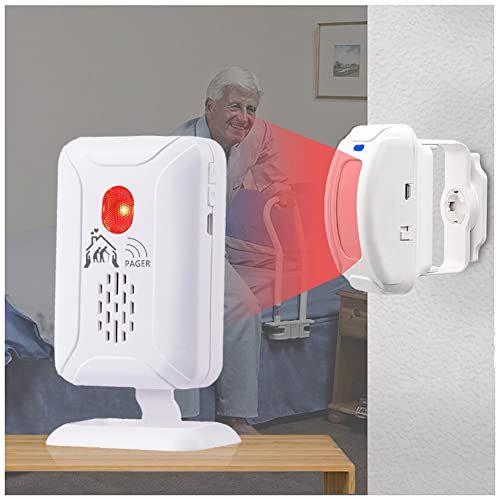
This system centers on bed exit monitoring with a wireless motion sensor and a caregiver pager. Sensors can be placed under the bed or near the door, and they transmit within a wide open-air range. It is best for preventing falls without startling the patient in their room, as the bed alarm remains outside the patient’s space. A limitation is the requirement to test sensor range and direction prior to installation to avoid false alarms or missed alerts.
PILSAMAS 3 Pack Wireless Caregiver Call Button

PILSAMAS offers a 3-button setup with a hub that connects to 2.4 GHz Wi‑Fi and uses 433 MHz for extended range. The system delivers app alerts, sounds, and flashing lights when a button is pressed. It supports app-driven alarm history and battery checks. It is best for households seeking multi-button coverage and remote monitoring through a dedicated app, though some users may require a subscription for SMS or phone alerts.
CallToU Wi-Fi Wireless Caregiver Pager
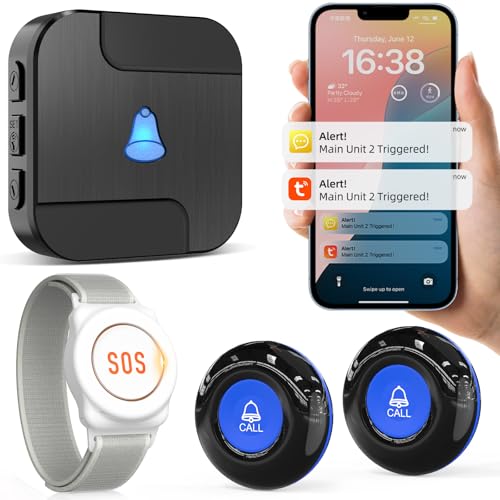
The CallToU system integrates through 2.4 GHz Wi‑Fi, with a 328 ft range typical for homes and offers app notifications, shared alerts with family, and optional premium SMS/phone notifications. It is best for households that want alerts synchronized across multiple phones or devices. The reliance on Wi‑Fi means performance may hinge on network stability, and subscribers should plan for potential data costs with app notifications.
Smart Caregiver Bed Exit Alarm with Wireless Pager

The Smart Caregiver Bed Exit Alarm pairs a soft bed pad with a full-coverage weight sensor and a wireless pager that offers vibrate and sound alerts. It supports an expandable network to monitor multiple areas (beds, chairs, doors). This setup is best for proactive fall prevention across a small home or facility, with the caveat that wiring and sensor placement require careful planning to avoid false activations.
Buying Guide: How to Choose the Right Help Alarm System
- Deployment and coverage: Consider whether you need portable pagers, wall-mounted call buttons, bed/door sensors, or a mix. A multi-device setup often provides better coverage in larger homes.
- Alert options and accessibility: Look for audible, visual, and vibration alerts, plus smartphone app notifications. Decide which method most reliably reaches caregivers first.
- Range and environment: Check the effective range indoors and the presence of walls or floors that could impede signals. Some systems use wall-mounted brackets, others rely on wireless hubs.
- Power and reliability: Assess battery life, the need for plug-in receivers, and any cloud or app dependencies. Consider backup options if Wi‑Fi or power is unstable.
- Scalability: If you plan to monitor more rooms or multiple seniors, choose an expandable system with additional sensors or hubs.
- Ease of use for caregivers and seniors: Prioritize simple button presses, intuitive apps, and clear alert tone customization to reduce response times.
Frequently Asked Questions
- What is the typical range for these caregiver pagers? Ranges vary by model, with common open-area ranges from around 100 to 500 feet depending on the hub, walls, and interference.
- Do these systems require a subscription? Some systems offer optional app-based or SMS notifications that may require a subscription for certain features.
- Can I share alerts with multiple family members? Several systems support sharing alerts via a mobile app or linked accounts, allowing multiple caregivers to receive notifications.
- Are bed sensors safe for dementia patients? Bed sensors are designed to reduce fall risk by signaling caregivers when a patient tries to get up; testing and correct placement help minimize false alarms.
- What is the best setup for a small apartment? A compact system with wall buttons, one smart hub, and a portable pager is often sufficient for alerting caregivers across rooms.
- How do I know which device to choose? Consider your home layout, desired alert style, and whether you need app integration or pure in-home alerts.