The best walkers for seniors combine stability, comfort, and easy handling. This guide highlights five top-rated options, each chosen for reliability, weight capacity, and user comfort. Ideal buyers include caregivers seeking dependable daily mobility aids, seniors who want safe indoor and outdoor use, and individuals needing compact folding models for travel. Below is a quick buyer snapshot, followed by in-depth product sections and a final buying guide to help you compare features at a glance.
| Product | Best For | Top Feature |
|---|---|---|
| VOCIC Z21 Rollator | All-terrain outings | 8″ wheels and off-road-ready tires |
| HOMLAND Foldable Rollator | Comfort and stability | Enlarged seat and adjustable height |
| Drive Medical Two-Button Folding Walker | Easy access and lightness | Dual push-button release |
| Whlicks Narrow Folding Walker | Compact spaces | Adjustable width for tight hallways |
| Helavo All Terrain Upright Walker | Standing upright mobility | Flat-free solid tires and stand-up design |
VOCIC Z21 Rollator With Seat

The VOCIC Z21 Rollator is designed for seniors who need reliable support with versatile terrain handling. It weighs about 22 pounds and supports up to 350 pounds, with thickened tubes for extra strength. The 3-second folding design yields a compact footprint—ideal for car trips and storage. The 8″ wheels improve obstacle crossing, and the 360° front wheels aid navigation. The seat is ergonomically contoured, with a breathable backrest for comfortable resting during outings. Best for active seniors who still want to travel across varied surfaces, including sidewalks and light gravel. Caution: ensure the folded dimensions fit your vehicle trunk or apartment storage space.
HOMLAND Foldable Rollator Walker With Seat

The HOMLAND Rollator emphasizes durability and comfort. It features a reinforced frame and double support bars, supporting up to 350 pounds. An enlarged 16″ seat and adjustable seat/handle heights accommodate a wide range of users, from shorter to taller individuals. Safety features include a reliable braking system, pinch-proof folding points, ergonomic hand grips, and multi-reflective strips for nighttime visibility. Best for users who prioritize a roomy seat and strong, stable performance on various surfaces. Limitation: space for storage may be more significant due to its size when fully extended.
Drive Medical Two-Button Folding Walker With Wheels
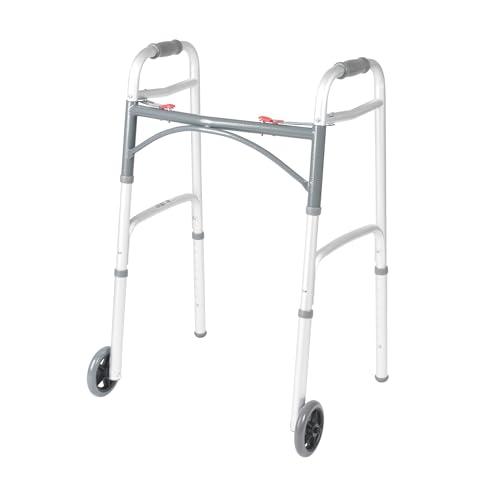
This Drive Medical model emphasizes lightweight mobility with strong aluminum construction and a 350 lb weight capacity. It uses dual push-button releases for easy folding and 5″ front wheels to help with smooth forward motion. It suits users who want a simple, dependable walker that folds quickly for travel or storage. Better for caregivers seeking a straightforward, maintenance-light option. Caution: front wheels are 5″ and may feel less forgiving on very rough terrain compared with larger-wheel models.
Whlicks Narrow Folding Walker
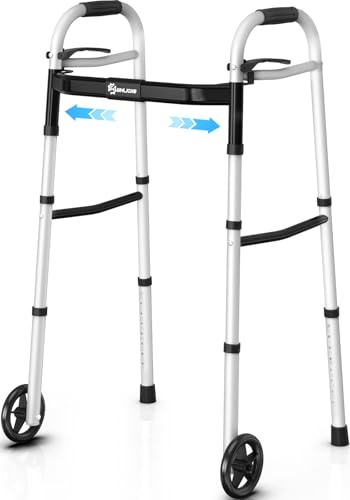
The Whlicks Narrow Folding Walker is built for compact spaces. Thickened aluminum tubes—about 25% stronger than standard models—support up to 350 pounds while keeping the overall weight low at around 6.6 pounds. The adjustable width (22.4″ to 26.4″) and height (30.3″ to 37.4″) fit a range of body sizes and doorway clearances. Best for travelers and apartment dwellers who need a portable, space-saving option. Limitation: the slim-fit setting still requires a minimum doorway width; measure before choosing.
Helavo All Terrain Upright Walker

The Helavo Upright Walker is designed for standing-style mobility with a sturdy aluminum frame, 10″ front wheels, and puncture-proof tires. It supports up to 300 pounds and features height-adjustable ergonomic handles that encourage a natural, standing posture to relieve shoulder and back strain. Best for outdoor use and users seeking an upright stance for easier visibility and balance. Caution: weight capacity is lower than some four-wheel models, so verify needs before selecting.
Buying Guide: Key Considerations For Choosing A Senior Walker
- Weight capacity: Match the user’s weight and any daily load to avoid overloading the frame.
- Wheel size and terrain: Larger wheels handle uneven surfaces better; smaller wheels are typically easier to maneuver indoors.
- Seat comfort and height: A well-cushioned seat and adjustable height improve comfort during rests and transitions.
- Folding mechanics: Quick-fold designs save time and simplify storage and travel.
- Braking and safety features: Easy-to-use brakes, pinch-proof folding, and reflective materials enhance safety.
- Width and doorway clearance: Consider width range for hallway navigation and doorway access.
- Weight of the walker: Lighter models ease lifting and transport but may trade off some durability.
Frequently Asked Questions
- What should I prioritize when selecting a senior walker? – Prioritize weight capacity, stability, and ease of use for the user’s daily routine and living space.
- Are upright walkers better for standing use? – Upright walkers promote a standing posture, which can reduce back and shoulder strain for some users, though they may be heavier or less maneuverable indoors.
- Do all walkers have adjustable height? – Many models offer adjustable handles and seating height, but check the exact range to fit the user’s height.
- Is a larger wheel always better? – Larger wheels improve outdoor performance and obstacle handling, but can make indoor turning harder. Choose based on primary use.
- Can folding walkers fit in car trunks? – Most folding models are designed to fit standard trunks, but measure trunk space and folded dimensions before buying.
- What maintenance is required? – Regularly check brakes, wheels, and frame integrity; keep tires inflated per manufacturer guidance and clean between uses.