Answer: These bed sore prevention mattress pads use alternating air cells to relieve pressure, boost circulation, and reduce skin breakdown for bedridden patients. They’re best for long-term caregivers, nursing home residents, and homecare patients who cannot shift weight regularly. The top picks below emphasize comfort, quiet operation, and durability for daily use. This guide helps you compare options, choose the right temperature, and understand how each pad supports healing and prevention.
| Product | Best For | Key Benefit |
|---|---|---|
| Vive Alternating Air Pressure Mattress Pad | Bedridden adults needing gentle relief | 130 air cells with whisper-quiet pump |
| Lunderg Alternating Air Pressure Mattress Pad (Static Mode) | Users who want a break from cycling | Static mode for stable surface |
| Lunderg PressuRelief Alternating Pad | Those who need extra softness | PressuRelief Comfort Layer |
| Alcedo Alternating Air Pressure Mattress Pad | Hospitals and home care with waterproof surface | Medical-grade quality, 75″ x 35″ inflate area |
| Kekoy 130-Cell Mattress Pad | Early-stage risk and comfort-focused care | Waterproof cover, 130 cells, Beige |
Vive Alternating Air Pressure Mattress Pad
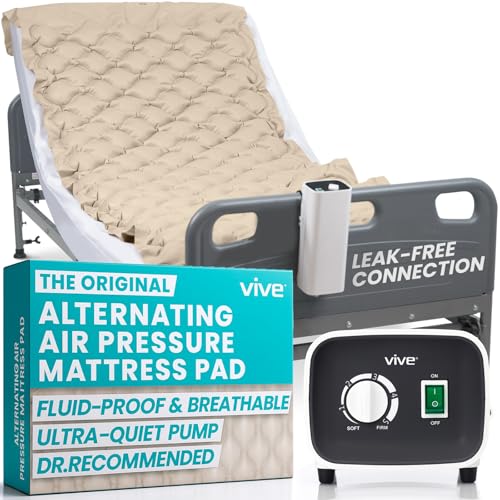
The Vive pad uses 130 air cells and an advanced wave-like therapy to distribute weight evenly. It aims to relieve pressure spots and improve skin integrity for bedridden users. The whisper-quiet pump operates at about 22 dBA, offering multiple pressure levels for customization. Best for caregivers seeking a quiet, durable solution with reliable cell segmentation.
Best for: bedridden patients who cannot shift weight and caregivers needing a reference, quiet operation. Limitations: while the system cycles every six minutes, some users may still require manual repositioning for comfort.
Lunderg Alternating Air Pressure Mattress Pad (Static Mode)
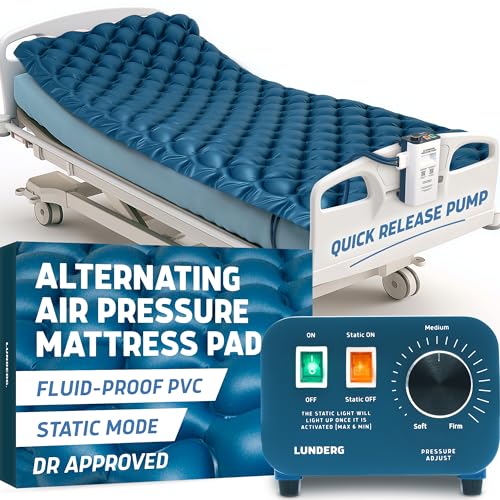
This Lunderg model combines doctor-approved alternating therapy with a Static Mode option and a quiet 23 dBA pump. It supports up to 300 lbs, suitable for hospital beds or home use. Best for users who want the option to switch to a stable surface for rest or to reduce cycling when needed.
Best for: long-term care at home or in a facility where rest periods benefit from static support. Limitation: Static Mode reduces pressure redistribution depth compared to full alternation.
Lunderg PressuRelief Alternating Pad

The PressuRelief version adds a Soft-to-Firm Comfort Layer for a softer, more familiar feel, easing sleep and rest. It uses gentle wave-like therapy to relieve pressure, aiding faster healing. The pump remains whisper-quiet at 23 dBA with Static Mode for a stable surface when desired. Best for caregivers prioritizing comfort and easier adaptation for long nights.
Best for: users sensitive to typical alternating pads. Caution: the extra comfort layer may slightly alter feel and airflow compared to standard pads.
Alcedo Alternating Air Pressure Mattress Pad

Alcedo emphasizes medical-grade quality with breathable, waterproof surfaces and durable construction. The 75″ x 35″ inflatable area makes it suitable for standard hospital beds and home setups. It boosts circulation and reduces pressure on vulnerable areas. Best for environments needing easy cleaning and strong seam integrity.
Best for: durable daily use in hospitals or home care. Limitation: ensure correct bed fit to avoid uncovered gaps beneath the mattress.
Kekoy Alternating Air Pressure Mattress Pad

Kekoy uses 130 air cells and a whisper-quiet pump with waterproof cover. The pad is designed for stage 0–1 pressure sore prevention, making it suitable for early prevention and ongoing comfort. It’s UV-stable and medically oriented for elderly care and post-surgery recovery. Best for preventive care in at-risk individuals.
Best for: early-stage prevention. Caution: early-stage focus may not substitute for necessary clinical care in advanced ulcers.
Buying Guide: Choosing the Right Mattress Pad
What should I look for in a hospital bed pressure-relief pad?
- Cell count and coverage: More cells (like 130) generally provide finer weight distribution. Check coverage to fit the patient’s torso and hips.
- Pump noise and modes: A quiet pump reduces sleep disturbances. Static Mode is helpful for rest when full alternation isn’t needed.
- Weight capacity: Ensure the pad supports the patient’s weight and bed type (home or hospital).
- Surface durability and waterproofing: Water-resistant covers simplify cleaning and infection control.
- Comfort layer options: Some models add a soft layer for familiarity, which can aid sleep for sensitive users.
How to use these pads safely?
- Place the pad on a firm mattress and tuck edges securely under the bed border.
- Follow manufacturer guidelines for setup, pressure settings, and cycling duration.
- Inspect seams and inflations regularly for signs of wear or leaks.
- Combine with repositioning, skincare, and dry environments to maximize benefits.
Which scenario favors a replacement pad vs. a full system?
- Replacement pads (like Vive Replacement) suit when a pad deteriorates or you need a spare without buying a new pump.
- Full systems are ideal when starting from scratch or upgrading to a newer cycle technology with a quieter pump.
FAQ
- Q: Can I use these pads on any bed?
- A: Most are designed for hospital-style or standard home beds; confirm bed dimensions and weight limit with the product specs.
- Q: Do these pads prevent ulcers completely?
- A: They assist in pressure redistribution and skin care but are not a substitute for medical advice or comprehensive care plans.
- Q: How long does a typical cycle last?
- A: Many pads have cycles around six minutes per change, but settings can vary by model.
- Q: Are these pads easy to clean?
- A: Look for waterproof covers and reinforced seams; these features simplify cleaning and sanitization.
- Q: Is static mode useful?
- A: Static mode provides a stable surface for rest or when alternation is temporarily unnecessary, though it won’t deliver the same pressure relief as cycling.