For buyers seeking practical assistance with daily living, these independent living aids support dressing, grooming, and personal care with minimal strain. The top picks here are best for individuals recovering from surgery, dealing with limited mobility, or managing chronic pain. Each product is chosen for clear benefits, ease of use, and how it reduces bending, reaching, and twisting. Below you will find a quick product comparison table and detailed sections to help you decide which aid fits specific needs and scenarios.
| Product | Best For | Key Benefit |
|---|---|---|
| Nourislif 27″ Dressing Stick | Dressing independence | Long reach with protective vinyl hook for fabrics |
| CAidRE Sock Aid | Sock dressing without bending | Three-finger design with terrycloth and nylon lining |
| Fanwer Toilet Aids | Extended reach for bathroom tasks | 15″+ reach and ergonomic handle |
| Sammons Preston Economy Hip Kit I | Hip replacement recovery | Comprehensive set to minimize bending |
| Chonario Toilet Aids | Independent hygiene after surgery | Replaceable head for easy cleaning |
Nourislif 27″ Dressing Stick

The Nourislif 27″ dressing stick is designed to help users dress independently, especially after hip, knee, or shoulder surgery, or for those with arthritis or limited mobility. Its long reach reduces bending and twisting while enabling tasks like putting on shirts, jackets, pants, and shoes. The tool features a protective vinyl-coated hook to grip fabrics securely without slippage, plus a slim “C” shaped hook for pulling zippers and shoelace loops. The wooden shaft is smooth and lightweight for easy maneuverability around delicate fabrics. Best for: individuals focusing on maintaining dressing independence with minimal physical strain. Limitation: the straight-pull action may require some practice for new users, and fabrics with slick textures may still slip if not gripped firmly.
CAidRE Sock Aid

The CAidRE Sock Aid is designed to help seniors and those with limited mobility slip on socks without bending over. It features a unique three-finger design that securely holds stockings and tights, with terrycloth exterior and nylon interior to minimize friction and fabric tears. This tool is particularly useful for pregnant individuals or anyone needing an assisted method to put on socks easily. Best for: quick, low-effort sock dressing. Limitation: may require some finger dexterity to guide the sock over the foot for first-time users.
Fanwer Toilet Aids Tools
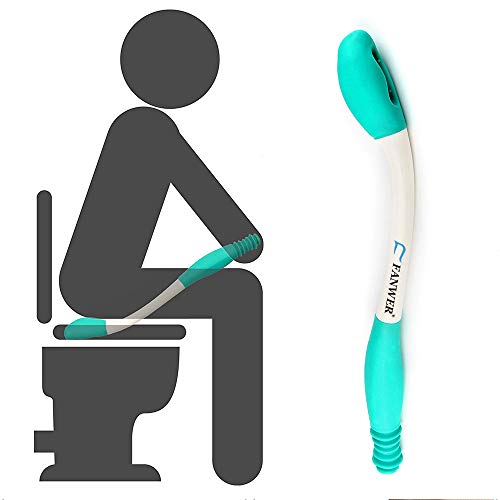
The Fanwer toilet aid extends reach by about 15 inches, allowing users to wipe from the front or back without bending. It combines durable plastic and rubber and features an ergonomic handle for a secure grip. This aid supports self-sufficiency in bathroom tasks and is especially useful for those with a limited range of motion or after back surgery. Best for: users who need a longer reach and a comfortable grip. Limitation: the product’s effectiveness relies on user coordination and may require practice to optimize wiping technique.
Sammons Preston Economy Hip Kit I
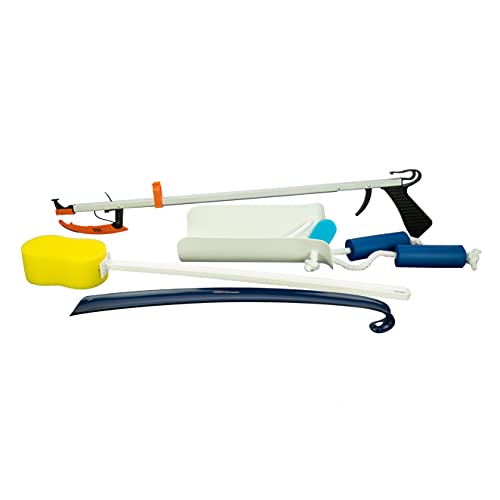
The Sammons Preston Economy Hip Kit I bundles essential tools for post-hip replacement care, including a 26″ Easireach II Reacher, a 16.5″ plastic shoehorn, a sock aid with built-up handles, and a contoured bath sponge. This kit reduces bending and twisting, enabling independent dressing and self-care without caregiver assistance. Best for: recovering patients needing a compact, all-in-one set to support daily routines. Limitation: potential usefulness depends on individual dexterity and the initial familiarity with each tool.
Chonario Toilet Aids for Wiping Bottom

The Chonario Toilet Aids tool offers a 16.5″ reach with a replaceable head for hygienic cleaning after use. Its ergonomic handle and wrist strap help prevent drops, making it a reliable post-surgery or limited-mobility aid. Best for: individuals who require a hygienic, replaceable head option and a secure grip. Limitation: the replaceable head mechanism may require periodic maintenance to ensure a tight seal and effective use over time.
Buying Guide: Practical Considerations
- Purpose and routines: Match aids to the dwelling tasks most frequently needed, such as dressing, bathing, or toilet assistance.
- Reach vs. control: Longer tools expand reach but may require steadier hands; shorter aids can offer greater control for delicate tasks.
- Material and fabric care: Protective finishes reduce fabric damage; consider cushioned ends for sensitive skin.
- Ease of cleaning: Replaceable heads or washable components improve hygiene and longevity.
- Adaptability: Kits with multiple tools offer a broader range of use, especially after surgery or during rehabilitation.
Frequently Asked Questions
- What is the primary benefit of using a dressing stick?
It reduces bending and twisting while enabling independent dressing. - Which aid is best for putting on socks without bending?
A sock aid with built-up handles, like the CAidRE Sock Aid, is designed for this. - How do toilet aids support independence?
They extend reach and provide ergonomic grips for safer wiping and personal care. - Can these tools be used after hip replacement?
Yes, products in the hip-recovery category are specifically designed to minimize strain during recovery. - Do these aids require training?
Some familiarity helps; most are straightforward, but initial practice improves effectiveness. - Are replaceable parts important?
Replaceable heads or parts can improve hygiene and extend tool life.
In summary, these independent living aids address a range of needs from dressing and sock assistance to bathroom hygiene. Selecting the right set depends on individual mobility, recovery stage, and daily routines. The highlighted options emphasize ease of use, longevity, and the capacity to maintain dignity and independence in daily activities.