When plantar fasciitis pain interrupts your daily routine, the right inner soles can make a meaningful difference. This guide focuses on top, evidence-based options designed to pin down heel pain, support the arch, and stabilize your gait. The selections below are best for active individuals, desk workers seeking all-day comfort, and those recovering from prolonged standing. Each product is chosen for its ability to relieve pressure at the source and prevent recurrence, while offering practical trade-offs for different feet and activities.
Buyer’s snapshot: the table below highlights five selected insoles with distinct strengths, helping you compare at a glance.
| Product | Best For | Key Benefit |
|---|---|---|
| Dr. Scholl’s Men Plantar Fasciitis Relief Insoles | Men with heel pain and high-arch support needs | Immediate pain relief and stable arch support |
| Dr. Scholl’s Women Plantar Fasciitis Relief Insoles | Women seeking reliable arch support | Source-focused pain relief with balanced pressure distribution |
| PowerStep Pinnacle Insoles | Daily walking and standing, moderate pronation | Maximum cushioning and podiatrist-recommended support |
| PROFOOT Plantar Fasciitis Orthotic Insoles | Women and men needing targeted gel heel relief | Gel heel insert and full plantar fascia support |
| WALK·HERO Comfort And Support Insoles | Flat feet and long-standing comfort | Deep heel cup and durable EVA with arch support |
Dr. Scholl’s Plantar Fasciitis Relief Orthotic Insoles – Men

Best for: Men seeking immediate, direct pain relief with strong arch support. Why selected: These insoles are designed to relieve plantar fasciitis pain at the source, distribute pressure across the foot, and reduce heel inflammation with a deep heel cup. The arch support is crafted to fit a range of arch types, including higher arches, helping prevent overstretching of the plantar fascia. Caution: Effectiveness may vary with shoe type and individual foot structure; some users may need gradual wear-in time.
Dr. Scholl’s Plantar Fasciitis Relief Orthotic Insoles – Women

Best for: Women seeking reliable, all-day plantar fascia relief. Why selected: The women’s version mirrors the men’s design with targeted pain relief and evenly distributed foot pressure. It features a deep heel cup and supportive arch, offering cushioning and stability across arch types. Caution: Fit may be sensitive to toe box space in snug footwear; ensure adequate room to prevent bunching.
Professional Heavy Duty Support Pain Relief Orthotics

Best for: Users over 230 lbs needing robust arch support and durable materials. Why selected: These insoles emphasize dual PORON cushioning and an ergonomic “Golden Triangle” of arch, forefoot, and heel support to relieve arch pain and walking stress. Caution: Heavier wearers may require a longer adjustment period to acclimate to the fit and stiffness of the orthotic.
DWTWLE 4D Cloud Insoles

Best for: Those needing soft, anti-fatigue support with breathable comfort. Why selected: They offer arch support with a honeycomb design for airflow, plus shock-absorbing heel and a gel insert for added cushioning. Caution: Product claims stress-relief may vary with walking surfaces and foot shape; not all users will experience identical results.
Plantar Fasciitis Insoles for Men Women
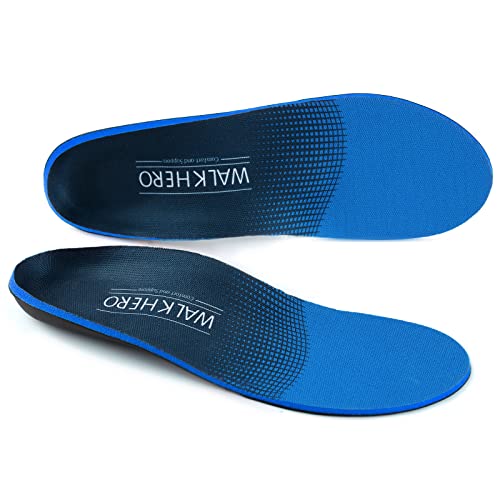
Best for: People seeking all-day arch support and a deep heel cup for flat feet. Why selected: These insoles emphasize lasting comfort and a robust EVA core for shock absorption, with a design aimed at improving foot alignment and reducing plantar fascia strain. Caution: Fit can vary with boot or sneaker type; check sizing carefully to avoid tightness or slipping.
PowerStep Pinnacle Insoles

Best for: People needing long-lasting arch support with strong heel cushioning. Why selected: The Pinnacle line provides maximum cushioning and a stable arch to relieve foot pain, alongside dual-layer cushioning that reduces stress and fatigue. Caution: Some users may prefer thinner profiles for dress shoes or sneakers with tight fits; check shoe compatibility and thickness requirements.
Buying Guide: How To Choose The Right Insole For Plantar Fasciitis
Understanding your needs helps match the right insole to your daily routine. Consider these factors:
- Arch Type: High arches benefit from solid arch support; flat feet require deeper heel cups and broader support.
- Activity Level: Long hours on your feet demand stronger cushioning and stability; lighter daily use may tolerate lighter inserts.
- Shoe Type: Dress shoes, sneakers, and work boots differ in space and rigidity. Confirm fit and clearance for each pair.
- Heel Cup Design: A deep heel cup can reduce pronation and heel inflammation; a shallower cup may suit more flexible footwear.
- Material and Cushioning: Latex, EVA, PORON, and gel inserts offer different levels of shock absorption and durability. Balance comfort with breathability.
- Durability and Maintenance: Look for insoles with reinforced edges and washable fabrics if you sweat heavily or use them daily.
Frequently Asked Questions
- What is plantar fasciitis and how do insoles help?
Answer: Plantar fasciitis is heel pain caused by fascia strain. Insoles provide arch support, stabilize the foot, cushion the heel, and distribute pressure to reduce strain during walking and standing. - Can I wear insoles with dress shoes?
Answer: Yes, but check shoe depth and ensure the insole thickness does not crowd the toes or affect fit. Thin profiles or slip-in variants are often best for dress footwear. - How do I know which arch support level to choose?
Answer: Start with moderate arch support and adjust based on comfort. People with flat feet or pronation benefit from firmer, broader support; those with high arches may need stable but cushioned levels. - How long should I wear new insoles to assess relief?
Answer: Allow 1–2 weeks of gradual wear to adapt, especially if you’re moving from minimal support to structured orthotics. - Are there risks with over-the-counter orthotics?
Answer: Some users may experience initial soreness as feet adapt. If pain worsens or persists beyond a couple of weeks, consult a podiatrist. - Do insoles replace medical treatment?
Answer: Insoles can alleviate symptoms but are not a substitute for medical evaluation if you have persistent or severe pain.