Answering the question: a keratolytic cream for keratosis pilaris helps soften and remove keratin buildup that causes bumpy skin. This guide focuses on creams with proven keratolytic ingredients like lactic, glycolic, or salicylic acids that can improve texture over time. Each product section identifies who it’s best for, why it was selected, and a practical caveat to consider.
Summary of selected products:
| Product | Main Keratolytic Ingredient | Best For | Notes |
|---|---|---|---|
| AmLactin KP Bumps Be Gone Body Cream | Lactic Acid (15%) | Normal to dry skin prone to KP, those seeking gentle daily use | Dual-action moisturizer and exfoliant |
| PROcure Keratosis Pilaris Cream | Glycolic Acid | Users wanting controlled exfoliation with natural complex | Willow Bark complex adds moisture |
| SANIDOC Cerafine Body Cream | 0.5% Lactic Acid, 10% Urea | Rough KP with thick buildup on elbows/arms | High-urea keratolytic alternative |
| Strawberry Resurfacing Cream | Glycolic, Lactic, Salicylic Acids | Strawberry skin and mixed-acid routine | Triple acid complex for deeper exfoliation |
| KPAWAY Moisturizing Cream for Kids | No acids | Children or sensitive-skinned users needing gentle hydration | Acid-free, simple formula |
AmLactin KP Bumps Be Gone Body Cream
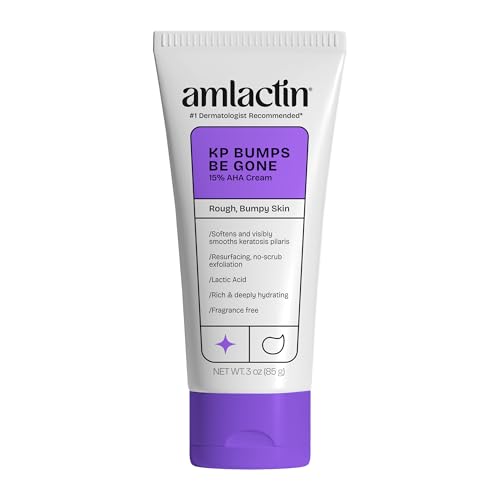
Best for: Normal to dry skin types seeking a one-step solution that exfoliates and hydrates. This 15% lactic acid formula softens rough KP bumps while delivering moisture, aiming to reduce visible bumps over time without scrubbing.
Why selected: The product blends strong keratolytic action with moisturizing benefits in a single step, reducing the need for separate exfoliants or washes. It’s suitable for daily use across larger body areas.
Limitation: Some users with ultra-sensitive skin may experience mild tingling; patch testing is advised before widespread use. Avoid applying on broken or irritated skin.
PROcure Keratosis Pilaris Cream

Best for: Individuals seeking targeted KP care with a gentle exfoliation profile. Glycolic acid paired with Willow Bark helps clear follicles while avoiding harsh scrubs for daily use.
Why selected: The formula emphasizes a natural soft complex with moisturizing agents to support smoother skin without aggressive scrubbing. It’s a balanced choice for ongoing KP maintenance.
Limitation: Results depend on consistent daily use; those seeking immediate, dramatic changes may want to pair with a complementary routine.
SANIDOC Cerafine Body Cream

Best for: KP-prone areas like upper arms and thighs with rough texture and dryness. The cream uses 10% urea as a keratolytic and includes lactic and salicylic acids for a back-to-back approach to smoothing.
Why selected: It prioritizes a standout keratolytic (urea) that softens the buildup without burning, then supports more even tone with niacinamide. A good pick for sensitive or reactive skin families.
Caution: Some users may prefer low-activity acid formulations; if irritation occurs, discontinue use and consult a clinician.
Strawberry Resurfacing Cream for Keratosis Pilaris

Best for: People dealing with strawberry skin and KP bumps who want a multi-acid approach to exfoliation. The triple acid complex targets keratin buildup effectively.
Why selected: Its combination of glycolic, lactic, and salicylic acids provides broad-spectrum exfoliation that helps unclog pores and refine texture. Useful for updated daily or alternating routines.
Limitation: A higher acid load may not be suitable for very sensitive or compromised skin; start with limited areas and gradual exposure.
KPAWAY Moisturizing Cream for Kids

Best for: Children or skin types needing gentle hydration without acids. This acid-free formula focuses on moisture to minimize irritation while supporting skin comfort.
Why selected: It offers a simple, seven-ingredient approach designed for sensitive or young skin. It avoids common irritants and emphasizes skin-friendly hydration as a base treatment.
Limitation: Because it does not exfoliate, KP texture improvement may be slower; consider combining with a targeted keratolytic option if advised by a clinician.
Buying Guide
What should I look for in a keratolytic cream for KP?
- Active ingredient: Common keratolytics include lactic acid, glycolic acid, and salicylic acid. Higher concentrations may exfoliate more aggressively but can cause irritation.
- Moisturizing base: Effective KP care often combines exfoliation with hydration. Look for ceramides, urea, glycerin, or fatty acids.
- Skin type and sensitivity: If you have sensitive skin or react to acids, choose formulations labeled for sensitive skin or acid-free options.
- Scope of use: Some products are suited for arms and legs; others are designed for hands, elbows, or all-over body use.
- Patch testing: Always patch test new products on a small area to check for irritation before wider use.
How do I build a KP care routine?
- Start with a gentle cleanser, then apply a keratolytic product to affected areas.
- Follow with a moisturizer to lock in hydration and support skin barrier health.
- Use sunscreen daily if acids are applied in daytime routines to protect newly exfoliated skin.
What if I have very thick or stubborn KP?
Consider combining a keratolytic product with a moisturizing cream containing urea or ceramides and consult a dermatologist for a tailored plan. Some users benefit from gradual, steady exfoliation paired with long-term hydration.
How long before results appear?
Improvements commonly begin within several weeks of consistent use, with continued progress over months. Individual results vary based on skin type and adherence to the routine.
Frequently Asked Questions
- What is keratosis pilaris?
- Are acids safe for KP on the body?
- Can I use multiple KP creams together?
- Is this condition curable?
- Should children use keratolytic creams?
- What should I do if I experience burning or redness?
Keratosis pilaris is a common skin condition where keratin clogs hair follicles, causing small bumps and rough patches.
Yes, when used as directed. Start with lower concentrations and patch test to minimize irritation.
Sequential use (one in the morning, another at night, or alternating days) can be effective, but avoid layering high-acid products at once to prevent irritation.
KP is a chronic condition; products aim to manage symptoms and improve texture rather than cure it completely.
Some products are formulated for kids (no acids). Always follow product labeling and consult a pediatrician if unsure.
Discontinue use, rinse with water, and seek medical advice if irritation persists or worsens.