When recovering from a lateral collateral ligament (LCL) injury, a well-fitted knee brace can support stability, reduce pain, and aid healing. This guide highlights top-rated braces chosen for LCL concerns, balancing support, comfort, and adjustability. Below is a quick overview of five models with strong lateral stabilization features and dependable performance for both athletes and everyday wear.
Summary of Selected Products
| Product | Brand | Key Benefit |
|---|---|---|
| Shock Doctor Knee Brace, Hinged | Shock Doctor | Dual hinges, four-way stretch fabric, targeted support |
| EXOUS BODYGEAR Knee Brace | EXOUS BODYGEAR | 4-way straps, stable lateral support |
| Bodyprox Hinged Knee Brace | Bodyprox | Heavy-duty hinges, open patella design |
| McDavid Knee Brace With Side Stays | McDavid | Spring steel stays, cross straps for stabilization |
| Orthomen Functional Knee Brace | Orthomen | Dual hinges, ROM control, anti-slip features |
Shock Doctor Hinged Knee Brace For LCL Support

The Shock Doctor knee brace offers maximum support with dual hinges and side stabilizers. Built for both men and women, it emphasizes stabilization of medial and lateral structures while allowing natural movement through four-way stretch Lycra mesh. Its pre-curved anatomical design fits right or left knees, aiding stability during activities and daily tasks. The compression helps align soft tissues and improve blood flow, potentially supporting recovery from ligaments and tendons around the knee.
EXOUS BODYGEAR Knee Brace With 4-Way Straps

The EXOUS BODYGEAR knee brace uses a patented 4-strap attachment system to deliver full circumferential support around the knee. This design combines with flexible stabilizers on the sides to create a buttress-like effect, enhancing lateral stability without excessive bulk. The back of the knee is kept relatively unobstructed by using thinner straps, enabling improved range of motion for athletes and active users during rehab and routine activity.
Bodyprox Hinged Knee Brace For Unified Support
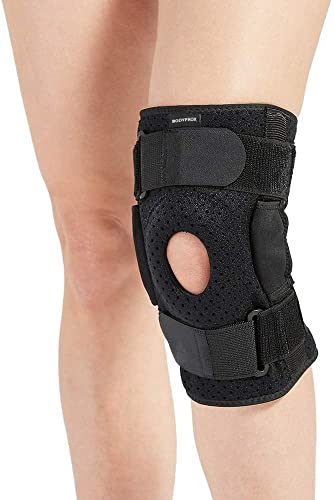
Bodyprox provides a heavy-duty hinged design aimed at medial and lateral stability. Its dual removable hinges and padded buttress offer robust support while helping to prevent hyperextension. The open patella and back design reduces pressure under the kneecap and supports proper alignment, promoting comfort during extended wear and rehabilitation exercises. The brace comes in multiple sizes to fit a range of leg measurements.
McDavid Knee Brace With Side Stays

McDavid’s brace emphasizes stability with spring steel stays that provide medial-lateral control, enabling confident movement and support for ligaments around the knee. Elastic cross straps add another layer of stabilization, targeting the collateral ligaments and providing improved rotational control. The latex-free neoprene sleeve delivers compression to maintain warmth and blood flow, which can be beneficial for ligament-related discomfort and recovery.
Orthomen Functional Knee Brace With Hinges

Orthomen’s functional knee brace uses bilateral adjustable hinges to mirror natural knee motion and provide progressive ROM control. The aluminum frame keeps weight down while delivering robust stability for post-injury recovery. Anti-slip silicone grips help keep the brace in place during activity, and the anti-slip design reduces movement that could stress the LCL during lateral cuts and pivots. Contoured padding supports the knee joint with emphasis on comfort and alignment.
Buying Guide: Key Purchase Considerations
- Activity level and rehab stage: Choose a brace with adjustable ROM stops and hinge stiffness suitable for early rehab or full activity.
- Stability vs. mobility: Hinged braces provide greater lateral support but may feel bulkier; open-patella designs can improve comfort during extended wear.
- Fit and sizing: Proper fit is crucial for effectiveness; measure circumference and consult size charts. Look for adjustable straps to customize compression.
- Materials and comfort: Neoprene blends balance warmth and flexibility, while breathable fabrics reduce overheating during long wear sessions.
- Patella support and padding: Gel pads or cushioned rims can reduce kneecap pressure, which is important for people with patellar tracking concerns alongside LCL injuries.
- Durability and daily use: Consider braces with reinforced hinges and secure fasteners if the user plans to wear the brace during sports or daily activities.
- Maintenance: Removable components and easy cleaning help maintain braces’ performance and hygiene over time.
- Clinical relevance: Some braces are designed for ACL/MCL/PCL alongside LCL injuries; ensure model alignment with specific rehab goals.
- Size variability: Many brands offer multiple sizes; verify if there are separate left/right knee options or universal fit.
The five selections above cover a range of stabilization strategies—dual hinges, four-way straps, open back designs, and anti-slip features—allowing users to target LCL-related instability while balancing comfort and mobility. For best results, pair a knee brace with guidance from a healthcare professional and follow a structured rehabilitation plan tailored to the LCL injury.