For caregivers and family members, reliable location and bed-monitoring devices can dramatically improve safety for loved ones with dementia. This guide highlights five practical products designed to detect when a patient leaves a bed or moves into a risky area, while offering caregivers timely alerts. Each item is evaluated for who it’s best for, how it works, and potential limitations. The products below are suitable for home use and can help reduce wandering and falls while preserving independence where possible.
| Product | ||
|---|---|---|
| Smart Caregiver Bed Exit Alarm with Wireless Pager | Caregivers needing床side alerts and wireless paging | Full-coverage weight bed pad with wireless cordless notification |
| CallToU Bed Alarm for Elderly | Families seeking silent operation and easy setup | Under-bed motion sensor with multiple alert modes |
| Caregiver Pager Wireless Motion Sensor Set | Multi-area monitoring (beds, doors, chairs) | Room-wide alerts with multiple receivers |
| EverNary Bed Alarm System | Portable monitoring for remote caregivers | Flexible placement and long-range monitoring |
| Fall Guardian 1000 Bed Sensor Pad | Constant-on monitoring for fall risk patients | Always-on monitor with short-term bed pad warranty |
Smart Caregiver Bed Exit Alarm With Wireless Pager

The Smart Caregiver system uses a 10″ x 30″ bed pad with a full-coverage weight sensor to alert caregivers when a patient leaves the bed. It includes a caregiver pager with both vibrate and sound options and supports up to six sensors for expanded coverage. This setup is best for households where continuous bed monitoring and quick caregiver response are priorities, especially for seniors who frequently attempt to stand and wander at night. A potential limitation is reliance on wireless reception across multiple rooms, which may require placement planning.
CallToU Bed Alarm For Elderly Adults

CallToU emphasizes easy setup and quiet operation. The wireless motion sensor can be placed under the bed and uses 433MHz technology. It sounds an alarm when the user’s foot is about to touch the ground, giving caregivers time to respond. This option is ideal for households seeking minimal disruption and fast installation, especially for individuals who sleep with minimal disturbance. A caveat is potential false alarms in very restless sleepers; using precise sensor placement and mode settings can mitigate this.
Caregiver Pager Wireless Motion Sensor Set

This EverNary bundle includes two plug-in pagers and three motion sensors. It creates a network where motion detected triggers alerts on connected receivers. With a 16.4-foot range and 110-degree coverage, it suits rooms of average size while offering up to 500 feet in open air. It is best for families seeking a broader monitoring net beyond a single bed, particularly in multi-room homes. A limitation is potential interference in dense wireless environments; proper channel and placement testing helps reduce false alerts.
EverNary Bed Alarm For Elderly Dementia
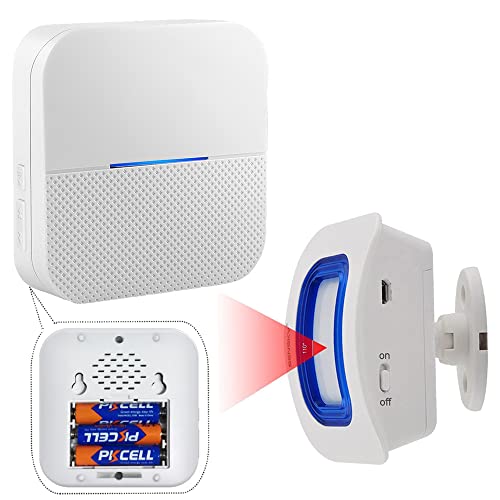
This portable system emphasizes remote caregiver monitoring with a pocket-size pager and motion sensors. It supports a sizable open-area range and offers a selection of ringtone options and adjustable volumes. It is well-suited for caregivers who move between rooms or spend time away from the bedroom. A potential drawback is battery management for wireless devices; regular charging ensures consistent alerts.
Bed Sensor Alarm And Fall Prevention

The Diweit bed alarm offers a wireless setup with a bed pad and a receiver that supports multiple modes, including LED indicators and vibration. It supports a broad 500-foot range in open space and provides up to five levels of volume, making it adaptable to various environments and sensory needs. This choice is strong for households seeking a compact, versatile alarm with several notification options. A limitation is the potential for false alarms in highly restless nights; test placement to reduce misfires.
Buying Guide: Practical Considerations For Dementia Location Devices
What type of monitoring fits your routine?
- Bed-focused systems are best for overnight safety when the primary concern is leaving the bed.
- Motion sensor networks extend coverage to doors, chairs, and rooms for a broader safety net.
How important is ease of setup and maintenance?
- Look for models with simple setup, intuitive alerts, and long battery life or rechargeable components.
- Wireless ranges matter in larger homes; confirm expected coverage in your living space.
What alert format works best for the caregiver?
- Vibration, audible alerts, and visual indicators cater to different environments and hearing needs.
- Multiple receivers and silent modes help avoid disturbing other household members.
How flexible should the system be?
- Expandable sensor networks allow monitoring multiple areas as needs change.
- Portability supports caregivers who travel between rooms or homes.
Frequently Asked Questions
- Are these devices suitable for home use only?
- Can the alerts be customized?
- Do these systems require professional installation?
- How reliable are wireless sensors in large homes?
- Can these devices help reduce caregiver burden?
- Do these products come with warranties?
Yes. They are designed for home environments to monitor bed exits and movements for dementia and elderly patients.
Many models offer multiple ringtones, volume levels, and vibration modes to fit different preferences.
Most are plug-and-play with straightforward setup; some under-bed sensors may require simple placement adjustments.
Reliability depends on layout and interference. Choosing devices with clear ranges and multiple receivers helps improve consistency.
Yes. Real-time alerts enable timely intervention and allow caregivers to perform other tasks with greater confidence.
Warranty information varies by product; refer to each listing for details related to coverage and returns.