Bed sores and ulcers can be a major concern for bedridden individuals. Selecting an alternating air pressure mattress pad or foam mattress topper that evenly distributes weight and encourages blood flow can help prevent and alleviate pressure injuries. The following picks are designed to optimize comfort, reduce skin maceration, and promote better circulation without sacrificing quiet operation or ease of use. Use this guide to compare features, noise levels, and size options to find the best fit for home care or clinical settings.
Summary of chosen products
| Product | Brand | Key Feature | Size Availability |
|---|---|---|---|
| Vive Alternating Air Pressure Mattress Pad | Vive | 130 air cells with whisper-quiet pump | Various sizes |
| Kekoy Alternating Air Pressure Mattress Pad (Blue) | Kekoy | 5 adjustable modes; 130 cells; wave-like massage | 75″ x 36″ |
| Kekoy Alternating Air Pressure Mattress Pad (Beige) | Kekoy | 5 modes; 130 cells; silent pump | 75″ x 35″ |
| Kölbs NSR Long Term Care Foam Mattress | Kölbs | Pressure redistribution foam; non-slip; waterproof cover | 80″ x 36″ |
| MedVance Premium Alternating Air Pressure Mattress Pad | MedVance | Ultra-quiet pump; dual pump cores; 6-minute cycle | Standard hospital sizes |
Vive Alternating Air Pressure Mattress Pad
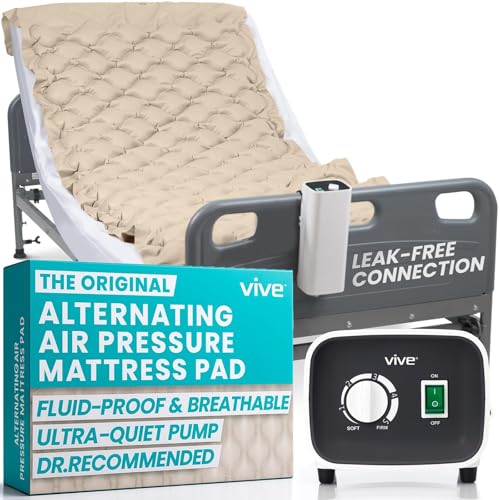
The Vive mattress pad uses 130 air cells and an advanced wave-like therapy to evenly distribute weight and relieve pressure spots. Its doctor-recommended approach aims to prevent skin maceration while improving circulation for bedridden patients. The whisper-quiet pump operates at 22 dBA and offers multiple pressure levels for a customizable experience. Each cycle lasts about six minutes, balancing comfort with effective pressure redistribution.
Key considerations:
- 130 air cells provide broad coverage for pressure relief.
- Whisper-quiet operation minimizes sleep disruption.
- Customizable pressure levels support different care needs.
Kekoy Alternating Air Pressure Mattress Pad (Blue)

The Kekoy blue model emphasizes breathable micro air vents and a 5-mode pump with wave-like cycles every 10-12 minutes. The compact pack-out and expansion to a full-size sleeping area make it suitable for home use. The design targets elderly individuals, post-operative patients, and users with limited mobility by promoting circulation and reducing prolonged pressure on vulnerable areas.
Key considerations:
- Breathable vents help maintain a cool, dry sleep environment.
- Five adjustable modes plus a gentle wave-like massage.
- Ergonomic curve adds targeted support for comfort.
Kekoy Alternating Air Pressure Mattress Pad (Beige)

Beige Kekoy offers a similar 130-cell configuration and a quiet aluminum pump with 28 dBA, delivering five adjustable pressure modes and cyclical, gentle massaging waves every 10-12 minutes. The design prioritizes professional-grade bed sore prevention, making it suitable for bedridden individuals and those with post-operative needs. It’s marketed as a comfort-focused option for home use and caregiving environments.
Key considerations:
- Low-noise operation suitable for light sleepers.
- Five pressure modes and cycle-based relief for circulation.
- Targeted relief suitable for long-term bed rest scenarios.
Kölbs NSR Long Term Care Pressure Redistribution Foam Mattress

This foam mattress by Kölbs emphasizes pressure redistribution with a focus on sensitive skin areas for bed-bound patients. It is designed for hospital beds and home care setups, featuring a non-slip underside to stay securely in place and a waterproof removable cover for easy cleaning. The 80″ x 36″ size fits standard hospital-style beds, with a 5.5-inch profile that balances support and comfort while reducing shear forces.
Key considerations:
- Foam construction provides steady support and pressure redistribution.
- Non-slip underside helps maintain position and stability.
- Waterproof, removable cover simplifies cleaning and infection control.
MedVance Premium Alternating Air Pressure Mattress Pad

The MedVance mat combines an ultra-quiet pump (less than 20 dB) with dual pump cores for robust performance. It features a two-channel alternating mode that cycles every six minutes, promoting circulation and reducing pressure on vulnerable areas. The digital adjustment and diagnostic alarms help tailor care to individual patients, making it suitable for hospital, medical, and home bed use.
Key considerations:
- Ultra-quiet operation supports uninterrupted rest.
- Two-channel alternating mode for consistent pressure relief.
- Digital controls and diagnostic alerts aid individualized care.
Buying Guide: How to Choose the Right Mattress for Bed Sores
When selecting a seating or sleeping surface for pressure relief, consider these factors to ensure effective prevention and comfort.
-
<liPressure redistribution method: Decide between alternating air pressure (air cells that inflate/deflate) and foam-based options. Air cells excel at dynamic pressure relief, while foam provides solid support with less movement.
<liCell count and coverage: A higher cell count (e.g., 130 cells) offers more uniform pressure distribution across the torso and limbs. Ensure the pad fits your bed size and recipient’s body dimensions.
<liPump noise and reliability: A quiet pump improves sleep quality. Look for decibel ratings around 20–28 dBA for peaceful nights.
<liCycle frequency and pattern: Shorter cycles (every 6–10 minutes) provide more frequent pressure changes; longer cycles may be more comfortable for some users but offer less relief from constant pressure.
<liMaintenance and cleaning: Removable, washable covers and waterproof layers simplify hygiene and infection control in care settings.
<liCompatibility and installation: Verify fit with standard hospital beds or home beds and assess whether adjustments are easily accessible to caregivers.
<liDurability and safety: Latex-free, fire-retardant materials and non-slip undersides contribute to safety and longevity in daily use.
<liClinical suitability: For advanced wounds or high-risk patients, consult healthcare providers to determine whether alternating pressure, static modes, or a foam topper is most appropriate.
Product diversity allows caregivers and patients to tailor solutions to mobility, room environment, and noise tolerance. In homes or facilities, combining a base mattress with a top-rated alternating pressure system can help manage skin integrity while maintaining comfort and safety.