When choosing medical aids for disability, focus on devices that extend reach, reduce bending, and promote self-care with dignity. This guide highlights five practical tools suited for daily living challenges—ideal for caregivers and individuals seeking greater independence. The best options here support toileting, dressing, and mobility, helping users perform tasks with less strain. Each product section notes who benefits most, why it was selected, and a practical caveat to consider before purchasing. A quick comparison table follows to summarize core differences and target needs for quick browsing.
| Product | Best For | Key Benefit |
|---|---|---|
| Fanwer Toilet Aids Tools | Individuals needing extended reach for wiping | 14-inch ergonomic design with soft end |
| RMS Premium 35” Leg Lifter | Those with limited hip/knee mobility | Long reach and easy transfers |
| Juvo Toilet Aid | Seniors and post-surgery patients | 18″ wand for front or back use |
| Nourislif 27″ Dressing Stick | People dressing independently with restricted motion | Vinyl-coated hook for fabric grip |
| FreedomWand Multipurpose Toilet Wand | Disability or post-surgery toileting | Multi-use wiping head and paper grip |
Fanwer Toilet Aids Tools
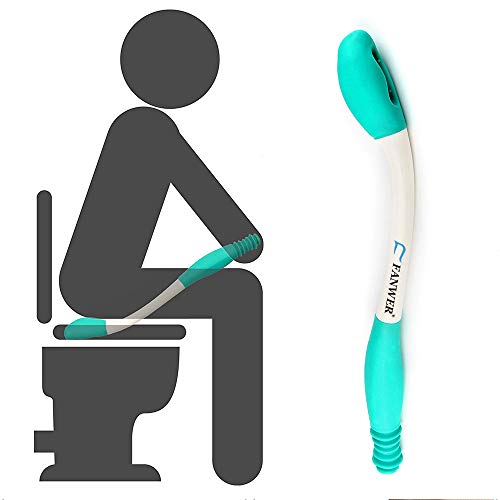
This 14-inch toilet aid extends the user’s reach, helping with wiping from the front or back. Its durable plastic and cushioned end provide a soft, skin-friendly grip. Best for individuals who struggle to bend or reach repeatedly during personal care. The ergonomic handle supports stable use for daily independent hygienic routines. A potential limitation is its fixed length, which may not fit all users or seating heights.
RMS Premium 35” Leg Lifter

The RMS leg lifter provides a long reach to maneuver legs in and out of chairs, beds, and cars. Large open loops accommodate hands, feet, or casts, aiding safe transfers with less strain. This makes it ideal for users with hip, knee, or general mobility limitations. Choose this if you need steady, long-range leg positioning. A caveat is that the tool is designed for transfers rather than all types of lifting tasks, so it may not replace other mobility devices in every situation.
Juvo Toilet Aid

The Juvo Toilet Aid offers an 18″ wand designed for comfortable wiping from either direction, promoting independence for seniors or surgery-recovery patients. Its design supports limited range of motion with a simple, effective approach to personal care. Best for users who value a straightforward, front- or back-use option. A limitation is that it may require some practice to optimize grip without twisting the wrist excessively.
Nourislif 27″ Dressing Stick

This 27″ wood dressing stick helps users independently get dressed, with a vinyl-coated hook that grips fabric gently to prevent slipping. The opposite end features a “C” shaped hook for zippers and shoelaces, aiding dressing and shoe wear without bending or twisting. This is especially useful for those recovering from surgery or dealing with arthritis. A potential drawback is its fixed length, which may not suit all body heights or wardrobe setups.
FreedomWand Multipurpose Toilet Wand

The FreedomWand is a 14.5-inch, four-prong wiping tool designed to wipe without bending or twisting. It also functions as a multipurpose device for full hygiene needs, including holding toilet paper and wipes, reaching hard-to-access areas, and acting as a back moisturization tool. Best for post-surgery care and general daily independence. A caution is that some users may require a larger length for taller users or very low toilet seats.
Buying Guide: Key Considerations For Choosing Disability Aids
- Reach and range: Prioritize products that extend distance without requiring awkward postures. Long handles reduce bending and twisting.
- Grip comfort: Look for cushioned or non-slip grips and vinyl coatings that protect skin and fabrics during use.
- Versatility: Consider devices with multiple uses (for example, wiping and back scrubbing) to minimize the number of tools needed.
- Weight and storage: Choose lightweight tools that are easy to maneuver and store in accessible locations.
- Ease of cleaning: Select materials that are simple to clean and maintain for daily hygiene workflows.
- Compatibility with user needs: Assess whether a product supports front- or back-wiping, dressing, or transfers based on the user’s specific mobility challenges.
Frequently Asked Questions
- What should I consider when buying a toilet aid for independence? The main factors are reach length, grip comfort, and ease of cleaning. Ensure the device supports your typical grooming direction (front or back).
- Are long-reach dressing sticks suitable for all heights? They are helpful for many users, but some may need adjustable-length tools or different hooks to match their wardrobe tasks.
- Is a leg lifter useful for daily mobility? Yes, for getting in and out of chairs, beds, and cars. Choose one with large loops and a comfortable grip.
- Can these tools replace professional medical devices? They complement, not replace, medical equipment or professional assistance when required.
- How do I choose between similar products? Compare length, grip design, and the specific tasks you need to perform—dressing, wiping, or transfers—and pick the option with the most versatile features for your routine.
- What maintenance is needed for these aids? Regularly clean surfaces with mild soap and water, inspect joints for wear, and replace worn ends or grips as needed.