Answering the need for reliable relief from bed sores and uncomfortable pressure in bedridden or immobile patients, these medical air mattresses with pumps distribute weight, promote circulation, and help prevent skin breakdown. This guide highlights five top options, clarifying who each is best for, and why they were chosen. Whether you’re caring for a loved one at home or outfitting a facility, these models provide quiet operation, adjustable support, and durable construction to support long-term comfort.
Quick product snapshot:
| Product | Best For | Key Benefit |
|---|---|---|
| Vive Alternating Air Pressure Mattress Pad | Home caregivers seeking quiet operation | Whisper-quiet pump and 130 air cells for even pressure distribution |
| MedVance Low Air Loss Mattress Replacement System | Facilities or homes needing diagnostic alarms | Digital control with alarms and quick CPR deflate feature |
| Vaunn Cloud Air Whisper Quiet | Bedridden individuals needing consistent airflow | Air-lift therapy and 130-cell pattern for circulation |
| Lunderg Alternating Air Pressure Mattress Pad | Those who value quiet operation and static mode | Flocking surface for comfort and a static option |
| Drive Medical Med-Aire Low Air Loss System | Care facilities requiring replaceable bladders | 20 replaceable bladders with moisture-wicking cover |
Vive Alternating Air Pressure Mattress Pad
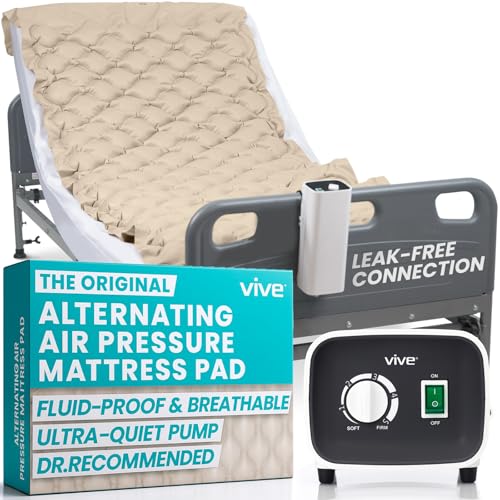
Best for home caregivers who want a balance of relief and quiet operation. This Vive pad uses 130 air cells with a proprietary wave-like therapy to evenly distribute weight and reduce pressure spots. The 22 dBA whisper-quiet pump supports multiple pressure levels for customizable comfort. An included waterproof, breathable ulcer cushion aids skin protection. A potential limitation is the six-minute cycle time, which may feel slower for users requiring frequent repositioning.
Who it’s best for: caregivers prioritizing low noise and adjustable pressure at home. Why selected: the combination of 130 cells, quiet pump, and doctor-recommended relief for bed sores makes it a strong choice for continuous pressure redistribution without disturbing rest.
MedVance Low Air Loss Mattress Replacement System

Best for clinical-like performance in a home or small facility. This system features an ultra-quiet pump under 20 dB, a digital LED display with weight and pressure readouts, and a rapid deflate CPR-style emergency function. It includes low air loss with a cell-on-cell design to prevent bottoming out and offers 24-hour power outage protection with a pillow function at the head. Caution: the kit may require more setup and monitoring in non-clinical environments, and the data mentions alarms rather than a full multi-parameter diagnostic suite.
Who it’s best for: environments needing reliable digital control and quick deflation capability. Why selected: hospital-grade quiet operation, a comprehensive alarm system, and a design that minimizes moisture buildup make it a solid option for ongoing care at home or in clinics.
Vaunn Medical Cloud Air Whisper Quiet

Best for users who need steady airflow and 130-cell cycling for improved circulation. Vaunn’s air-lift technology distributes constant airflow across the body, while the 130 pre-programmed cells provide wave-like therapy to reduce pressure points and keep skin from macerating. The model emphasizes cooling comfort and general relief of pressure ulcers. Consideration: some users may prefer a longer alternating cycle depending on individual needs and comfort preferences.
Who it’s best for: those seeking consistent airflow and a cool, comfortable sleeping surface. Why selected: its combination of air-lift distribution and advanced wave therapy aligns with long-term pressure relief goals.
Lunderg Alternating Air Pressure Mattress Pad
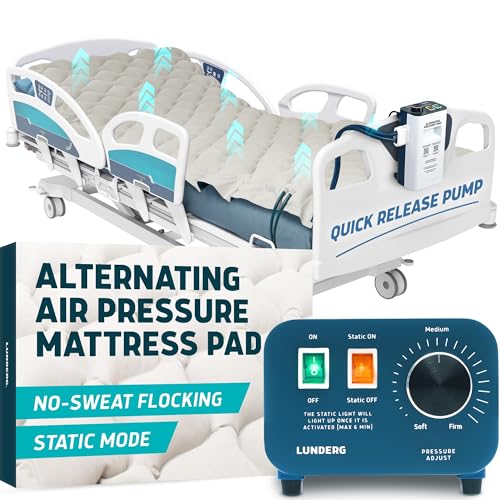
Best for users who value a static mode alongside perpetual alternation. Lunderg’s mattress pad offers doctor and therapist-approved bed sore prevention with a quiet 23 dBA pump and a static mode where all cells stay inflated. It includes a waterproof topper option and is designed for hospital beds or home use, supporting up to 300 pounds. Caution: ensure the topper fit matches bed dimensions to prevent gaps or movement during sleep.
Who it’s best for: caregivers wanting a flexible system with both alternating and static options. Why selected: the static mode provides stability for certain users, while the overall build supports long-term care at home or in facilities.
MedVance Premium Alternating Air Pressure Mattress Pad

Best for long-term care settings needing quiet operation and reliable cycle timing. This pad features an ultra-quiet digital pump, dual pump cores, and a digital control panel with alarms. Its alternating relief system redistributes weight every six minutes, aiding prevention of pressure ulcers and skin breakdown. Limitation: like other pump-based systems, it requires power access and routine maintenance to maintain optimal performance.
Who it’s best for: facilities or homes seeking a robust, clinically oriented relief mattress with clear diagnostics. Why selected: digital controls, alarms, and a steady six-minute cycle provide predictable support for ongoing care.
Vive 8″ Alternating Pressure Mattress

Best for users needing a compact hospital replacement mattress with a three-cell head area and a variable pump. This model uses 16 air chambers and a three-cell head zone to create a pillow of air while offering both alternating and static settings. Caution: the smaller footprint may feel less comfortable for larger individuals or for those requiring more surface area for weight distribution.
Who it’s best for: caregivers looking for a compact, hospital-style option with adjustable support. Why selected: durable design, quiet operation, and practical head support features suit home and facility care alike.
Lunderg Static Mode Option with Waterproof Topper
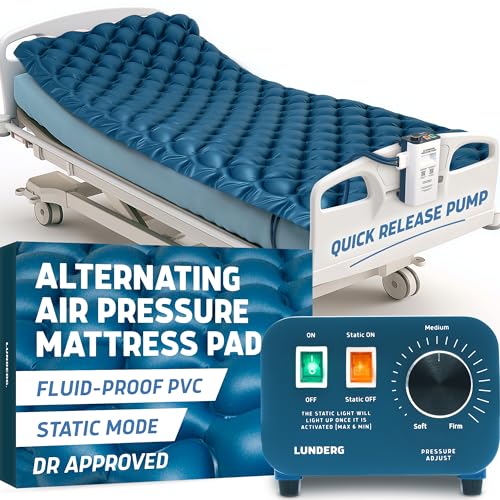
Best for patients who benefit from a stable surface without alternating cycles. This Lunderg model emphasizes static mode alongside doctor- and therapist-approved care. The waterproof topper and quiet pump offer practical protection and comfort for long nights. Limitation: static mode may reduce ongoing pressure redistribution compared to alternating modes.
Who it’s best for: users who prefer a stable, non-alternating surface for rest. Why selected: combination of static mode, doctor-approved design, and waterproof topper supports comfort and protection in home or hospital settings.
Buying Guide
Key considerations when selecting a medical air mattress with pump:
- Intended use and environment: Home vs. facility needs may dictate the level of diagnostic alarms, pump quietness, and durability.
- Pressure relief pattern: Alternating pressure vs. static mode; cycle duration and number of cells influence comfort and skin protection.
- Noise level: Ultra-quiet pumps reduce sleep disturbance; consider dB ratings when rest is a priority.
- Weight capacity: Check patient weight rating and support features like pillow zones or head stability.
- Maintenance and durability: Look for leak-resistant cells, easy-to-clean covers, and replaceable components if needed.
- Power considerations: Ensure compatibility with power backup options for continuity during outages in care settings.
- Size compatibility: Confirm mattress dimensions align with bed frames used at home or in a facility.
Frequently Asked Questions
- What is a low air loss mattress? A mattress designed to minimize moisture and shear by distributing air across multiple cells, reducing skin maceration and pressure points.
- How does alternating pressure help bed sores? It redistributes weight by inflating and deflating cells, promoting circulation and relief in vulnerable areas.
- Are these mattresses suitable for home use? Yes, all listed models are intended for home or facility use with appropriate supervision and fitting to the user’s needs.
- What about noise? Many models advertise ultra-quiet pumps; verify the dB rating to match sleep requirements.
- Do these require professional setup? Most are designed for straightforward setup, but larger systems may benefit from clinician guidance for optimal placement and monitoring.
- What is a static mode? A mode where all cells stay inflated, providing a stable surface when alternating pressure is not needed.