Best military-style ear protection for shooting combines strong noise reduction with clear sound amplification, comfort, and durable construction. This guide showcases five top options for shooters, hunters, and tactical enthusiasts. Each product is chosen for specific needs: ultra-low-profile designs, high-fidelity amplification, reliable noise reduction, and rugged durability. The following sections highlight who each product is best for, why it stands out, and any practical limitations to consider during selection.
| Product | Best For |
|---|---|
| Walker’s Razor Slim Electronic Earmuffs | Best for compact wear and clear ambient hearing |
| Floriogra Electronic Earmuffs | Best for amplified conversation and 82 dB protection |
| PROHEAR Electronic Ear Protection | Best for long sessions and versatile ANSI 23 dB protection |
| Peltor Sport Tri-Flange EarPlugs | Best for insert-ear protection with reliable NRR |
| ACT FIRES Shooting Ear Protection | Best for a balanced active noise reduction and sound amplification |
Walker’s Razor Slim Electronic Earmuffs

Walker’s Razor Slim Ear Muffs offer an ultra-low-profile design with extra-slim cups for a secure fit under gear or helmets. They protect against hazardous noises while allowing you to hear surrounding activity clearly, a feature that makes them well-suited for hunters and range shooters who need situational awareness. The two hi-gain microphones provide sound amplification, emphasizing low-end frequencies for a natural listening experience. A rugged rubberized exterior helps resist damage in the field, and the sound-dampening housing protects the internal electronics. The padded, metal-wire headband adds durability for repeated use. Best for shooters who value a compact form factor without sacrificing hearing protection or ambient awareness. Caution: highly active environments may require adjusting the amplification to avoid overstimulation in loud ranges.
Floriogra Electronic Ear Protection

Floriogra’s electronic earmuffs provide 5x sound amplification for safe sounds, enabling clearer conversations on the range while maintaining protective levels. They actively reduce loud noises above 82 dB within 0.01 seconds, protecting against gunfire while preserving situational hearing. The device uses a volume control knob to tailor amplification and includes ANSI S3.19 and CE EN 352-1 certifications with an NRR of 23 dB. A foldable design helps with portability, and the product is suitable for shooting, hunting, woodworking, and other noisy environments. Choose this if you want strong amplification with fast protective response. Limitation: heavier models may be less comfortable for extended use.
PROHEAR Electronic Ear Protection
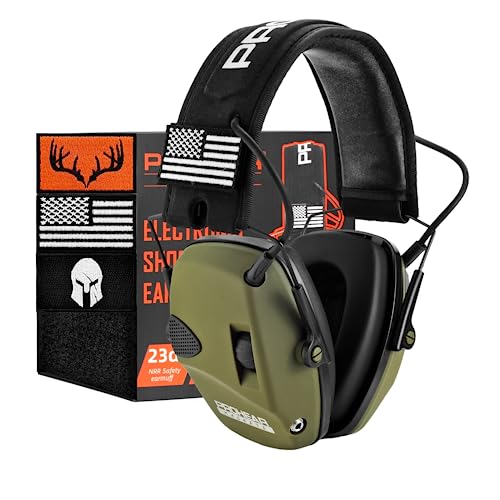
PROHEAR offers smart active hearing protection with quick-suppress gunfire and up to 4x amplification of low-volume sounds. It runs on two AAA batteries, delivering around 300 hours of operation, which is advantageous for long practice sessions. The headband is telescopic and padded, with a lightweight frame for comfort across head sizes. It adheres to ANSI S3.19 with an NRR of 23 dB, enhancing safety in gun ranges, hunting, mowing, and noisy environments. Best for shooters seeking a lightweight but capable option with adjustable amplification. Caution: battery dependency may require planning for replacements during extended use.
Peltor Sport Tri-Flange EarPlugs

Peltor’s Tri-Flange EarPlugs provide a compact, corded form with a 26 dB NRR. The tri-flange design ensures a snug fit, and the plugs are washable and reusable. This option is best for shooters who prioritize simple, insert-ear protection that remains effective without relying on electronic amplification. Use these if you want a straightforward solution that doesn’t require batteries or electronics. Limitation: not suitable for hearing augmentation; you trade amplification for consistent passive protection.
ACT FIRES Shooting Ear Protection

ACT FIRES ear protection blends active noise reduction with sound amplification through an internal processing chip. The device provides 23 dB of noise reduction and features stereo sound amplification for better sound localization. It uses a durable finish and adjustable headband for comfort during extended use. Best for shooters who want a balanced approach—strong noise reduction with enhanced ambient awareness. Caution: performance may vary with heavy equipment or environmental conditions, so test fit and amplification settings before critical use.
Buying Guide
What should I look for in military ear protection?
- Noise Reduction Rating (NRR): Higher numbers generally indicate stronger passive protection. For electronic earmuffs, consider the effective protection when amplification is engaged.
- Amplification quality: Look for clear, natural sound as opposed to artificial tone or distortion. Some models emphasize low-end frequency clarity to preserve speech.
- Fit and comfort: Ultra-low-profile cups and padded headbands are important for long sessions and compatibility with helmets or goggles.
- Power and battery life: If the device relies on batteries, ensure you have reliable replacements for extended training sessions.
- Durability: Rugged housings and water-resistant materials help in field environments and wet ranges.
- Certifications: ANSI S3.19 and CE ratings indicate compliance with recognized hearing protection standards.
Electronic vs passive protection: which should you choose?
- Electronic earmuffs: Best for dynamic ranges with variable noise. They protect against loud gunfire while letting you hear conversations. Ideal for frequent range shooting and tactical scenarios.
- Passive earplugs or earmuffs: Best for environments where there is constant noise but no need for amplification or situational hearing.
What about fit for different head sizes?
- Look for adjustable headbands, swivel cups, and lightweight materials that spread pressure evenly. A secure fit improves both safety and comfort during long sessions.
FAQ
- What is the difference between NRR and real-world performance?
NRR indicates the intensity of passive protection. Real-world performance can be lower due to fit, noise type, and usage. Electronic earmuffs aim to preserve speech while reducing harmful noise.
- Can I wear earmuffs with a helmet?
Yes, choose ultra-low-profile models or earmuffs designed to fit under or alongside helmets. Ensure the headband clearance remains comfortable.
- How long can I use electronic earmuffs without changing batteries?
Many models offer hundreds of hours on standard batteries. Check battery life claims and carry spares for long practice days.
- Are passive plugs better than earmuffs for hearing protection?
Passive plugs offer consistent protection without electronics. Earmuffs provide amplification and situational awareness, which some users prefer in active shooting environments.
- Which product is best for beginners?
Products with straightforward fit, reliable NRR, and easy maintenance are best for beginners. Peltor Tri-Flange EarPlugs offer simplicity, while electronic models like Walker’s Razor Slim provide added hearing comfort with amplification.