If you’re searching for reliable mobile hoists to help with daily transfers, this guide highlights five strong options tailored to different needs. Each pick prioritizes safety, ease of use, and caregiver support. Best for homes with limited space, hospitals, and care facilities, these models cover transfers from bed to chair, wheelchair to toilet, and more. The following table summarizes key details to compare at a glance.
| Product | Best For | Key Benefit |
|---|---|---|
| Carearise Electric Patient Lift | Home care and small clinics | High capacity with breathable sling and long power cord |
| Invacare Hydraulic Patient Lift | Careful transfers in narrow spaces | Bent mast design for wide lift path |
| Carearise 3IN1 Electric Patient Lift | Multi-scenario rehab and daily care | Three modes for body transfer and walking |
| Vive Patient Lift | Bed-to-chair and under-bed tasks | Low-profile base and wide lift range |
| EHUCONHEEL Full Body Sling | Universal, easy sling compatibility | Breathable, quick-dry mesh for comfort |
Carearise Electric Patient Lift 350LBS – Plug-In Transfer Lift

The Carearise model offers a reinforced alloy steel frame and a high-torque motor with a 350-pound lifting capacity. Best for caregivers in home care or small clinical settings, it reduces manual strain and supports smooth, quiet operation. The premium breathable sling with ergonomic head support aids long transfers and patient comfort, while machine-washable fabric simplifies hygiene. A 10-foot power cord enables cross-room transfers without socket changes, making it suitable where outlets are far apart.
Best for: caregivers who need dependable plug-in power, a breathable sling, and long reach. This lift is well suited for daily transfers in homes and clinics with consistent power access. Limitations: it requires access to a power outlet; battery-free operation means no standby mobility without power.
Invacare Hydraulic Patient Lift

Invacare’s hydraulic lift combines an ergonomic bent mast with a simple shifter adjustable base. The bent mast design provides a wider lift path to minimize contact with the frame, reducing patient intimidation during transfers. The base can narrow to about 22 inches for doorway access or expand to about 62 inches for stable transfer into wheelchairs or recliners. A critical feature is the floor-to-bed emergency recovery range of 20 to 64 inches, supporting safer recovery after a fall.
Best for: spaces with tight hallways where you still need a broad lift range. It’s a solid choice for clinics and homes needing easy width adjustments and improved patient visibility during transfers. Caution: floor clearance and room layout should be evaluated to ensure doorway access without obstruction.
Carearise 3IN1 Electric Patient Lift

This 3-in-1 lift transitions among body transfer, assisted walking, and independent walking modes. It’s ideal for elderly or disabled users who require rehabilitation, with a rechargeable battery-powered motor that delivers smooth lifting, plus an emergency lowering knob for power outages. Features include a 360° rotating hook for positioning and a base width adjustable to fit standard doorways and wheelchairs. The design covers bed-to-wheelchair, toilet transfers, car transfers, and walking rehab within a single device.
Best for: multi-scenario households or facilities needing versatility in a single device. Choose this if you require both transfer and walking rehabilitation capabilities. Limitation: battery life and motor power can influence performance in very heavy-duty scenarios, so plan for charging cycles accordingly.
Vive Bed Ladder Assist
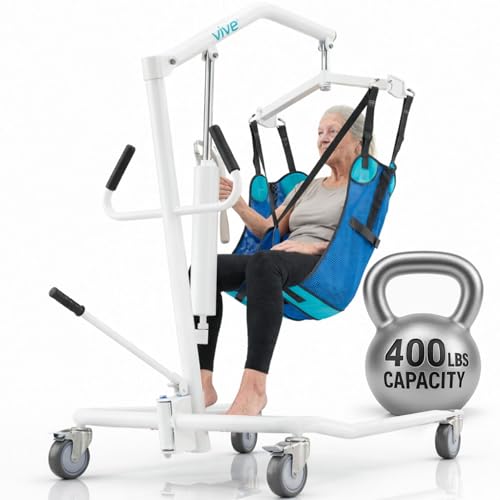
The Vive Bed Ladder Assist provides a simple pull-up mechanism with padded, non-slip hand grips. It’s designed for recovery and mobility challenges, allowing users to sit up and exit the bed with minimal caregiver assistance. Installation is tool-free and designed for most bed frames, including adjustable or hospital beds, provided there is a secure, fixed portion of the frame. Its compact, portable design makes it suitable for home use or travel.
Best for: individuals needing assistive sitting or standing help right from bed, especially in home settings. Limitation: it may not be ideal for users requiring full-body lifting; it is a pull-up aid rather than a full hoist solution.
Yedadi Bed Ladder Assist

The Yedadi bed ladder assist offers an all-in-one mobility and recovery solution. It functions as a secure bed pull-up assist with padded grips designed for comfort and reliability. The setup is tool-free and compatible with most beds, making it a portable option for home care or travel. The product emphasizes comfort and secure grip for daily pull-up assistance, particularly useful during post-surgery or Parkinson’s care routines.
Best for: users needing a portable, easy-to-install bed assist that supports daily pull-ups and transitions. Limitation: this device is a pull-up aid, not a full hoist, so use in combination with other lifting devices for heavier transfers.
Buying Guide
What type of hoist is right for your space?
Consider room size, doorway width, and ceiling height. Hydraulic and electric lifts vary in footprint and maneuverability. Wall-mounted options save floor space, while portable floor models offer flexibility in multiple rooms.
What weight capacity and lift range are needed?
Choose lifts with capacity above the user’s weight plus margin. Look for a wide lift range to accommodate bed-to-wheelchair or floor transfers. If fall recovery is a concern, ensure the model supports safe lowering and has a broad travel path.
Which sling and attachment options matter?
Breathable, medical-grade slings improve comfort and hygiene. Verify sling compatibility with your chosen lift and the ease of cleaning. Some models include head support for better alignment during transfers.
Power needs and reliability
Plug-in lifts require accessible outlets; battery-powered options offer portability but need charging. Consider user needs for continuous operation across shifts or multiple rooms. Emergency lowering features are a valuable safety addition.
Ease of use and caregiver considerations
Look for intuitive controls, narrow widths for doorways, and easy base adjustments. Rotating hooks, adjustable bases, and shifter handles simplify positioning and reduce caregiver strain. Portability matters for homes with multiple rooms or care facilities with limited space.
Maintenance and cleaning
Machine-washable slings and corrosion-resistant frames extend lift life. Check manufacturer guidance on cleaning and inspection routines to maintain safety and reliability over time.
FAQ
- What is the main difference between a hydraulic and an electric patient lift? Hydraulic models use manual leverage or foot pumps, while electric lifts use motors for lifting and lowering. Electric lifts can reduce caregiver strain in frequent transfers.
- Can a wall-mounted lift be used in a standard home bathroom? Yes, but ensure proper mounting and weight support. Wall units save floor space but require wall integrity and proper installation.
- Are slings essential for every transfer? Slings are typically required for safe transfers. Look for breathable, machine-washable options that fit your lift system.
- What should I consider regarding doorways and hallways? Check base width and the ability to narrow the lift for doorway access. Narrower configurations help in tight spaces.
- Is emergency lowering important? Yes. An emergency lowering feature provides a safety backup during power outages or control issues.
- How many people should operate the lift? Usually at least two trained caregivers are recommended for safe transfers, especially with heavier patients.