Finding the most accurate blood pressure monitor helps you track heart health confidently at home. This guide highlights five monitors that consistently deliver dependable upper-arm or wrist readings, suitable for different lifestyles. Best for daily tracking, medical awareness, seniors, or travel, these options prioritize simplicity, data storage, and clear results. Read on to compare key features and decide which fits your needs.
| Product | Best For | Unique Benefit |
|---|---|---|
| Omron Platinum Blood Pressure Monitor | Dual-user, AFib screening | AFib detection and high-capacity storage |
| Omron Bronze Blood Pressure Monitor | Budget-conscious home use | Advanced accuracy with simple setup |
| iHealth Track Smart Upper Arm Monitor | Smartphone integration | Bluetooth syncing and color-coded results |
| Invaxe Blood Pressure Monitor | Two-user households, data tracking | 199 readings per user and automatic averaging |
| Oklar Upper Arm Monitor | Elderly or visually limited users | Large LED display and easy one-button use |
Omron Platinum Blood Pressure Monitor
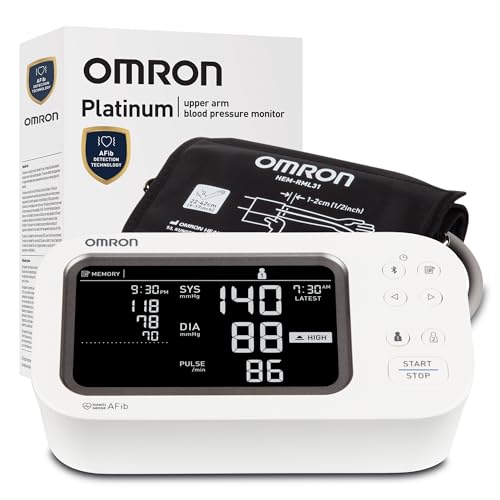
The Omron Platinum uses advanced accuracy technology and supports dual users, enabling each person to store up to 100 readings. It includes AFib detection to screen for abnormal rhythms with every check. Best for households needing reliable long-term tracking and rhythm monitoring, it helps users and clinicians identify patterns over time. A limitation is that some features rely on the companion app for full data management.
Best for: users who want clinical-style reliability at home, with dual-user tracking and rhythm screening. Why selected: robust data storage, AFib screening, and clear interpretation tools support ongoing health decisions.
Caution: interface and app setup may require familiarity with smartphone syncing for full benefits.
Omron Bronze Blood Pressure Monitor

Omron Bronze emphasizes advanced accuracy in a straightforward setup with one-button operation. It stores up to 14 readings, making it suitable for users who want quick checks without heavy data management. Best for individuals who prefer a simple device with dependable readings from a trusted brand. Limitation: lower storage than premium models, so long-term trend analysis requires manual note-keeping or app use.
Best for: occasional home use by people who value a trusted brand and easy operation. Why selected: compact, reliable, and consistently accurate readings with simple daily use.
Caution: fewer memory slots mean less historical context if you test multiple times daily.
iHealth Track Smart Upper Arm Blood Pressure Monitor
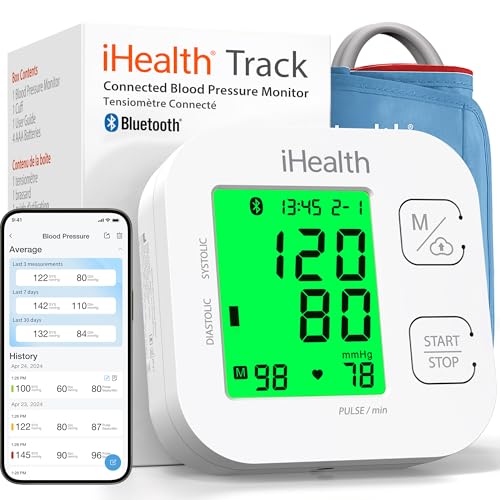
This unit combines clinical accuracy with modern convenience. It uses a wide-range cuff, supports up to 99 readings on the device, and unlimited smartphone storage via iHealth apps. The color-coded display (green/yellow/red) helps users quickly gauge whether readings fall within normal ranges. Best for: tech-savvy buyers who want seamless phone integration and visual status indicators. Caution: some features require Bluetooth and compatible devices to access full data history.
Best for: everyday use with smartphones and visual status indicators. Why selected: strong on-device memory plus app-based history, making trends easier to spot.
WAMELPRI FDA-Cleared Blood Pressure Monitor

WAMELPRI offers a bright 4.5-inch LED display with dual-user memory supporting up to 199 readings per user. Its large digits and high-contrast screen are useful for seniors or those who read displays from a distance. Best for: households needing clear visibility and extensive history storage. Limitation: as a budget-friendly option, some advanced data features may be less prominent than premium models.
Best for: seniors or visually accommodating environments. Why selected: easy-to-read display, two-user memory, and robust local history storage for ongoing comparisons.
Invaxe Blood Pressure Monitor

Invaxe provides two-user memory with 199 storage sets per user and automatic average calculations from the last three measurements. The large 4.5-inch backlit LCD helps readability, and the device supports easy one-button operation. Best for: users who want automatic result averaging and memory for multiple users. Caution: battery life and power source details are not specified here; ensure you have a reliable power option for extended use.
Best for: daily home monitoring with data-driven averages. Why selected: clear display, substantial storage, and automatic averaging improve trend awareness.
Buying Guide: Key Purchase Considerations
What cuff size do you need? Most upper-arm monitors come with standard to large cuffs. If you have a larger arm or need a comfortable fit over time, choose a wide-range cuff and check the arm circumference specification.
Do you prefer Bluetooth or smartphone integration? For many buyers, app connectivity helps track trends over weeks or months. If you seldom use phones, prioritize devices with strong on-device memory and simple displays.
How important is irregular heartbeat detection? Models with Irregular Heart Beat Detection or AFib alerts can flag potential issues for discussion with a clinician. This feature adds valuable context to readings but does not replace medical advice.
What about data storage and sharing? Dual-user memory and large data histories support long-term tracking. Consider whether you want on-device storage only, smartphone backups, or cloud-based history for easy sharing with family or healthcare providers.
Is display readability important? Large, backlit screens reduce reading errors, especially in low light or for users with visual challenges. If readability is a priority, look for big digits and high-contrast displays.
FAQ
- What makes a blood pressure monitor “accurate”? Accuracy depends on a validated cuff, proper cuff size, stable measurement conditions, and consistent operating procedures. Look for clinically validated devices from trusted brands.
- Can I rely on home monitors for medical decisions? Home monitors provide useful trends but should not replace professional medical advice. Use readings to discuss concerns with your clinician.
- Which feature matters most for seniors? Large, backlit displays, simple one-button operation, and reliable memory are especially helpful for seniors to read results easily and track changes over time.
- How many readings should I store? A higher storage capacity supports longer trend analysis. Many devices store 90–199 readings per user, or offer unlimited smartphone history.
- Do I need AFib detection? AFib detection can provide early signals of rhythm irregularities. It’s beneficial but not a substitute for professional evaluation if readings are consistently abnormal.
- How often should I test? Follow your clinician’s guidance; for many users, daily morning readings over several weeks establish reliable baselines.