The best motion sensors for elderly care provide reliable bed exit and room-entry alerts, helping caregivers respond quickly while reducing false alarms. This guide highlights five top options designed for dementia, mobility challenges, and home safety. Each product targets different needs—from discreet in-bed monitoring to long-range wireless alerts—so you can choose based on environment, range, and preferred alert style. Ideal buyers include family caregivers, in-home aides, and small-care facilities seeking non-intrusive monitoring without constant supervision.
| Product | Best For | Range | Notable Benefit |
|---|---|---|---|
| Upgrade Professional Bed Sensor Alarm (Nesthao) | Under-bed monitoring, door monitoring | Up to 918 ft | Floor placement to detect foot touch |
| Smart Caregiver Wireless Motion Sensor Alarm System | Remote caregiver monitoring | Up to 300 ft | Removes bedside noise, mountable |
| Upgraded Nesthao Bed Sensor Alarm (2nd Gen) | Non-intrusive bed exit alerts | Up to 918 ft | Under-bed floor placement, multiple modes |
| CallToU Bed Alarm With 2 Motion Sensors | Centralized monitoring area | 3–10 ft sensor range | Chime and flashing light |
| yiwei Newly Upgraded Bed Alarm | Dual alert, long-range monitoring | 500+ ft | Clip-on receiver for portability |
Upgrade Professional Bed Sensor Alarm by Nesthao
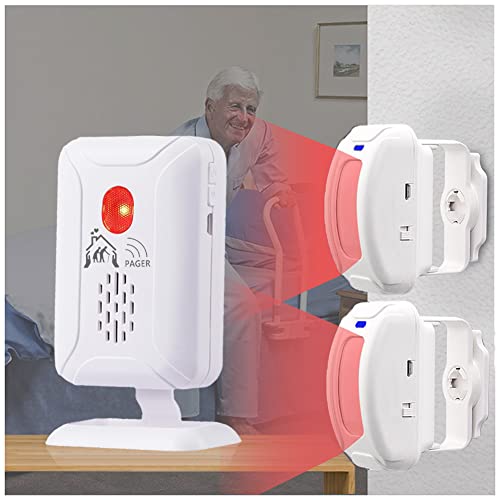
The Nesthao system uses a long-range wireless motion sensor to monitor bed exits or doorway departures. Best for families seeking a floor-installed sensor that can trigger a caregiver receiver from a distance. It supports two power modes: battery or Micro USB, and the sensor pairs with the receiver out of the box for quick setup. A self-test procedure helps ensure correct sensing range before securing placement. Choose this if you need under-bed monitoring plus room surveillance without occupying power outlets.
Best for: Caregivers who want a discreet, floor-based alert with flexible mounting and long-range reach. Limitations: Initial placement testing is recommended to prevent misreads due to directionality or room layout.
Smart Caregiver Wireless Motion Sensor Alarm System

This system emphasizes caregiver freedom with remote monitoring and a quieter bedside experience since alarms aren’t audible at the patient’s location. It is well-suited for homes where caregivers prefer to monitor from a distance, such as kitchens or living rooms, while keeping the patient comfortable. Optional adjustable mounting brackets add versatility for doorways or beds. Best for: Those who want a flexible, mountable motion detector with remote alerting. Caution: Verify the receiver placement aligns with the caregiver’s typical movement zones to maintain reliable alerts.
Nesthao Upgraded Bed Sensor Alarm with 5 Volume Levels
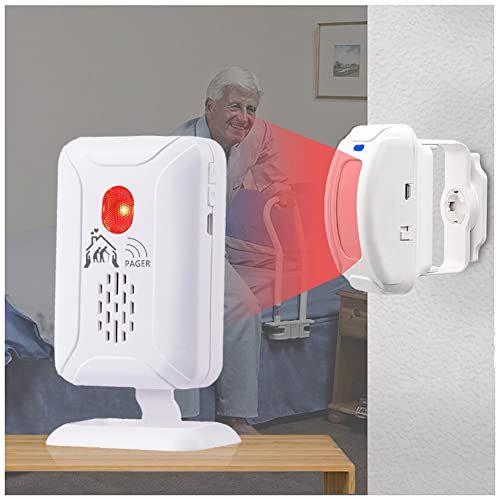
The upgraded Nesthao model focuses on accurate bed-exit detection by placing the motion sensor on the floor under the bed. It clearly communicates with receivers up to 918 feet away and uses a 5-volume alert system to suit daytime or nighttime monitoring. It’s particularly effective when avoiding harsh bed alarms that startle patients. Best for: Families seeking under-bed floor sensors with non-intrusive alerts. Limitation: Sensor orientation and distance testing are advised to avoid missed events in larger rooms.
CallToU Bed Alarm With 2 Motion Sensors

CallToU offers a compact two-sensor setup focused on one primary monitoring area, such as a bedside or doorway. It provides an audible chime and a flashing light when motion is detected, with adjustable volume levels up to 110 dB and 18 ringtones. Best for: Those who need a straightforward, in-room alert system with versatile sound options. Limitation: Smaller detection radius means it’s less suited for wide, open spaces.
HENDUN Motion Sensor Doorbell and Bed Alarm

HENDUN combines doorbell-style alerts with bed-monitoring capabilities and features a long-range transmission up to 918 feet. It offers 36 melodies and a 4-level volume range, plus a silent/light-only mode for nighttime use. Best for: Environments needing flexible alert tones and a robust range. Caution: The variety of melodies may require initial setup to select the most appropriate sound for the home environment.
Newly Upgraded 2026 Bed Alarm (yiwei)

The yiwei system provides dual alert options with LED indicators and 110 dB sound notifications. It supports both battery and Micro USB power, offering portable operation for caregivers who move throughout the home. Range exceeds 500 feet, and the receiver is clip-on for easy transport. Best for: Caregivers who want a dual-alert setup with portable monitoring. Limitation: Depending on home layout, interference may occur in dense construction environments.
Buying Guide: Key Purchase Considerations
- Range and coverage: Choose based on home size and where caregivers spend time. Long-range systems support multi-room monitoring, while shorter ranges suit single rooms.
- Detection method: Floor-based sensors detect feet touching ground; bed-exit monitors focus on movement near the bed. Select the method that aligns with the patient’s behavior and mobility.
- Alert type: Audible chimes, LED flashes, silent or vibrate modes, and caregiver receivers all affect sleep quality and disruption. Consider household preferences.
- Power and placement: Battery-powered devices reduce outlet dependence but require occasional battery changes. USB-powered devices require available outlets. Test placement before final installation.
- False alarms: Look for sensors designed to minimize false triggers from incontinence, bed repositioning, or pet movement. Placement testing is essential.
- Ease of setup: Factory pairing and simple self-test procedures speed up deployment, especially for non-technical users.
Frequently Asked Questions
- What is the main difference between bed sensors and door sensors?
Bed sensors detect when a person exits the bed; door sensors monitor movement near entry points. Choose based on where the monitoring is most needed. - Can these systems work without WiFi?
Yes. Most operate via local wireless signals between sensors and receivers without requiring internet access. - What should I consider for a multi-room home?
Look for long-range capabilities and portable receivers so caregivers can monitor from different areas of the house. - Are there privacy concerns with motion sensors?
These systems rely on motion detection rather than cameras, preserving privacy while providing alerts. - How do I minimize false alarms?
Correct sensor placement, testing sensitivity settings, and avoiding areas with pet movement help reduce false triggers.