Answer: Organic, FCC/USP-grade ethanol is ideal for botanicals and tinctures, offering strong solvent power with food-grade safety. This guide covers 5 top picks best for professional formulators, herbalists, and hobby tincture makers who value purity, sustainability, and reliable extraction performance.
| Product | Best For | Key Benefit |
|---|---|---|
| Lab Alley Ethanol 190 Proof Organic Sugar Cane Alcohol (1 L) | Herbalists and eco-conscious creators | Organic cane source; FCC Food Grade compliance |
| Lab Alley Ethanol 190 Proof USP/FCC Alcohol (1 L) | Laboratory and formulation work | USP & FCC certified; versatile for botanicals |
| Lab Alley Ethanol 190 Proof Organic Cane Alcohol (4 × 1 Quart) | Bulk tincture production | High-volume supply; FCC food-grade |
| Kleen-Xtract 190 Proof Sugarcane Alcohol (One Gallon) | Cost-effective large batches | Food-grade 190 proof solvent, reliable for extractions |
| Florida Herbs Hops Tincture (Humulus Lupulus) Organic | Non-GMO hops tincture needs | Organic hops extract drops for tinctures |
The following sections outline five products that are highly relevant to organic alcohol for tinctures. Each product includes who it’s best for, why it’s chosen, and a practical caution to help you compare options quickly.
Lab Alley Ethanol 190 Proof Organic Cane Alcohol

Type: 95% ethyl alcohol distilled from certified organic sugarcane. FCC food-grade compliance ensures ingredient integrity. Premium extraction solvent designed for botanical and herbal work.
Best for: Professional formulators and eco-conscious creators who require a plant-based, sustainable solvent with strong extraction capabilities. The organic cane base supports clean tinctures with minimized impurities.
Caution: If you need ultra-pure solvent for highly sensitive assays, verify storage conditions to prevent moisture uptake that can affect potency.
Lab Alley Ethanol 190 Proof USP/FCC Alcohol

Type: 95% ethyl alcohol aligning with USP and FCC standards. Suitable for laboratory, industrial, and formulation uses, including botanical extraction.
Best for: Users needing certified, multi-application solvent suitable for precise tincture work and chemical processing.
Caution: This product is formulated for lab-use as well as botanicals; ensure compliant handling and storage in appropriate containers to maintain quality.
Lab Alley Ethanol 190 Proof Organic Cane Alcohol (4 × 1 Quart)
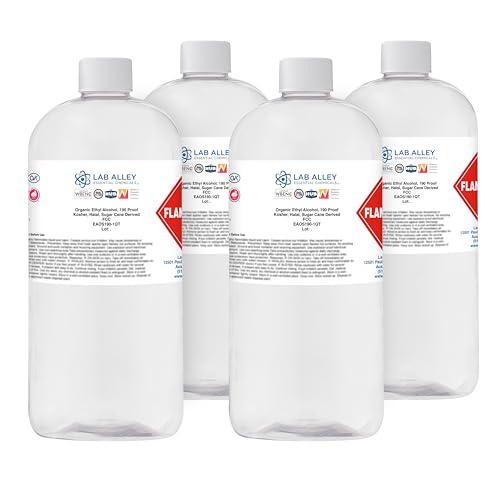
Type: Organic cane ethanol at 95% with FCC food-grade compliance. Designed for efficient extraction across multiple batches.
Best for: Medium to large tincture production where consistent quality and batch-to-batch repeatability matter.
Better for: Those who want bundled quart bottles to streamline workflow and inventory management.
Kleen-Xtract 190 Proof Sugarcane Alcohol

Type: 190 proof sugarcane alcohol, food-grade and suitable for tinctures and extractions. A reliable option for consistent solvent performance in bulk workflows.
Best for: Budget-conscious studios and practitioners who need dependable, high-volume solvent for tincture production.
Caution: Higher alcohol concentrations require careful handling and storage to minimize evaporation and ensure safety.
Florida Herbs Hops Tincture Organic

Type: Organic hops tincture extract. While primarily used as a tincture rather than a pure solvent, it represents a common format for herbal tinctures that may be alcohol-based depending on batch formulation.
Best for: Practitioners seeking hops-based tincture components for calming or relaxation blends.
Caution: If you specifically need a pure organic alcohol solvent, verify the tincture’s solvent base before processing your own extractions.
Buying Guide: Key Purchase Considerations For Organic Alcohol In Tinctures
What grade level should I choose for tincture work?
For botanicals and tinctures, choose ethanol labeled as USP or FCC food-grade. These standards indicate compliance with validated purity criteria, reducing impurities that can alter extraction outcomes or taste.
Why choose organic cane ethanol over grain-based alcohol?
Organic cane ethanol is plant-based and often produced with fewer additives. It appeals to eco-conscious makers and those seeking a renewable, vegan solvent with clean extraction profiles for delicate plant compounds.
What’s the difference between 190 proof and other proofs?
190 proof equals about 95% ethanol. Higher proof solvents extract more compounds and dry faster, but require careful handling to manage residual water, which can affect tincture stability and flavor.
When is bulk packaging advantageous?
Bulk or multi-bottle packs are beneficial for professional labs or large-scale home studios, enabling consistent solvent quality across many tincture batches and reducing per-bottle cost.
Are there safety considerations I should follow?
Yes. Store in glass containers away from heat and direct light. Use proper ventilation when handling high-proof ethanol, and follow local regulations for storage and transport of flammable solvents.
FAQ
- Is organic ethanol suitable for all tincture bases? Yes, organic ethanol is widely used as a solvent for botanical extraction and tincture preparation due to its purity and solvent power.
- What does FCC compliance mean for tincture solvents? FCC compliance indicates the solvent meets Food Chemicals Codex standards, ensuring ingredient integrity for food and beverage-related applications.
- Should I choose USP or FCC for tincture work? Both indicate quality standards; USP is healthcare-oriented, while FCC is broader for food and beverage applications. Either is acceptable for tinctures, depending on your formulation needs.
- Can I mix high-proof ethanol with water for tinctures? Yes, many tinctures are made by adjusting ethanol strength. Be mindful of stability and compound solubility when diluting.
- Is Kosher certification important for tinctures? Kosher status is beneficial for certain dietary or label compliance requirements but does not directly affect solvent performance.
- What should I consider when buying in bulk? Look for consistent packaging, clear labeling of proof and grade, and reliable supplier certifications to minimize lot-to-lot variability.