Answer: Over-the-counter metatarsalgia orthotics provide targeted metatarsal padding, arch support, and heel stability to relieve ball-of-foot pain for most walkers, runners, and standing workers. This guide highlights five proven options and who they’re best for, plus a practical buying guide to help you choose the right fit.
Summary table of selected products:
| Product | Best For | Key Benefit | Limitations |
|---|---|---|---|
| PowerStep Pinnacle Plus | Moderate to mild metatarsalgia with need for arch support | Built-in metatarsal pads with firm yet flexible arch | May require break-in period |
| AceStep Metatarsalgia Insoles | Forefoot pressure relief with full-length cushioning | Metatarsal pad behind the ball of foot | Full-length design may feel bulkier |
| ORHILYA Metatarsal Insole Arch Support | Arch-heavy feet needing balanced distribution | 35mm arch height and non-slip fabric | Not ideal for very low arches |
| 3810 Ultra Arch Support (Ten Seconds) | Heavy-impact activity and demanding daily wear | High arch support and zero-drop cushioning | May feel stiff for some users at first |
| VALSOLE Plantar Fasciitis High Arch Insole | Flat feet to high arches needing robust metatarsal relief | Rear and forefoot cushioning with rigid arch support | Bulkier profile for some shoes |
PowerStep Pinnacle Plus Met Orthotics

The PowerStep Pinnacle Plus features built-in metatarsal pads that provide targeted cushioning under the forefoot, plus neutral arch support. The design includes a firm yet flexible contoured arch and a deep heel cradle to improve stability and reduce pronation. A premium foam top layer offers additional shock absorption from heel to toe, suitable for walking, running, and all-day wear.
Best for: People seeking metatarsal cushioning with reliable arch support in everyday shoes. This is a solid pick for mild to moderate forefoot pain and those who want a USA-made option.
Limitations: Some users may require a brief break-in period to acclimate to the firmer arch support.
AceStep Metatarsalgia Insoles

AceStep combines a full-length orthotic design with a built-in metatarsal pad just behind the ball of the foot. It provides neutral arch support, a deep heel cup, and full-length cushioning to distribute pressure across the forefoot and midfoot. This design supports those with flat feet, plantar fasciitis-related discomfort, and metatarsalgia pain, while promoting stable alignment.
Best for: Individuals needing comprehensive forefoot relief and a full-length cushion that still supports arch alignment. Ideal for long days on hard surfaces.
Limitations: The full-length construct may feel bulkier in tighter-fitting shoes.
ORHILYA Metatarsal Insole Arch Support

ORHILYA arch support inserts are engineered for heavier wearers (over 220 lbs) with a 35mm arch height suitable for low, neutral, and high arches. They combine metatarsal pad support, deep cup, and strength arch support to alleviate metatarsalgia, heel pain, and related conditions. The fabric is non-slip and the EVA foam provides shock absorption for day-long comfort.
Best for: Heavier individuals seeking strong arch support with a stable forefoot cushion to relieve metatarsalgia and fatigue.
Limitations: Higher arch height may feel overly rigid for those with very flat feet or very flexible arches at first.
3810 Ultra Arch Support Insole

Ten Seconds’ 3810 Ultra Arch Support focuses on a high arch profile with very high shock absorption. The insole is designed for heavy impact activities and work environments, providing substantial arch firmness and cushioning from heel to forefoot. It suits those who need durable support during strenuous days or athletic activities.
Best for: Users requiring substantial arch support and superior shock absorption during workouts or long-standing tasks.
Limitations: The high arch emphasis can feel rigid for people with low arches or flexible feet until breaking in.
DARLIS Metatarsalgia Insoles
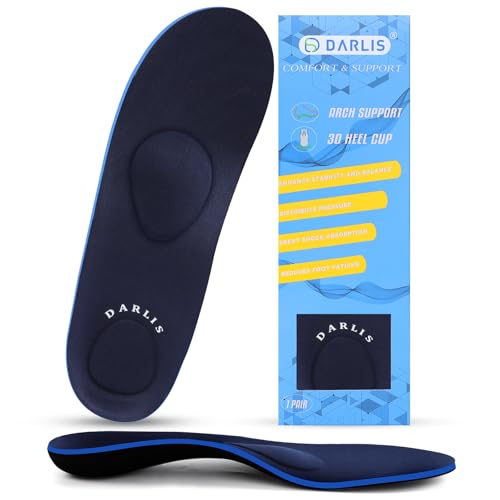
DARLIS offers an orthotic with a built-in metatarsal pad designed to relieve metatarsalgia and related forefoot pain. The pad sits to distribute pressure away from painful areas while a reinforced heel and arch support help stabilize the foot. This option is suited for daily wear and passive relief during long periods of standing.
Best for: People seeking a balance of metatarsal cushioning and arch support with a focus on distributing forefoot pressure.
Limitations: Discomfort may occur if used without metatarsalgia symptoms in some cases.
Buying Guide: How To Pick The Right Over-The-Counter Metatarsalgia Orthotics
- How severe is your forefoot pain? Choose a metatarsal pad design for targeted relief, or a full-length orthotic for comprehensive support.
- What is your arch type? High arches benefit from substantial arch support; low or flat arches may prefer neutral to moderate arch contour and a stable heel cup.
- Should you consider the shoe type? Bulky inserts work best in larger sneakers or boots; slimmer designs fit tighter dress shoes but may offer less metatarsal padding.
- Is weight-bearing comfort important? Heavier individuals may need higher-density foams and firmer support to maintain alignment and reduce fatigue.
- How often will you wear them? For long days, prioritize cushioning and heel stability; for light use, a more flexible insert may suffice.
Practical tips for use and care
- Introduce new insoles gradually to adapt to the feel and height.
- Replace insoles when padding or arch support compresses, or after 6–12 months of daily use.
- Ensure proper shoe fit; remove existing insoles if your shoe’s insole is already designed for support beyond the new insert.
- Keep feet dry and clean to maximize the longevity of fabric-covered inserts.
FAQ
- What is metatarsalgia, and can insoles help?
Metatarsalgia is pain near the ball of the foot. Orthotic insoles with metatarsal pads can redistribute pressure and provide arch support to reduce forefoot stress. - Do I need a doctor’s note to use OTC metatarsal insoles?
No. Over-the-counter insoles are designed for general relief, but persistent pain or structural concerns should be evaluated by a clinician. - How long should I wear them each day?
Start with 1–2 hours and gradually increase as comfort allows, especially during walking or standing tasks. - Can insoles fix flat feet or high arches?
They can help realign pressure and improve comfort, but severe structural foot conditions may require custom orthotics. - Will I need different insoles for different shoes?
Some inserts are universal, while others are shoe-specific. Check the product’s compatibility with your typical footwear. - Are these insoles suitable for Morton’s neuroma?
Several listed options help redistribute pressure behind the ball of the foot, which can alleviate neuroma-related discomfort for many users.