If you’re seeking fast, convenient relief from muscle or joint discomfort, over-the-counter (OTC) patches can be a clear option. These patches deliver analgesic or lidocaine-based relief directly where it hurts, without pills. This guide highlights five top options, who they’re best for, and practical use tips. It also includes a quick buying table to help you compare sizes, strength, and application simplicity at a glance.
| Product | Best For | Patch Type | Strength | Approx. Area Covered |
|---|---|---|---|---|
| Salonpas Pain Relieving Patch – Large | General muscular pain, back or large areas | Cream-based analgesic patch | Menthol, camphor, methyl salicylate | Large patches |
| WELMATE 4% Lidocaine Patch | Nerve-related or localized pain | Lidocaine patch | 4% Lidocaine | Portable, small to mid patches |
| Salonpas Pain Relieving Flex Patch Lidocaine 4% | Spot-specific pain with flexible wear | Flexible lidocaine patch | 4% Lidocaine | Flexible coverage |
| Sumifun 4% Lidocaine Pain Relief Patches | Medium to large areas, longer relief | Lidocaine patch | 4% Lidocaine | Standard size patches |
| Biofreeze XL Pain Relief Patches | Back, neck, shoulders, large areas | Cooling menthol patch | Menthol-based formula | XL-sized patches |
Salonpas Pain Relieving Patch, Large

Best for: pain in large muscle groups or broad areas, such as the back, hip, or shoulder region. This patch uses a blend of camphor, menthol, and methyl salicylate to provide targeted relief at the skin level. It’s ideal for temporary relief during daily activities where creams may rub off or be inconvenient.
Why selected: It combines multiple active ingredients for a robust, site-specific analgesic effect without swallowing pills. The rounded corners and flexible fabric help the patch stay in place as you move.
Limitations: Not designed for every skin type; discontinue if irritation occurs or if you have a sensitivity to the ingredients. May not be ideal for very small, focused pain sites.
WELMATE 4% Lidocaine Pain Relief Patch

Best for: localized nerve pain or sharp discomfort in a specific area. Each patch delivers fast-acting numbing relief with lidocaine, suitable for temporary relief of minor pains from injuries or neuropathic discomfort.
Why selected: The 30-count value pack ensures steady stock for first-aid kits and home care. Patches are large enough to cover typical nerve-related pain zones, and they can be cut to fit small areas if needed.
Caution: Maximum effect occurs within the patch’s active window; remove if numbness or excessive tingling causes concern. Not a substitute for medical advice for persistent pain.
Salonpas Pain Relieving Flex Patch Lidocaine 4%

Best for: small to moderate pain sites requiring a conforming patch that moves with you. The flexible design helps maintain adhesion during daily activities.
Why selected: Combines maximum OTC strength lidocaine with a contoured, low-profile patch ideal for elbows, knees, or neck areas. Provides up to eight hours of relief per application.
Limitation: As with other lidocaine patches, avoid applying to broken or irritated skin. Do not exceed the recommended number of daily applications.
Sumifun 4% Lidocaine Pain Relief Patch

Best for: people needing reliable lidocaine-based relief for moderate muscle or joint discomfort across larger body areas.
Why selected: A 30-count value pack supports intermittent use without frequent re-purchasing. Patches are designed to deliver quick numbing relief and can last up to eight hours.
Limitation: The patches are a strong topical anesthetic; avoid coverage on sensitive skin areas and monitor for signs of irritation.
Biofreeze XL Pain Relief Patches
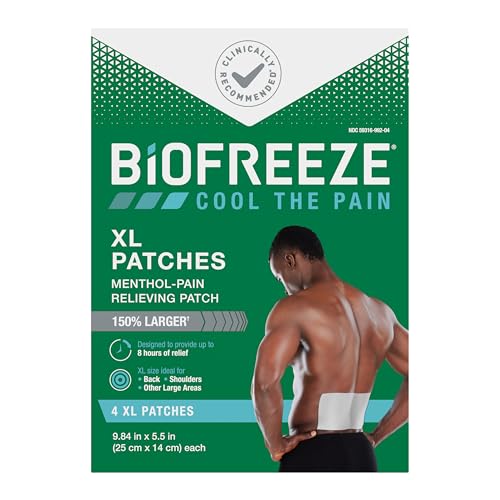
Best for: large-area relief on the back, neck, shoulders, or other broad zones requiring a cooling analgesic effect.
Why selected: Biofreeze XL patches are larger than standard patches, offering extended coverage and up to eight hours of cooling relief. The menthol-based formula provides a refreshing sensation while addressing pain.
Limitation: Cooling sensation may be intense for sensitive skin or during skin conditions; if discomfort persists, discontinue use and consult a healthcare professional.
Buying Guide
What should you look for in an OTC pain patch?
Identify the active ingredient type (menthol/camphor/methyl salicylate vs. lidocaine) to match your pain type—muscle soreness or nerve-related pain. Consider patch size and flexibility to fit the treatment area and activity level. For larger areas, choose XL or large patches to cover more surface area without reapplication.
How long should patches stay on?
Most OTC patches offer relief for up to 6–8 hours, with some stronger lidocaine patches delivering relief closer to 8 hours. Follow the product’s directions to avoid skin irritation or reduced effectiveness from overuse.
Are patches safe for all ages?
OTC patches are generally intended for adults and older children. Check age recommendations and avoid use on broken or irritated skin. If you have sensitive skin or a history of allergies, perform a small patch test first.
How do you choose between lidocaine and menthol-based patches?
Choose lidocaine patches for targeted numbness to dull sharp discomfort and nerve-related pain. Choose menthol/camphor/methyl salicylate patches for surface-level heating/cooling sensations and diffuse discomfort in larger muscle groups.
Practical tips for use
- Clean and dry the area before applying a patch.
- Avoid wrapping patches with tight bands or clothing that rubs against the patch.
- Do not apply over wounds or sensitive skin without veterinary or medical advice when in doubt.
- Remove after the recommended duration and wash skin to remove residue.
FAQ
- Do OTC patches require a prescription? Answer: No, most patches in this guide are available OTC and packaged for home use.
- Can I use patches on the same area every day? Answer: Rotating areas can help prevent skin irritation; follow label directions for daily limits.
- How long until I feel relief from a patch? Answer: Relief onset can vary; some users feel faster cooling or numbness within minutes, others may take longer depending on patch type.
- Can patches replace pain medications completely? Answer: Patches provide temporary relief and are not a substitute for ongoing medical treatment for chronic conditions.
- Can patches be used with creams or gels? Answer: It’s best to avoid layering topical products over a patch to reduce irritation and patch adhesion issues.
- What should I do if I develop a rash? Answer: Remove the patch immediately and seek medical advice if a rash or persistent irritation occurs.