For patients and clinicians seeking comfortable, disposable gowns, the right option balances modesty, material feel, and practical coverage. This guide highlights five reliable choices that fit most patient needs—from standard exams to procedures requiring easy access. Best for hospitals, clinics, and temporary care settings, these gowns emphasize comfort, fit, and ease of use. The table below summarizes key details to help compare at a glance.
| Product | Material Type | opening | Best For | Limitations |
|---|---|---|---|---|
| McKesson Disposable Patient Exam Gown | Poly/Tissue blend | Front | General exams, all sizes | One size fits most |
| Avalon 813 Patient Gowns | Tissue/Poly/Tissue | Open-Back | Procedures needing back access | Open-back design may affect modesty for some |
| JMU 50 Pcs Patient Gown | Tissue/Poly/Tissue | Front/Back Opening | Dual access exams | Single-use; disposal needed |
| McKesson Patient Exam Gowns | Tissue/Polyester | Front/Back compatible | linen-like feel and modesty | Limited size range noted |
| Disposable Patient Exam Gown, 2XL | SMS Nonwoven | Front | 2XL patients or larger size requirement | Fluid-resistant but bulkier |
McKesson Disposable Patient Exam Gown

Material is a soft poly-tissue blend designed to be comfortable while maintaining durability. The waist belt lets patients adjust the gown for a secure fit during examinations. The gown measures 30 inches by 42 inches with a 56 inch sweep, accommodating most body types. Best for routine exams in clinics or hospitals where quick, single-use coverage is essential. Choose this if you prioritize a familiar gown feel with reliable fit for many patients. A potential limitation is that the one-size approach may not suit very tall or unusually proportioned patients.
Avalon 813 Patient Gowns

Front- or back-opening disposable gowns offer generous coverage suitable for examinations and procedures. The embossed poly layer adds strength, and the waist-tie is adjustable for the desired length. This gown is a practical option for facilities that need economical, single-use protective garments. Best for settings where back access is frequently needed or where modesty must be maintained with a simple back-opening design. Avoid this if your workflow requires closed-front gowns for certain procedures requiring full chest coverage or privacy concerns due to back-opening design.
JMU 50 Pcs Patient Gown

These gowns offer a front/back opening design for flexible access during examinations. The tissue/poly/tissue construction adds strength while absorbing liquids and spills, making them suitable for varied procedures. Being disposable, they promote clean environments and quick turnover. Best for clinics needing multiple patients with a single-use option. Choose this if you want a simple, reliable disposable gown with flexible opening options. A limitation is that the front/back opening design may not create a perfectly uniform fit for every patient size.
McKesson Patient Exam Gowns

These gowns emphasize modesty and comfort, designed and sized to feel and cover like linen gowns. They are made from high-performance materials to withstand hospital workflows while keeping patients comfortable. Best for facilities that want a more linen-like feel with dependable coverage. Better for patients who prefer a more traditional gown experience. A potential limitation is that sizing may not cover all body types as uniformly as custom gowns.
Disposable Patient Exam Gown, 2XL
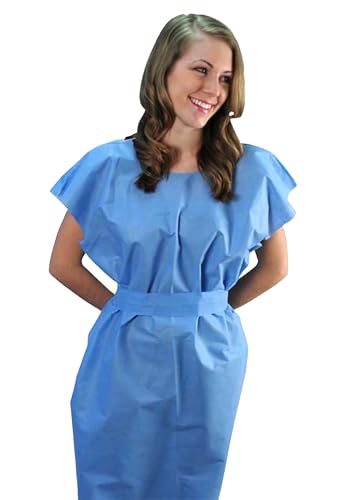
Designed for a comfortable and secure fit with a separate tie belt, this 2XL option uses SMS nonwoven fabric offering fluid resistance for patient protection. It suits hospitals, clinics, and dental offices needing dependable plus-size coverage. Best for larger patients or settings requiring a roomier fit. A limitation is that the gowns can be bulkier and may feel less form-fitting than standard sizes.
Buying Guide: Key Factors For Choosing Paper Gowns
- Material and comfort: Look for poly/tissue blends or SMS nonwoven fabrics that balance softness with durability. Consider whether a tissue layer adds absorbency for spills.
- Access and coverage: Decide between front-opening, back-opening, or open-back designs based on exam or procedure needs and patient modesty preferences.
- Size range: Check if one size fits most or if multiple sizes are needed to cover a diverse patient population.
- Single-use vs. reusable: Disposable gowns reduce cleaning needs and cross-contamination risks but generate more waste; consider your facility’s sustainability goals.
- Fit and adjustability: Waist ties and adjustable features improve security and comfort during procedures.
- Cost per use and inventory: For high-turnover settings, prioritize gowns that balance cost with practical coverage and ease of use.
Frequently Asked Questions
- What is the most common material for disposable patient gowns?
– A poly/tissue blend or embossed poly layers are common, offering a balance of comfort and strength. - Which gown opening is best for exams requiring back access?
– Back-opening or open-back designs are preferred for flexibility during certain procedures. - Are disposable gowns safer for infection control?
– Yes, single-use gowns reduce cross-contamination risk when properly discarded after use. - How should gown size be chosen for patients of varying body types?
– Consider gowns labeled as one size fits most, with adjustable waist ties, or select specific sizes for tall or larger patients. - Can gowns be used in dental offices?
– Yes, many disposable gowns are designed for hospitals, clinics, and dental practices alike, with fluid resistance suitable for oral exams and procedures.